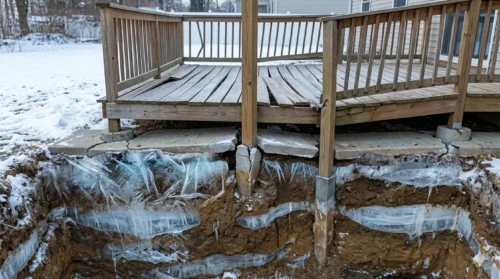
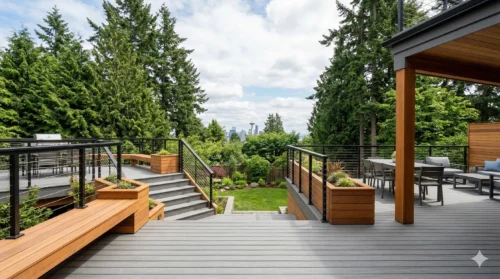
Elevated deck design is where a nice backyard idea starts getting serious. A ground-level platform can be forgiving. A raised deck or multi-level deck works differently. Once the walking surface sits above grade, the deck has to use vertical space carefully while accounting for weight, movement, stairs, railing loads, drainage, privacy, and local code. In Seattle and the greater Puget Sound area, steep lots, soft winter ground, heavy rain, and hillside views make that planning even more site-specific. Suddenly, the dream deck is not just about where the fire pit goes or whether the surface feels like an inviting space.
At Olympic Decks, we look at elevated deck projects across the greater Seattle area from the structure outward. A beautiful deck should feel natural from the house, but it also has to be engineered correctly, comfortable to use, and realistic for the property. That is why new decks planned around elevation and everyday use need more thought than a few saved deck ideas from an inspiration board. The view matters. So does the footing under the post.
Multi-Level Deck Plans Start With the Yard, Not the Furniture
A multi-level deck can solve a real Pacific Northwest problem: a sloped backyard that looks scenic but is hard to use. Many Seattle-area backyards drop away from the house, making a regular patio difficult or leaving parts of the yard underused.
A multi-level layout can turn that drop-off into usable zones in the homeowner’s own backyard:
- an upper deck for morning coffee;
- a lower deck for casual lounging;
- stairs that give easy access across the whole outdoor space;
- levels that are seamlessly integrated with the slope.
A new deck with multiple levels needs careful deck design because each level has to be supported properly. Posts, beams, footings, stairs, railing, and connections all have to work together. In the wet soil common around the Puget Sound area, deep concrete footings and robust post-and-beam planning matter.
The framing may be freestanding, connected to the house, or a combination, depending on the site conditions, design, and local requirements. The deck plans should come after the property is understood. Not before.
Deck Design Has to Respect Elevation and Deck Levels
The higher the deck, the less room there is for casual guessing. In Seattle, a deck with a walking surface more than 18 inches above the ground generally requires a construction permit from the Seattle Department of Construction & Inspections.1 Decks more than 30 inches above grade also trigger guardrail and safety considerations.
Here is the practical version:
| Design detail | Number to know | Why it matters |
| Seattle permit trigger for decks | More than 18 inches above ground | SDCI states decks above this height generally need a construction permit |
| Guard-related height trigger | More than 30 inches above grade | Higher decks require closer attention to railing and safety rules |
| Common residential guard height | 36 inches | A common minimum for residential deck guards where required |
| Typical maximum guard opening | 4 inches | Helps prevent unsafe gaps in railing systems |
| Multi-level structural review | Each level must be supported | Every level carries loads and must tie safely into the whole structure |
These numbers affect railing height, stair planning, post spacing, hardware, inspections, and sometimes the overall layout.
This is also where a custom deck design is worth it. A two-level deck with a hot tub, outdoor kitchen, built-in grill, black metal railings, additional seating, and a covered porch is not just a larger deck with more features. It is a structure with different load zones and different daily-use patterns, so the layout maximizes functionality instead of simply adding features.
Deck Ideas That Create Real Zones
The best multi-level deck designs do not simply stack platforms. They create a reason for each level to exist. One deck level might sit close to the kitchen for outdoor dining. Another might become a cozy dining space, while a quieter corner can work as a cozy spot with a privacy screen. A lower deck can work near a pool area, garden, or fire pit, especially when a poolside view matters. If the grade allows it, the upper deck can capture scenic views or wider panoramic views while the lower deck feels more sheltered.
That separation is useful. It gives the outdoor space a larger feel without turning the whole yard into one level surface. A multi-level deck can break the backyard into useful areas for dining, lounging, cooking, and entertaining. It can also add architectural interest and visual appeal without looking overbuilt. Instead of building one large platform, the deck can step naturally with the yard. When the design is right, it feels like part of the property.
Still, more structure is not always better. Too many levels can make the deck harder to use. Too many stairs can break up the flow. A good deck should feel easy, open, and connected, with easy access, a smooth transition from the house, and seamless transitions between levels. Good deck design ideas are not only about features. They are about flow.
Hot Tub, Fire Pit, and Outdoor Kitchen Choices Change the Deck Build
A hot tub is not patio furniture. Neither is an outdoor kitchen. These features change the deck build because they affect weight, layout, access, ventilation, and daily traffic patterns.
The structure has to account for:
- the concentrated weight of a hot tub;
- built-in grill and outdoor kitchen placement;
- safe fire pit clearance;
- dining and seating circulation;
- easy movement between the house and each deck level.
This is where multi-functional spaces either feel natural or become frustrating. A hot tub too far from the house may not get used much once the weather turns cold. A dining area that blocks the stairs can make outdoor meals feel awkward. If the fire pit takes over the main circulation zone, the deck feels crowded.
The smartest deck ideas start with real habits. Where do people enter from the house? Where does rain blow in? Will people use the hot tub after dark? Is outdoor dining close enough to the kitchen? Should the upper deck protect unobstructed views?
A great deck is designed around real outdoor habits, not just a clean plan on paper.
Contemporary Deck Materials That Keep a Beautiful Deck Durable
On an elevated deck, top-quality materials are not just about beauty. Across Seattle and Western Washington, frequent rain makes durability more than a minor detail.2
Common material choices for Seattle-area elevated decks include:
- capped composite decking;
- premium hardwoods;
- cedar, when natural wood tones suit the house;
- corrosion-resistant hardware and fasteners;
- moisture-resistant framing decisions.
A cedar deck can still bring natural beauty, but even an elegant design needs regular care. Cleaning, inspections, and protective sealant all help preserve the wood and reduce water damage.3
Materials should also match the exposure. A shaded, damp deck under Northwest evergreens will age differently than a sunny deck with open airflow. Regular cleaning is not optional. Mold and mildew buildup can damage the surface and affect appearance, while hardware should be checked for loose boards, rusted connections, and stair movement.
A beautiful deck that is hard to maintain will not feel beautiful for long.
Built-In Planters, Privacy Screens, and Site Flow
Built-in planters can do more than add lush greenery. Built-in planter boxes are useful on a multi-level deck because they soften the hard edge between the structure and the yard. They can create natural privacy screens, separate seating areas, and an inviting atmosphere without making the space feel crowded. They also help a big deck feel more broken up and less like one oversized platform.
Privacy is more important on elevated decks because the sightlines run both ways. If the deck overlooks nearby properties, privacy screens may be needed, but they should be planned around the view, not just added wherever there is space. Otherwise, the deck can start to feel closed in.
There is also a less obvious issue: movement through the property. On sloped lots, fences, stairs, deck levels, and retaining walls can accidentally cut off animal paths. Thoughtful deck design that helps wildlife move through the property can leave smarter openings, avoid unnecessary barriers, and make the deck feel more connected to the landscape. That kind of planning is subtle, but it is part of designing for the actual site, not just the house.
Black Railings, Cable, Glass, and Views
Railing choice can change the whole feel of an elevated deck. Black railings can frame a view without looking heavy. Black balusters can also work well with contemporary design because they add definition without pulling too much attention, while clean railing lines can bring a modern touch.
For Seattle-area homes with hillside, water, or backyard views, cable or glass railings can help preserve unobstructed views on an upper deck. Still, railing is not just a style decision. Elevated decks need safe, code-aware railing systems that account for:
- wind exposure;
- post strength;
- stair runs;
- visibility;
- long-term maintenance.
Glass keeps the view open, but water spots show quickly. Cable looks clean, but it needs proper tension and sturdy posts. Wood feels warmer, but it brings more maintenance. Railing choices should be made early in deck design, before the framing limits the options.
Covered Porch, Shade, and Evening Use for a Dream Deck
A covered porch or partial roof can make an elevated deck more practical in wet Pacific Northwest weather. It can also provide shade, protect outdoor furniture, and create an inviting ambiance beyond the main summer season.
Built-in lighting is another place where design and safety meet. On a multi-level deck, lighting is not just for atmosphere. It helps people move through the space without awkward steps or hidden edges.
The most important areas to light are:
- stairs;
- level changes;
- dining zones;
- seating areas;
- transitions between the house, upper deck, lower deck, patio ideas, and yard.
Caps, steps, planter boxes, and railings can make the deck feel complete when they are placed carefully. If they are overdone, they can make the space feel cramped. A good layout creates seamless transitions without turning the deck into a cluttered structure.
The best version feels like an outdoor retreat in your own backyard, not a vacation spot that becomes annoying on a regular weeknight.
For homeowners planning an elevated deck in Seattle or nearby Puget Sound communities, the best starting point is a site-specific design conversation. Olympic Decks can help evaluate the slope, views, access points, structural needs, and everyday-use goals before the project moves into drawings, permits, and material selections.
FAQ
What is an elevated deck?
An elevated deck is a deck with a walking surface raised above the ground. It usually needs more structural planning than a ground-level deck because posts, beams, stairs, railings, and footings carry more structural responsibility.
Is a multi-level deck good for a sloped Seattle yard?
Yes, a multi-level deck can be a strong solution for a sloped Seattle yard. It can turn a steep drop-off into usable deck levels for dining, lounging, cooking, or enjoying views.
Does an elevated deck need a permit in Seattle?
In Seattle, decks more than 18 inches above the ground generally require a construction permit from SDCI. Decks above 30 inches also need careful attention to guardrails and safety requirements.
Can a hot tub go on an elevated deck?
A hot tub can go on an elevated deck only if the structure is engineered for the load. The deck build must account for concentrated weight, support, access, and long-term durability.
What materials work best for elevated decks in Seattle?
Capped composite decking, premium hardwoods, and properly maintained cedar can all work, depending on the project. In Seattle’s wet climate, rot resistance, maintenance needs, and airflow matter.
Are black railings good for elevated decks?
Black railings can work well because they frame the view without feeling too visually heavy. Black metal railings, black balusters, cable, and glass can all support a modern look when properly planned.
Should an elevated deck have multiple levels?
Multiple levels make sense when the yard has slope, the homeowner wants distinct spaces, or the deck needs to connect different parts of the property. A single-level deck may be better when simplicity and open movement matter more.
Can built-in planters improve deck design?
Yes, built-in planters and built-in planter boxes can add greenery, soften hard edges, create natural privacy screens, and make a multi-level deck feel more connected to the yard.

Olympic Decks is your Seattle area Deck Company, We specialize in all your Decking needs – new deck installation, deck resurfacing, louvered roof and cedar wood fence installation.