For Western Washington homeowners, cedar is a strong choice when natural appearance matters most, while pressure-treated pine may suit a tighter upfront budget. Neither is automatically better for every property: drainage, soil contact, and the finish you want to maintain all affect the decision.
At Olympic Decks, we design and install cedar fences in the Seattle area. Here, we compare cedar with pressure-treated pine so you can weigh the material differences before planning your fence.
Cedar vs. Pressure-Treated Fence: What Is the Difference?
The main difference is how each material resists deterioration. Western red cedar heartwood has natural resistance to decay, but durability varies with the lumber selected and its exposure to moisture. Its warm color and visible grain are also reasons homeowners choose it for fence boards.
Pine is chemically treated to help it resist decay and insect damage. The chemical treatment process introduces preservative chemicals into the lumber to protect it against these threats. Treatment does not make pine boards waterproof or prevent warping. Check that the specified treatment suits the intended use, especially for posts that will contact soil.
Cedar weathers to a silver-gray if left untreated. Pine can have a slight greenish hue due to chemical treatment.
What Should You Check on a Western Washington Property?
Before choosing a wood fence for your Seattle-area home, assess drainage, nearby planting, and the proposed fence line. Does water collect near the posts? Will mulch or a raised planting bed touch the boards? Can you reach both sides for cleaning and refinishing?
Discuss these conditions alongside the material choice. Ground-contact components need suitable specifications, while fence boards should be kept clear of soil and mulch. If preserving cedar’s warm color matters to you, include the finish and its upkeep in your budget.
Pressure-Treated Pine Fencing: Benefits and Drawbacks
Pressure-treated pine can be a budget-friendly option for large projects. Compare lumber prices for the required grade and dimensions to see whether it fits a tighter budget.
Benefits of pressure-treated pine
- Potentially lower upfront material cost;
- Preservative protection against decay and insect damage;
- Suitable for different fence designs;
- Widely available as treated lumber;
- Practical for large fencing projects.
Ground-contact-rated pressure-treated wood is designed to handle moisture in soil effectively. Check the lumber’s treatment designation when selecting fence posts.
Pressure-treated wood requires a period to dry out before staining or painting. Check that the lumber meets the finish manufacturer’s moisture requirements before application. Recoat according to the product’s guidance and the condition of the existing finish, rather than a fixed schedule.
Pressure-treated wood also contains chemical preservatives. It should not be burned in a fire pit.
Cedar Fence: Benefits and Drawbacks
Western red cedar boards offer a rich color and fine grain. Their natural beauty can suit homeowners who want the fence itself to be a visible feature of the yard.
Benefits of cedar fencing
- Warm reddish color and attractive grain;
- Heartwood that can resist rot without added preservatives;
- Potential for a long service life with proper care.
If you prefer cedar’s color and grain, its beauty may give it a clear advantage in your design. Weigh that preference against the upfront price and the upkeep of a suitable UV-protective finish. Leaving cedar unfinished creates a different appearance as the wood weathers.
Cedar vs. Pressure-Treated Fence Durability and Lifespan
A durable, long-lasting fence depends on suitable lumber, correct installation, and proper maintenance. Neither cedar nor pressure-treated pine has a fixed service life: poor drainage or unsuitable posts can lead to a shorter lifespan. Compare cedar grade, pine treatment, and post specifications rather than assuming cedar will always outlast pine.
Fence posts deserve particular attention because they are exposed to soil and moisture. Ground-contact-rated pressure-treated wood is designed for this purpose, while cedar posts also need proper installation and protection from prolonged moisture.
A Material Upgrade in Tukwila, WA
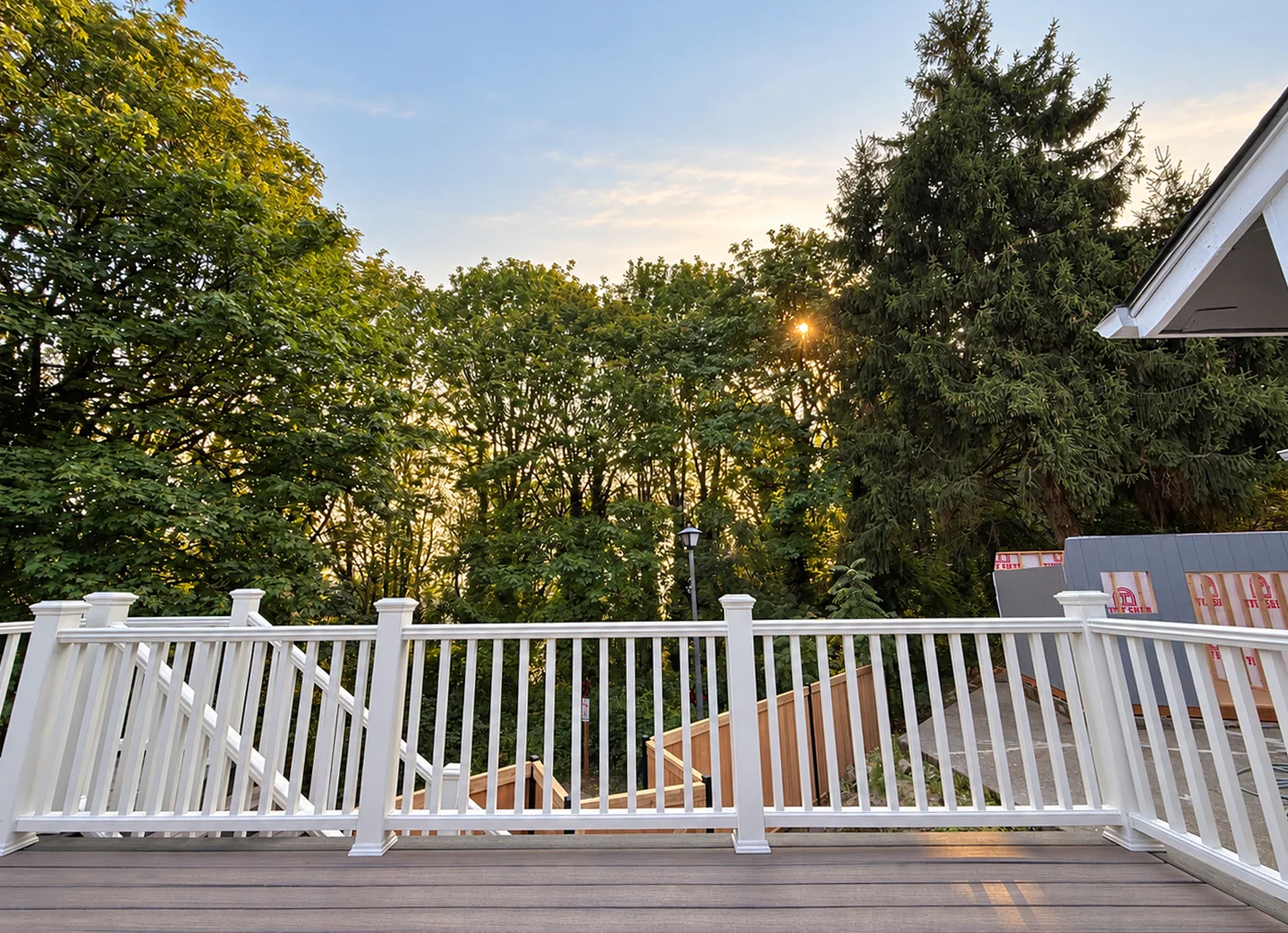
For this deck replacement in Tukwila, our team replaced a rotted, 250-square-foot wooden deck with Trex Transcend decking and matching composite railing. This project illustrates a wood-to-composite upgrade, not a comparison of cedar and pine fence performance.
Cedar vs. Pressure-Treated Fence Maintenance
Allowing cedar to weather naturally can mean less maintenance than preserving its original color through regular staining. It still needs cleaning and inspection. For cedar, choose an exterior coating suitable for exposure to the elements. For either material, follow the coating manufacturer’s preparation and recoating instructions to help protect the surface.
| Maintenance factor | Cedar fence | Pressure-treated pine fence |
| Routine care | Inspect and clean as needed | Inspect and clean as needed |
| Preserving appearance | Use a suitable UV-protective finish to help retain color | Choose a compatible exterior finish |
| Before finishing | Follow the product’s surface and moisture requirements | Follow the product’s surface and moisture requirements |
| Recoating | Base timing on finish condition and manufacturer guidance | Base timing on finish condition and manufacturer guidance |
Cedar vs. Pressure-Treated Fence Cost
For homeowners planning a new fence, comparing equivalent quotes helps separate material savings from the total project cost. Request the same height, length, and gate layout, with the lumber grade and post specifications clearly listed. Check whether removal, disposal, finishing, and difficult access are included. Before you decide, also consider the long-term upkeep of your chosen finish.
Our consultation and design process explains how we move from discussing your ideas to preparing a project quote and specifications.
Can You Combine Cedar and Pressure-Treated Wood?
Yes. A hybrid fence design can use pressure-treated wood for posts and cedar for visible components such as pickets and boards.
This combines cedar’s appearance and natural durability with posts treated for ground contact. Specify fasteners compatible with both materials.
Which Fence Material Is the Right Choice for Your Home?
Choose pressure-treated pine if:
- You have a tighter budget;
- You need to cover a large area;
- You want a practical material for different fence designs;
- The initial installation cost is your main concern.
Choose cedar if:
- You prefer a warm, natural appearance;
- You want natural resistance to rot and insects;
- You are comfortable with a higher upfront cost.
A hybrid cedar and pressure-treated fence may also be a practical option when you want to balance appearance, durability, and budget.
Planning a cedar fence in the Seattle area? Schedule a consultation with our team at Olympic Decks to discuss your layout, design preferences, and budget and request a quote for your property.
FAQ
Does pressure-treated pine need to be stained?
Not necessarily. Staining is a finishing choice, not the source of pressure-treated pine’s preservative protection. If you apply a finish, follow its instructions for wood moisture, preparation, and recoating.
Does cedar fencing require maintenance?
Yes. A properly maintained cedar fence needs cleaning and checks for loose fasteners, damaged boards, and other signs of wear and tear. Keep soil, mulch, and debris away from the boards. To help preserve the color, choose a suitable UV-protective finish; a clear water repellent alone may still allow graying.
Is pressure-treated pine cheaper than cedar?
Pressure-treated pine may have a lower upfront material cost, but compare installed quotes with matching specifications. Fence height, posts, gates, access, and removal work can change the total.

Olympic Decks is your Seattle area Deck Company, We specialize in all your Decking needs – new deck installation, deck resurfacing, louvered roof and cedar wood fence installation.