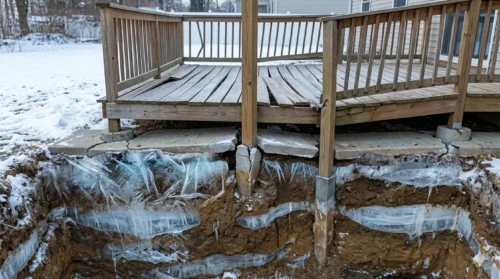
Deck restoration warning signs Seattle homeowners notice are usually easy to explain away. One board feels soft, the stain looks tired, a railing moves a little, or mildew keeps coming back after every wet week. The deck still works, so the problem gets pushed to later.
That is where older decks can get expensive. In Seattle, moisture has a way of turning small deck repair issues into larger repairs if the frame, boards, or fasteners are already weak. At Olympic Decks, we look at the deck’s condition first, then help homeowners decide whether deck restoration, deck resurfacing, or a new deck makes the most sense.
Quick Deck Repair Answer: When the Deck’s Condition Should Worry You
The deck’s feel can matter more than its appearance. If the surface feels soft, railings move, fasteners pop, boards show damage, mildew builds up heavily, or rot is visible, the deck should be checked before it gets more use.
Minor repairs may be enough when the damage is limited to a few boards, screws, or railing connections. Deck resurfacing is usually the better fit when the surface and railing are tired, but the frame is still dependable. If deeper structural problems are present, waiting can cause further damage, and replacement may be safer than trying to restore the entire deck. Cost should be judged after inspection because restoration, resurfacing, and full replacement are not the same type of project.
| Warning Sign | What It Can Mean | Practical Next Step |
| Soft deck boards | Moisture damage or rot | Inspect and replace damaged boards |
| Loose deck screws | Board movement or weak fastening | Check fasteners and frame |
| Mildew and dirt | Poor maintenance or trapped moisture | Clean before stain or sealant |
| Worn stain or paint | Exposed wood surface | Sand, stain, or reseal |
| Loose railing | Safety issue | Deck repair before regular use |
| Uneven frame | Possible structural issues | Professional inspection |
Deck Boards That Feel Soft, Cupped, or Unstable
Deck boards often show the first signs of trouble on an old deck. Soft boards, cupped edges, splinters, or movement underfoot all deserve a closer look.1 A screwdriver test can help check for rot in deck boards, especially near spots where water tends to sit.
One damaged board is not automatically a structural crisis. A few damaged boards may only need deck repair and replacement. But when several boards feel weak, the frame should be inspected before anyone decides on restoration or resurfacing.
Deck resurfacing only makes financial sense when the framework is safe enough to reuse. If the frame is still sound, deck resurfacing work that can refresh an older structure can replace worn boards, posts, and railings without building a completely new deck.
Deck Restoration Starts With a Clean, Dry Surface
Deck restoration usually means cleaning, repairing, sanding, and sealing the surface again. The restoration process sounds fairly simple, but the finish is only as good as the prep underneath it.
Before stain, paint, or sealant goes on, the deck has to be clean. Deck cleaners can remove dirt and mildew. A pressure washer can help when buildup is heavier, but it has to be controlled. A garden hose may be fine for lighter maintenance, while too much pressure can rough up bare wood and raise the wood grain.
After cleaning, the deck should dry all the way through unless the product being used allows damp wood application. Small cracks may need wood filler before the final coating is applied. If a semi-transparent stain is used, the wood surface and wood grain will show more than they would with paint or heavier deck restoration products.
Deck Resurfacing Seattle: When the Frame Can Stay
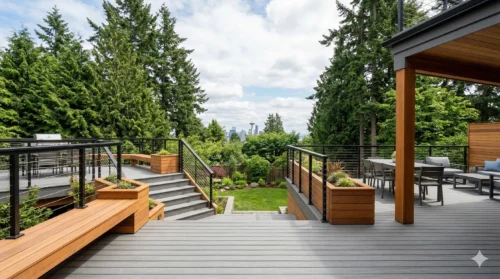
Deck resurfacing Seattle projects are usually worth discussing when the deck surface is worn down, but the frame below is still usable. If the framework can remain, homeowners may avoid the higher cost of a full replacement.
Our resurfacing process begins with a safety inspection. The crew checks joist spacing, reviews the frame, removes old deck boards and railings, makes needed repairs, checks framing hardware, and installs new materials. That inspection matters because resurfacing only works when the structure can support it safely. If not, deeper deck repair has to come first.
Material choice matters as well. Pressure-treated wood is affordable, but it needs regular maintenance. Western Red Cedar has natural rot resistance, though it still needs frequent care in wet climates. Capped composite and PVC are often recommended for Seattle because they offer durability with less upkeep. For many resurfacing projects, weather resistant materials can make the deck easier to maintain year after year, especially when moisture is the main concern.
Deck Screws, Popped Nails, and Fasteners That Will Not Stay Put
Loose deck screws, popped nails, and boards that keep shifting can mean the deck is moving more than it should. On older Seattle decks, we often see this around high-traffic stairs, exposed edges, and areas where water sits longer after rain. That is not just annoying. It can be a sign that the surface problem is connected to something deeper.
Sometimes minor repairs are enough. A crew may secure boards or replace fasteners. But if the same areas keep loosening, deck builders need to inspect the frame, joists, and support system. Level joists are especially important before installing composite decking because uneven framing can affect the finished surface.
That is why experienced deck builders do not go straight to stain or new boards. They find out what is happening underneath first.
Deck Cleaners, Mildew, and Pressure Washing Mistakes
Mildew may be expected on older decks in the Seattle area, but it is not something to ignore. Dirt, mildew, and moisture can make the deck slippery and make damaged boards harder to spot.
Cleaning is essential before any stain or sealant goes down. Deck cleaners can prepare the wood, and pressure washing can help clear heavier buildup. The mistake is thinking pressure washing is the restoration. It is not. It is only part of the prep.
A rushed job can trap moisture in the wood, leave dirt in the grain, or seal mildew beneath the coating. That can lead to peeling, uneven stain absorption, and more damage over time. The better process is straightforward: clean, inspect, repair, sand where needed, let the deck dry completely, and then apply stain or sealant. Some finishes may need a second coat for better coverage and UV damage protection.
Minor Repairs, Deck Resurfacing, or New Deck?
The right choice depends on the deck’s condition, the frame, the cost, and how the homeowner wants to use the outdoor space. A deck that only has surface wear is different from a deck with structural issues, and a failed frame may point toward full deck installation instead of another surface-level fix.
| Option | Best For | What It Usually Involves |
| Deck restoration | Faded surface, mildew, worn stain | Clean, sand, repair, stain, seal |
| Deck repair | Localized damage | Replace damaged boards or fix railing |
| Deck resurfacing | Sound frame with worn boards | Replace boards, posts, railings, surface |
| New deck | Failed frame or major redesign | Full replacement and new installation |
Real Seattle Example: When Replacement Made More Sense
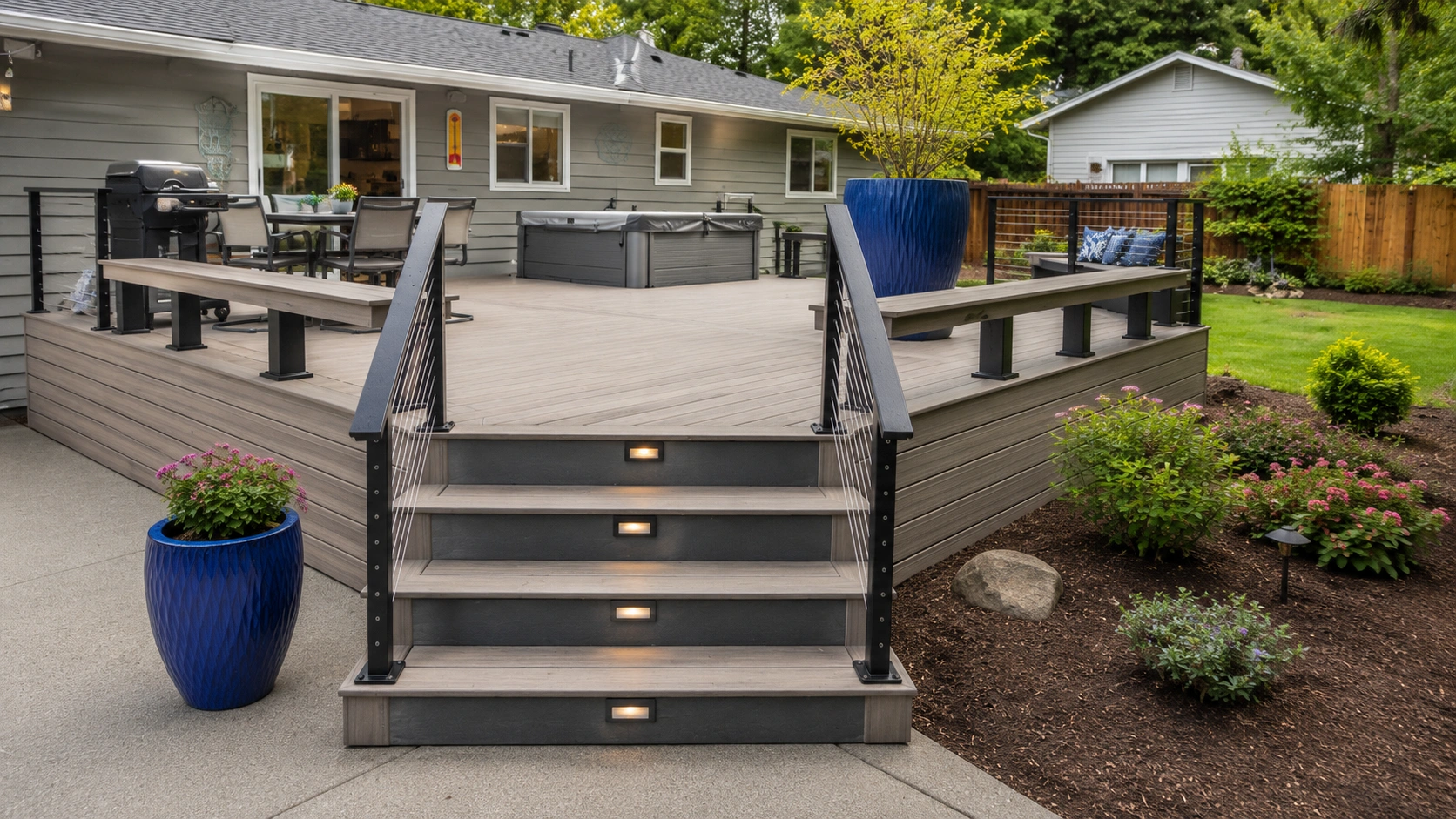
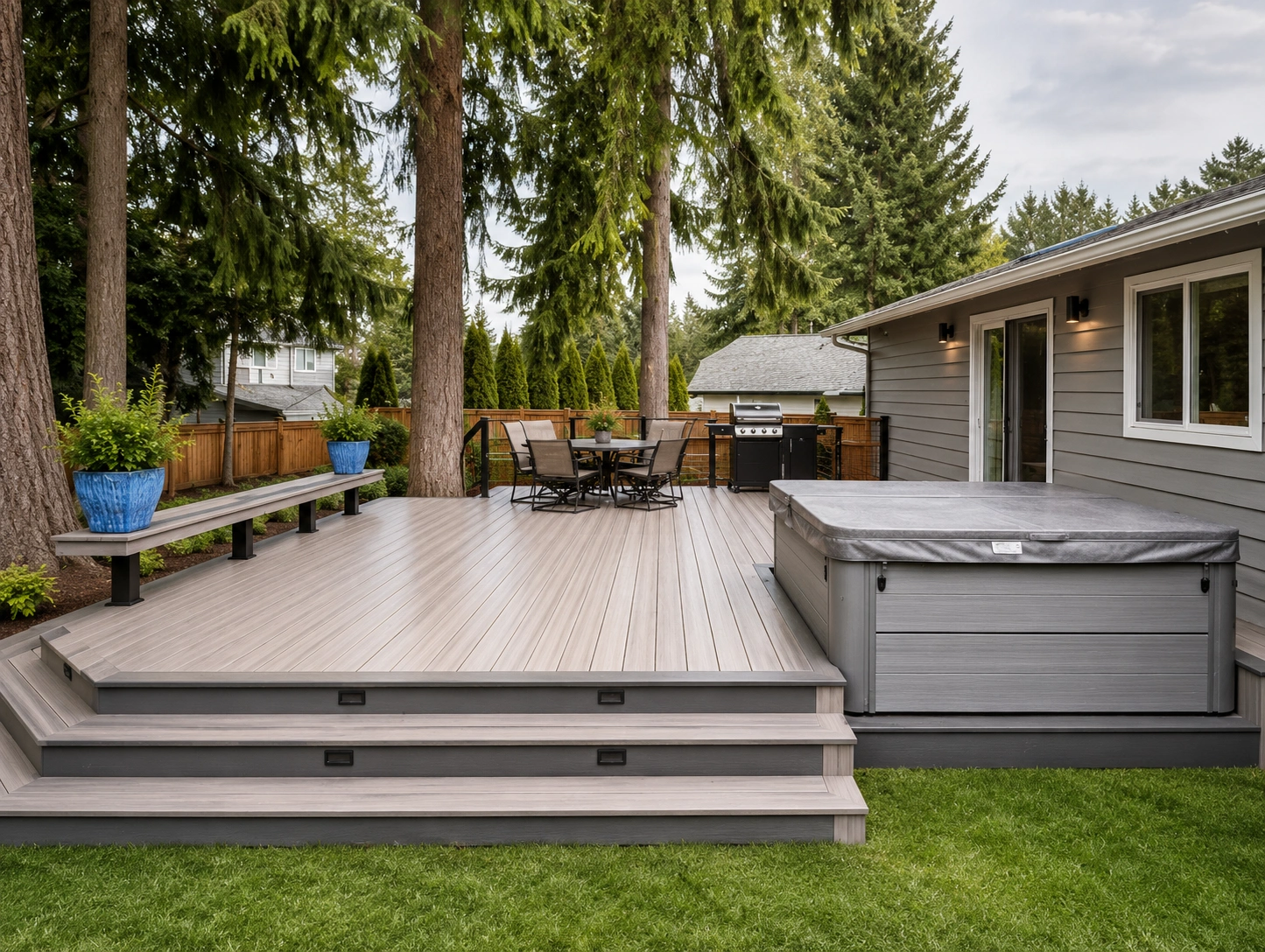
A recent composite deck installation in Seattle, WA shows why inspection comes before choosing restoration or resurfacing. The existing cedar deck was about 25 years old and falling apart, so patching the surface would not have solved the real problem. The old deck was fully removed and replaced with a 364 sq. ft. ground-level deck using Trex Transcend decking in English Walnut, black cable railing, step lights, built-in benches, and a dedicated hot tub platform.
The project took 5 days with a 3-person crew. The result was a safer, cleaner outdoor living space with better access, lower maintenance, and a layout that worked better for everyday backyard use.
Deck Restoration Cost, Timeline, and What Affects the Result
The final cost can shift quickly once the deck is inspected. Materials, labor costs, repairs, access, frame condition, installation scope, weather, and permit needs can all affect the result.2 Timeline should also be confirmed after inspection because a clean-and-stain project is very different from resurfacing a raised deck with framing repairs. If the crew finds rot, uneven joists, or structural integrity concerns underneath, the labor side of the project can increase.
Damaged Boards on a Raised Deck Need Faster Attention
Raised decks need a little more caution because safety depends on more than the walking surface. The frame, posts, stairs, railings, and connections all have to work together.
If a raised deck has soft boards, loose railings, or visible movement, it should be inspected before anyone assumes resurfacing is enough. For homeowners thinking about planning a raised deck safely above the yard, the structure should come before finishes, benches, stain colors, or a roof upgrade.
Applying joist tape can help seal moisture out and protect the framework from rot. That kind of detail can support longevity, especially in a wet climate where water tends to sit around framing connections.
What Deck Builders Check Before Changing an Older Layout
A lot of homeowners use deck restoration as the moment to rethink the layout. Maybe the stairs sit in the wrong place. Maybe the backyard would work better with benches. Maybe the deck does not connect well to the house anymore.
That is reasonable, but the inspection should come first. Before moving stairs or changing the footprint, review what to check before changing an older deck layout. The crew needs to evaluate the frame, support system, railing needs, materials, and local building regulations before treating resurfacing as the answer.3
Licensing and insurance should be checked too. Good deck builders should be clear about the process, honest about the repairs, and practical about whether restoration, resurfacing, or replacement makes the most sense.
Why the Right Deck Builders Matter
For an older deck, restoration is not only about cleaning and staining. The crew has to inspect the deck, understand its real condition, make repairs, and protect the structure from additional damage.
A resurfaced deck can make the outdoor space safer, cleaner, and easier to maintain. It may also improve buyer appeal and reduce waste by reusing a sound frame instead of replacing the entire deck. But that only works when the structure is strong enough to keep.
Cosmetic paint over weak wood is not restoration. A careful job starts with the deck’s condition and ends with the right repair, resurfacing, or replacement plan.
FAQ
What are the main deck restoration warning signs Seattle homeowners should watch for?
Watch for soft deck boards, damaged boards, mildew, popped fasteners, loose railings, rot, splintering, and areas that feel unstable. These signs should be checked before the deck gets heavy use.
Is deck resurfacing cheaper than building a new deck?
Deck resurfacing can be more cost effective when the frame is sound because it can reuse the existing framework. Provided cost notes say resurfacing in Seattle may be 40-60% cheaper than replacement, but that claim needs source verification.
When is deck repair enough?
Deck repair may be enough when the damage is limited to a few boards, loose deck screws, minor railing issues, or small surface problems. If the frame or support system is affected, the project needs a deeper inspection.
Can deck restoration fix rot?
Deck restoration can help with surface wear, cleaning, sanding, stain, and some repairs. Rot must be removed or repaired properly, especially if it affects the boards, frame, stairs, or structural integrity.
Should I choose wood or composite for deck resurfacing?
Wood can work, but it needs regular maintenance. Composite and PVC materials are often better for homeowners who want low maintenance and stronger moisture resistance in Seattle’s wet climate.
How long should a deck dry before stain?
The deck should dry completely before stain, paint, or sealant unless the product specifically allows application on damp wood. Drying helps the finish bond better and protects the surface.
What should deck builders inspect before resurfacing?
Deck builders should inspect the frame, joists, fasteners, railings, stairs, damaged boards, moisture signs, rot, and overall safety. That inspection helps determine whether deck repair, deck resurfacing, or replacement is the right job.

Olympic Decks is your Seattle area Deck Company, We specialize in all your Decking needs – new deck installation, deck resurfacing, louvered roof and cedar wood fence installation.