How To Build Deck Stairs: The Smart Way
Deck stairs are a vital component of any raised or multi-level deck. They not only provide safe and convenient access but also enhance the overall appearance of the deck. At Olympic Decks, a leading name in the Seattle deck industry, we know how important it is to build deck stairs that are safe, functional, and visually pleasing. In this blog, we share our expertise in teaching DIYers everywhere how to build deck stairs the right way and provide an overview of the costs involved in the deck building process.
Importance of Well-Built Stairs: How to Attach Stairs for Maximum Stability
Stairs must handle constant traffic and withstand the elements, making their construction a critical aspect of deck design. Well-built stairs ensure safety, preventing accidents and injuries. They also contribute significantly to the deck’s visual appeal, offering a seamless transition between the deck and the surrounding landscape. Here is a step-by-step guide to building deck stairs:
Step 1: Design and Planning
Begin with precise measurements to ensure safety and comfort in your deck stair design. Decide where your stairs will end, aiming for a stair angle between 30° and 38° for best comfort and code compliance. Use a straight board extended from the deck frame over the proposed landing point to measure the total rise directly down to the ground. This measurement is crucial as it determines the vertical distance your stairs need to cover, influencing their comfort and usability. Use marking paint to outline your layout before any cuts are made. Before starting construction, check local building permits and regulations to confirm compliance.
Step 2: Determine the Number of Risers
Calculate the number of stair risers by using the total rise measurement and marking a piece of wood at 7 ¾-inch intervals — the typical maximum stair rise per step according to most building codes. Count these intervals to estimate the required number of steps, rounding to the nearest whole number for accuracy. This simple formula is the key to figuring out how many steps for a 4 foot high deck or any custom height you encounter. Remember, the deck surface acts as the top tread, so subtract one from the total number of stair treads to determine the number of treads needed. A story pole can help maintain consistent measurements throughout the build.
Step 3: Choosing Materials
Select materials that complement your decking for a cohesive aesthetic. Pressure treated lumber is a popular choice for its durability and resistance to decay and pests, ensuring longevity. Alternatively, consider composite materials for a modern look and minimal maintenance. These materials are resistant to weathering and can retain their appearance over time without the need for frequent upkeep. Always use corrosion-resistant or stainless-steel fasteners rated for exterior use, and follow all manufacturer’s recommendations when choosing fasteners and coatings for optimal results.
Step 4: Cutting Deck Stair Stringers
The deck stringer is the backbone of your stairs and must be accurately cut for stability. Use a framing square and speed square to mark your rise and run, drawing a clean diagonal line along the board. For wider steps, consider using one stringer for every 12 inches of stair width. Use a saw guide or cutting jig to keep cuts straight and precise. Always wear eye protection when cutting.
Step 5: Assembling Steps
Attach the deck boards as treads and fasten each bottom end securely. Use screws rather than nails for a stronger hold. Position each tread at the same height to maintain uniformity and check that the stringer flush aligns correctly against the concrete or deck landing. Use strong tie brackets for added support at connection points and double check your measurements to confirm the correct height before proceeding. Ensure each tread has at least a 10-inch minimum run and that riser heights vary by no more than ⅜ inch between steps, as required by most building codes. This is especially critical when building a 2 step deck, where even small variances are noticeable.
Step 6: Installation
Securely attach the stringers to the concrete base, using concrete anchors to hold everything firmly in place. If needed, build a small landing pad or set the base below the frost line for long-term stability. Install bottom newel posts and bottom rail sections to frame the stair railing system, following local safety codes. Anchor or bolt all posts in place using structural brackets instead of driving them with a sledgehammer, which can damage the post or compromise alignment.
Step 7: Finishing Touches
Apply a high-quality sealant to wooden stairs to extend their lifespan and enhance their appearance. This step is critical for protecting the wood from moisture and UV damage. For composite stairs, periodic cleaning with suitable products is essential to maintain their pristine condition and appearance.
Following these steps for building deck stairs like a pro will make your DIY deck stairs safe, functional, and an attractive addition to your outdoor living space.
Types of Deck Stairs
Deck stairs not only enhance the accessibility of your deck but also contribute to its overall design and aesthetic. Different types of stairs suit different deck styles and spatial considerations. Here’s a look at some common types of deck stairs and their best applications:
Straight Stairs
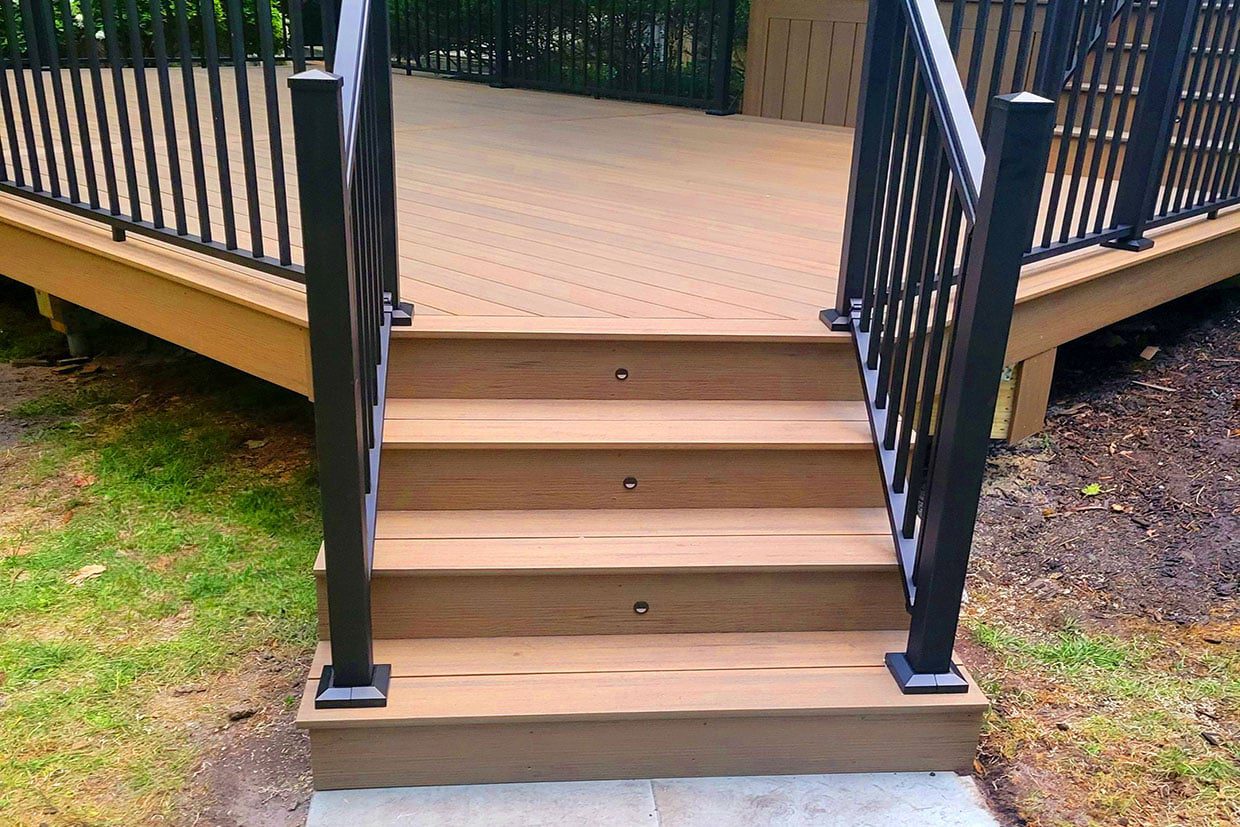
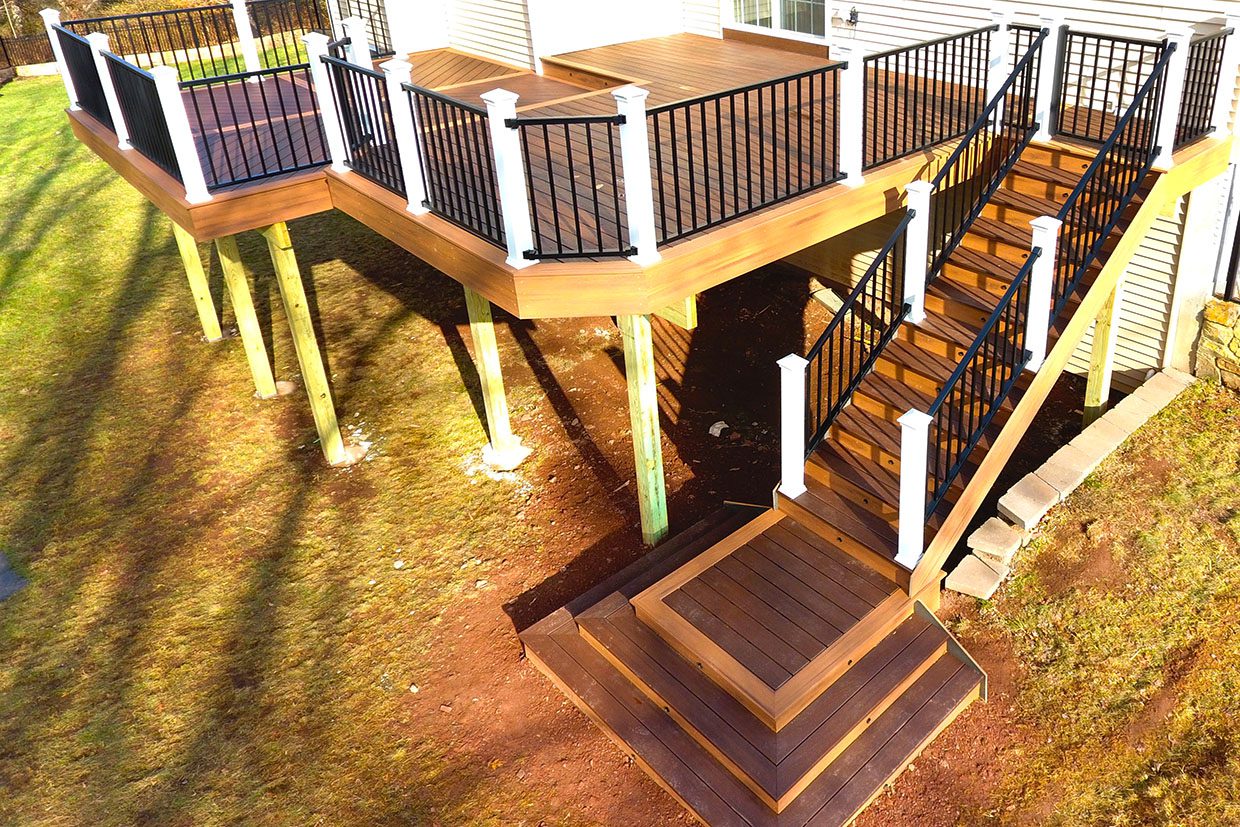
Straight stairs are the most common type of deck stairs due to their straightforward design and functionality. They provide a direct path from the deck to the ground and are relatively easy to construct. Straight stairs work well with any deck design and are ideal for decks that have ample space in front of them. They allow for easy movement and can accommodate multiple people at once, making them perfect for high-traffic areas.
L-Shaped Stairs
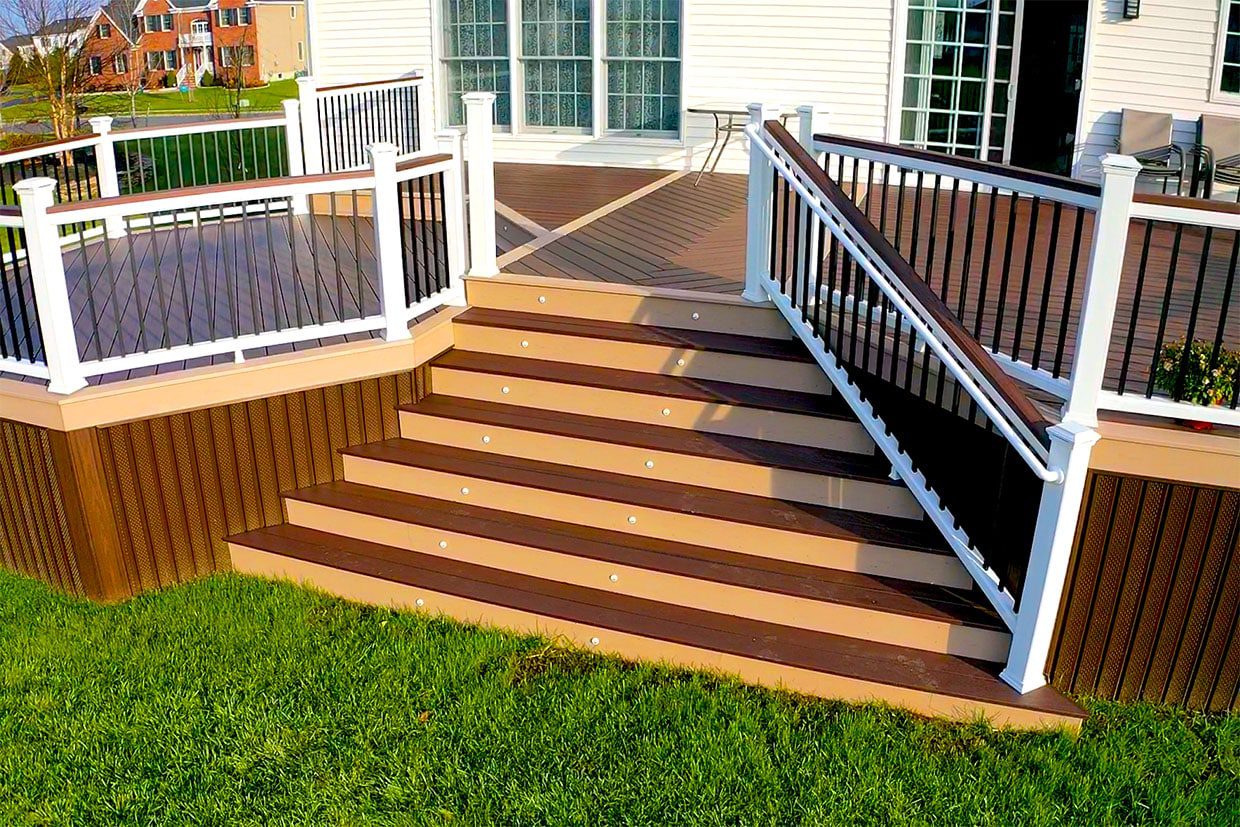
L-shaped stairs, also known as quarter-turn stairs, are a great option for decks with limited space. They feature a bend, usually at a 90-degree angle, partway down the run of the stairs. This bend allows the stairs to wrap around the deck or tuck neatly into a corner, maximizing space. L-shaped stairs can add visual interest to a deck design and are practical for connecting different levels without extending too far into the yard.
Spiral Stairs
Spiral stairs are a stylish and space-saving option for accessing higher or multi-level decks. These stairs twist around a central pole, ascending in a compact spiral form. They are perfect for decks where space is at a premium, but vertical access is needed. Spiral stairs can serve as a striking visual feature while providing practical utility, and they often require less floor space than other types of stairs.
Floating Stairs
Floating stairs, also known as cantilevered stairs, feature treads without visible risers, giving the appearance that they are floating in the air. These stairs are anchored only at one end, either at the side or the wall, which makes them look sleek and modern.
Floating stairs are an excellent choice for contemporary deck designs and are favored for their minimalistic and open-concept appearance. While they make a dramatic impact aesthetically, they are best used in low-traffic areas due to their open and less sturdy nature.
Each type of deck stair has its unique benefits and can be chosen based on both functional needs and design preferences. When planning your DIY deck stairs, consider how they will blend with your deck’s design, how much space you have available, and how they will be used to ensure you choose the type that best fits your needs.
Deck Stairs Costs & Code Requirements: What You Need to Know
Whether you’re building a new deck or renovating an existing one, adding stairs is necessary for easy access and enhanced functionality. Below, we explore the various costs associated with building deck stairs, helping you budget for this essential project. Here’s what you can expect to pay for deck stairs:
- National Average Price: In 2024, the average cost of adding stairs to a deck in the United States will be approximately $1,750.
- Typical Price Range: Most homeowners will spend between $1,380 and $2,520 to have deck stairs installed. This range depends on several factors, including the materials chosen and the complexity of the design. Be aware that you will see a higher cost to build exterior stairs with landing features due to the additional structural framing and concrete work required.
- DIY vs. Professional Installation: If you choose to undertake the project yourself, you might save significantly on labor costs, which can account for 40% to 60% of the total project expense. For the same setup, materials alone could cost between $552 and $1,512. However, DIY projects require a good understanding of construction techniques to ensure safety and durability. Otherwise, you could end up paying even more for your mistakes.
Always verify your measurements and materials align with local building codes before beginning construction. In Seattle, these regulations are governed by the Seattle Department of Construction & Inspections (SDCI), which follows the International Residential Code (IRC) with some local amendments.
Failing to meet code can result in costly corrections, failed inspections, or unsafe stairs. To ensure compliance, consider consulting a professional deck builder like Olympic Decks, who will ensure every element — from your deck landing to your stair railing — meets both safety and aesthetic standards.
Why Choose Olympic Decks for Your Deck Stairs
At Olympic Decks, we pride ourselves on craftsmanship and attention to detail. We guide you through the entire process, from planning and design to choosing materials and construction. Our team of deck stair installers will make sure that your deck stairs are not only safe but also a beautiful addition to your home.
Contact Olympic Decks today to discuss your deck stair needs. Let us help you build stairs that are safe, durable, and perfectly match your deck’s style. With our expertise, you can enjoy a seamless transition to and from your outdoor living space.

Olympic Decks is your Seattle area Deck Company, We specialize in all your Decking needs – new deck installation, deck resurfacing, louvered roof and cedar wood fence installation.