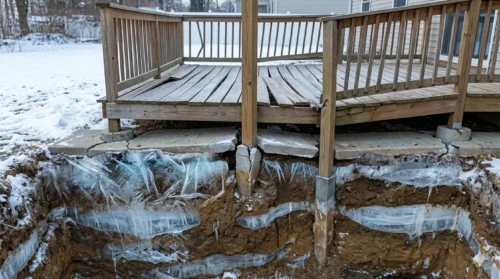
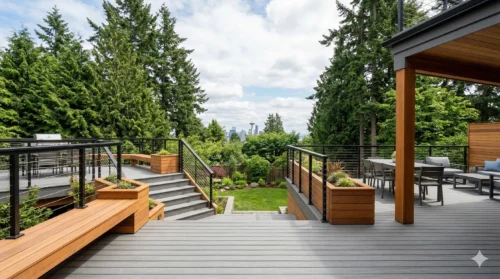
Deck resurfacing is easy to miss when a deck starts to look dated. Many homeowners immediately think bigger: a new layout, wider stairs, a lower lounge zone, or one of those 2-level deck designs that can make the whole backyard feel more complete. Sometimes that kind of upgrade makes sense. Sometimes it is more work than the deck actually needs.
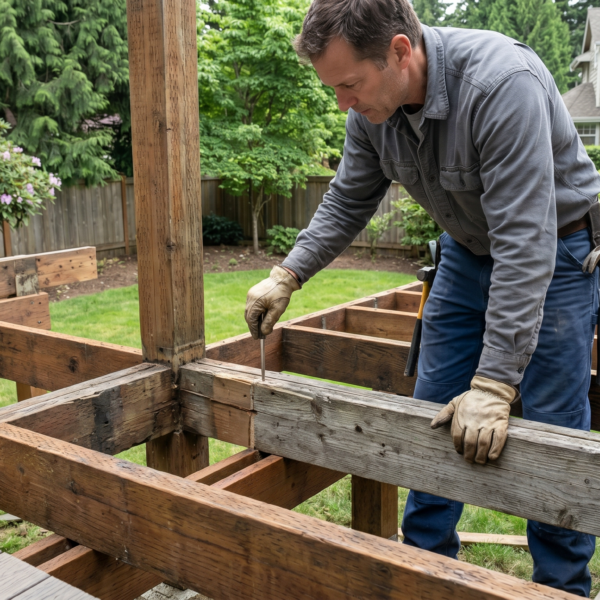
At Olympic Decks, the first question is usually less exciting and much more useful: is the frame still worth building on? If the posts, beams, joists, deck stairs, and railing system are still solid, deck resurfacing that starts with a closer look at the frame can refresh the outdoor living space without turning a surface problem into a full rebuild.
Before Two-Level Deck Designs, Check What Still Works
Two-level decks can be very useful in Seattle. They can make a sloped yard easier to use, keep important views open, and create a better path between the house and the yard. One level can stay open for dining and everyday use, while the lower level becomes a covered spot for sitting or relaxing.
The problem is that a second level is not a surface upgrade. It changes the project structurally and visually. Stairs, drainage, railing, framing, foot traffic, and the view from inside the home all have to be planned again.
If the current deck level still works, resurfacing may be the smarter option. New boards, better lighting, updated railing, and a safer walking surface can do a lot without forcing the homeowner into a larger rebuild. In Seattle, choosing the right material is also critical for longevity in the Pacific Northwest’s damp climate, especially when the goal is to reduce moisture-related wear instead of redesigning the entire deck.1
Deck Railing Tells You More Than You Think
Deck railing is one of the first places to look before deciding what kind of work the deck really needs. Deck railings serve the space for both practical and aesthetic reasons: they help define the edge, enhance safety, frame the view, and make the deck feel more finished.
The real red flags are movement and weak connections. If the posts are loose, the blocking is undersized or failing, the wood feels soft around fasteners, or the top rail moves when someone pushes against it, there may be a deeper structural issue. Adding a new railing style to that kind of frame does not solve much. It simply hides a problem that still needs repair.
Railings carry more responsibility than many homeowners realize. They help prevent accidental falls, shape the edge of the deck, frame the view, and make the space feel more contained. They can also showcase planters, hold accent lighting, support cocktail rails, or work near built-in benches when the deck layout is planned carefully. But the railing assembly has to be properly supported. Cable railing systems, solid materials used as a wind or sound barrier, and tall railings all place different demands on the deck, especially when homeowners want to build tall railings for privacy or wind control.
That is where inspection points that matter before changing a deck layout become important. The frame should answer the big questions before the design does.
Before choosing resurfacing, a new railing style, or a larger layout change, the inspection should usually cover:
- Posts and footings — whether vertical posts are stable, plumb, and not shifting at ground level.
- Joists and beams — whether the main framing still has enough strength for the updated surface or railing system.
- Deck stairs — whether the stairs feel solid, stay properly attached, and meet the way the deck connects to the yard.
- Railing support — whether blocking, fasteners, and posts can handle the selected railing height and material.
- Drainage and airflow — whether water can move away from the deck instead of staying trapped under the frame.
- Code-related details — whether railing height, baluster spacing, stair openings, and guard requirements match local rules.
Deck Railing Height Codes Should Shape the Plan Early
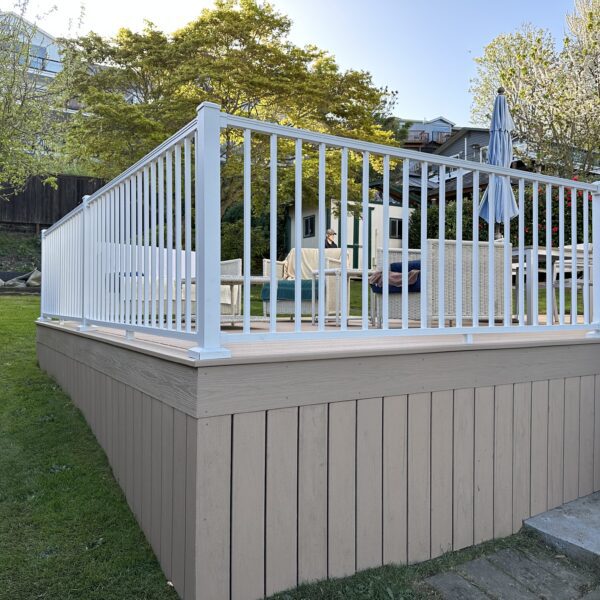
Deck railing height codes are not the glamorous part of deck design, but they can change the plan fast.
For many residential decks, railing requirements start once the deck surface is more than 30 inches above the adjacent grade or walking surface. For residential decks higher than that point, the International Residential Code generally requires guards, with a common minimum height of 36 inches from the walking surface to the top rail. When the building code refers to this measurement, it is usually measured vertically from the walking surface, not estimated from the yard or viewed from the side.
Seattle’s residential guidance also uses a 36-inch minimum height for guards and requires intermediate rail spacing to stay within a 4-inch clear opening.2 This is where standard code requires railings to do more than look finished: the system has to address specific safety concerns, including fall protection and openings that could create a child climbing or pass-through hazard.
| Code detail | Common number |
| Railing trigger height | More than 30 inches |
| Minimum guard height | 36 inches |
| Baluster opening | 4 inches max |
| Commercial or multifamily buildings | Often 42 inches |
Local building codes can vary, and local building authorities have the final say.3 Seattle, nearby cities, and different project types may have their own codes, specific building codes, and specific regulations that affect railing height, spacing, stair guards, and permit review. Some places may require taller guards, especially for commercial or multifamily buildings or other elevated structures. That is why deck railing height should be checked before materials are ordered, not after the old boards come off.
Recommended Deck Railing Height Is Not Only About Code
The recommended deck railing height starts with the height code, but it does not end there. A taller railing can make sense on the right deck.
It can improve privacy, make a high deck feel less exposed, soften the wind, and help turn an open platform into a more comfortable outdoor room. Integrated lighting solutions can also enhance safety and usability during Seattle’s dark winter months, especially when the railing system is already being updated.
Still, railing height has to be planned, not guessed. The vertical posts, fasteners, blocking, and bottom rail need to be suited to the taller system. Ensuring structural integrity matters here because a railing that looks strong from the lawn can feel loose or underbuilt when it is actually used.
On deck stairs, the details get more specific. Stair treads, the line connecting tread nosings, and the triangular space beneath the rail may all affect how the railing is measured and reviewed.
Railing Baluster Spacing Code Is a Small Detail With Real Weight
The railing baluster spacing code is one of those details people rarely think about until inspection. Balusters, also called spindles, are not there just to make the railing look finished.
They help control the size of the openings in the guard system. On many residential decks, those openings should not let a 4-inch sphere pass through, whether the railing uses vertical members, cables, panels, or mixed materials. This is the part of the code that addresses baluster spacing and specific safety concerns most directly. Stair areas may include special code provisions because triangular openings are treated differently.
This is why a particular railing configuration should be reviewed as a full system. The outside diameter of cables, spacing between rails, top rail height, bottom rail placement, and triangular openings all work together. This is also where generic how to guides can fall short, because they often explain the visible railing parts without checking whether the frame can support the system safely.
Deck Stairs Often Decide Whether Resurfacing Is Enough
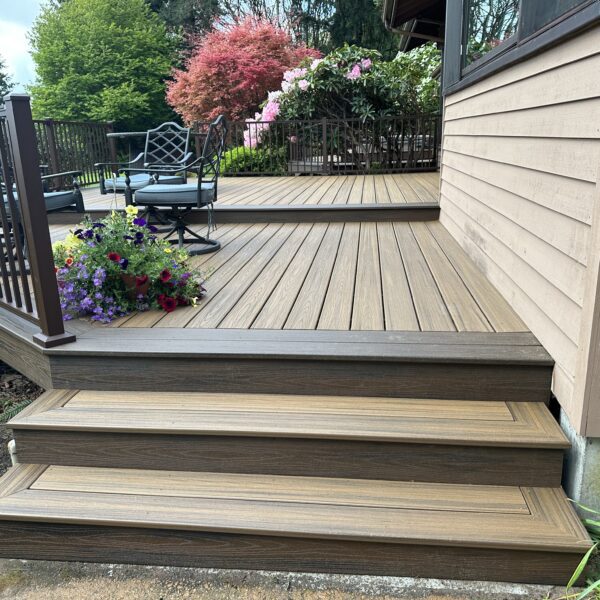
Stair condition can make or break a resurfacing plan. A solid stair structure, safe treads, and tight connections usually support the case for resurfacing.
But stairs that pull away, feel uneven, run too narrow, or depend on weak attachments can turn a surface project into a larger repair. They also influence how the raised deck connects to the yard, which affects the way the whole outdoor space works. That matters even more when the homeowner wants a lower deck or a more usable covered area below.
Under-deck drainage should be part of that conversation. A lower outdoor living space only works if rain is handled properly. Otherwise, the upper deck may look new while the area underneath still feels damp and unfinished.
Maximum Deck Height Is Not a Guess
There is no fixed maximum deck height that works for every property. The answer depends on local building rules, zoning, setbacks, structural planning, and the actual site conditions.
That is a lot to verify, but that is the point. These details should be checked early, before the project involves a height change, new stairs, a larger footprint, or a second level.
A layout change may still be the better choice. When the existing deck blocks movement, wastes part of the yard, or does not connect naturally to the house, resurfacing can only do so much. Multi-level decks and split-level deck ideas are useful when they solve a real problem with slope, access, or layout — not when they are added just to make the design look more dramatic.
When Resurfacing Is the Better Deck Project
Deck resurfacing usually makes sense when the main structure is still dependable. If the frame is strong, the layout still fits the house, and the visible problems come down to worn boards, dated railing, poor traction, or tired materials, resurfacing can be a sensible path. On decks built at such a low height that railings are not required, the same structural check still matters because boards, stairs, drainage, and framing can still fail over time.
It makes much less sense when the issues are structural. Rot in the frame, moving posts, unsafe stairs, or railing that cannot meet code without real repair, all point to a bigger problem. Resurfacing may hide those issues, but only for a while.
The right fix is not always the largest one. Sometimes the practical answer is safer decking, cleaner railing, stronger stairs, integrated lighting, and materials that can handle months of wet weather. If the structure is still sound, resurfacing can make the outdoor living space work again without changing a layout that already fits.
FAQ
When does deck resurfacing make sense?
Deck resurfacing makes sense when the frame is sound, the layout still works, and the main issues are worn boards, outdated deck railing, or surface wear.
Should I change my deck layout before resurfacing?
Not always. If the layout still supports the way the outdoor space is used, resurfacing may be more practical than adding a new level or rebuilding.
What deck railing height is usually required?
For many residential decks, the minimum deck railing height is 36 inches when guards are required. Local building codes may vary.
What are deck railing height codes based on?
Deck railing height codes are based on the height of open-sided walking surfaces above grade or the adjacent walking surface, plus the building type and local rules.
What is railing baluster spacing code?
Many residential guardrails must not allow a 4-inch sphere to pass through the openings. Stair and triangular openings may have special code provisions.
Can homeowners build railings taller than code requires?
Yes. Many deck owners choose tall railings for privacy, wind control, safety, or style. The railing assembly still needs proper support.
Do decks lower than 30 inches require railings?
Under common IRC guidance, decks less than 30 inches above grade generally do not require railings. Some homeowners still add them for comfort or design.
Why check deck stairs before resurfacing?
Deck stairs affect safety, access, and code compliance. If they are weak, uneven, or poorly connected, resurfacing alone may not be enough.

Olympic Decks is your Seattle area Deck Company, We specialize in all your Decking needs – new deck installation, deck resurfacing, louvered roof and cedar wood fence installation.