Do you need a permit to replace deck boards in Seattle? Not always. Like-for-like surface replacement may qualify as minor repair, while work involving joists, beams, posts, footings, or other load-bearing components can require a permit. Seattle and unincorporated King County also use different thresholds, so the property’s jurisdiction matters.
Olympic Decks checks joist spacing and framing condition before recommending resurfacing. The inspection establishes whether the existing deck needs new decking or structural work that may require a building permit.
Do You Need a Construction Permit to Replace Deck Boards?
Replacing deteriorated decking with similar material may qualify under Seattle’s limited in-kind repair guidance if no load-bearing support is affected. Minor repairs or alterations costing $6,000 or less in six months usually do not need a permit. Seattle uses the fair market value of labor and parts, including DIY labor.
The exemption is not automatic. Load-bearing work needs a permit at any cost, and environmentally critical areas can require additional review. Removing the complete walking surface can also reveal hidden damage.
When the framing remains sound and work is limited to the surface, professional deck resurfacing in Washington may preserve the existing structure.
Building Permit Rules for an Existing Deck in Seattle
Seattle requires a construction permit for a deck more than 18 inches above ground, a roof deck, or a deck in an environmentally critical area. Most decks that need approval use a subject-to-field-inspection permit; some decks require an addition or alteration permit.
That permit path applies when the structure will be more than eight feet above grade, includes beams 14 feet or longer, is a roof deck, lies in an environmentally critical area, has solid flooring without gaps, or exceeds 750 square feet.
The 18-inch threshold is not blanket permission to alter every lower platform. Load-bearing work requires a permit at any cost. A platform less than 18 inches above finished grade and not over a basement or other story may be exempt. Exempt work must meet code requirements.
Zoning rules matter when size or placement changes. Seattle restricts decks more than 18 inches above grade near a property line. A deck over 36 inches above grade can count toward lot coverage in neighborhood residential zones. Record deck size in square feet and whether it is attached to the house when planning expansion.
Why Permits Matter for Deck Repairs
Seattle lists resale value, insurance coverage for repairs, and avoiding complaints about unpermitted work as permit benefits. A permit also creates a documented record for work that must meet applicable code requirements.
Seattle vs. Unincorporated King County Deck Permit Rules
Seattle and unincorporated King County have their own thresholds. The Washington State Residential Code is not a substitute for checking the building authority responsible for the property. Across Washington State, rules can differ. Use City of Seattle guidance inside city limits and King County guidance only for unincorporated property.
| Jurisdiction | Published Guidance | What Homeowners Should Verify |
| City of Seattle | A permit is required for a deck more than 18 inches above ground, a roof deck, or one in an environmentally critical area. Load-bearing work also needs a permit. | Cost, framing, finished grade, flooring type, property-line limits, and ECA status. |
| Unincorporated King County | Uncovered decks 30 inches or less above ground appear on the county’s no-permit list. | Confirm jurisdiction and check critical areas, setbacks, flood zones, shorelines, slopes, and lot coverage. |
The 30-inch exception appears in King County’s no-permit guidance for uncovered decks in unincorporated King County. The King County exception is not a Seattle rule. Special property conditions can mean you still need a permit, so confirm the jurisdiction first.
Before treating visible damage as cosmetic, review the signs your deck needs structural repair and have the framing checked.
When Deck Board Replacement Becomes Structural
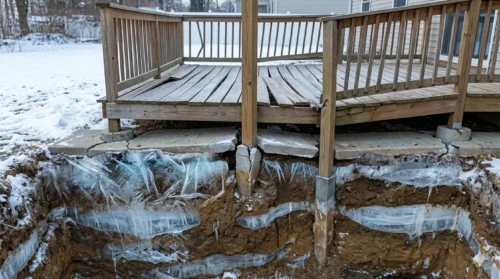
A surface replacement becomes structural when it reaches supporting elements or changes load transfer to the house and ground. Examples include:
- replacing joists or beams;
- changing posts, concrete footings, or other foundation supports;
- altering the ledger connection where the deck is attached to the house structure;
- rebuilding stairs or railings when their supports or configuration change;
- increasing size, changing height, or modifying the layout;
- converting gapped decking to a solid, gap-free surface.
Seattle identifies support and attachment as safety standards. Its building guidance addresses ledger connections, guards, and stairs. A contractor should verify permit requirements before those systems are installed or concealed.
Resurfacing, Repair, Restoration, or a New Deck?
These terms should describe the work, not serve as interchangeable marketing labels.
| Project Type | Practical Meaning | Permit Question |
| Resurfacing | Replacing the walking surface, and possibly railings, while retaining sound framing. | Check whether hidden damage expands the work. |
| Repair | Correcting a defined surface or structural problem. | The component matters more than the label. |
| Restoration | Combining surface renewal with repairs to an older deck. | Separate exempt work from items that require permits. |
| Full replacement | Removing the surface, railings, framing, and supports. | Verify construction plans, permit, and inspections. |
A framing assessment should decide whether to resurface or fully replace your deck. The condition of the structure matters more than surface appearance.
Deck Permit Decision Table
| Project Scope | Permit May Be Required? | What to Verify |
| Replace several surface pieces | Sometimes not | Fair-market cost, jurisdiction, ECA status, and absence of structural changes. |
| Replace the entire surface | Depends on the project | Framing condition, railings, flooring type, and any hidden damage. |
| Repair joists or beams | Usually requires review | Load-bearing work, current building code, connections, and required inspections. |
| Change size or layout | Likely yes | Setbacks from each property line, plans, lot coverage, attachment, and concrete footings. |
| Complete rebuild | Yes in most cases | Construction drawings, site plan, deck permit, plan review, and inspections. |
The Permit Process, Plan Review, and Final Inspection
When the work may require a permit, use this sequence:
- Confirm whether the property is in Seattle or unincorporated King County and check whether Seattle’s environmentally critical area requirements apply to the site.
- Define what stays and what changes, including decking, guards, stairs, framing, posts, and footings.
- Ask the building department which construction permit and local code apply.
- Prepare required plans. These may include a site plan and construction drawings showing location, total square feet, building connections, and structural details.
- Complete plan review or field-inspection steps. Schedule required inspections before work is concealed and a final inspection when required.
The estimate should say whether the homeowner or contractor will pull the permit, prepare plans, answer comments, pay fees, and schedule inspection. Olympic Decks can help with necessary plans and permits, but responsibilities should remain explicit. Clear ownership helps keep the project moving.
What to Verify Before Signing a Deck Estimate
Ask the contractor to document:
- the correct city or county jurisdiction for the property;
- whether the written scope is limited to deck boards or includes structural repair;
- the condition of joists, beams, posts, footings, and the ledger connection;
- whether stairs or guards will be repaired or reconfigured;
- whether the new surface will retain drainage gaps;
- who handles the application, plans, fees, corrections, and inspections;
- how hidden damage will be approved before extra work begins;
- which materials and building code details will be installed.
A contractor should not decide permit requirements from height alone. Condition, cost, location, and jurisdiction all matter.
Schedule a Deck Inspection and Resurfacing Estimate
If your deck has worn decking, start with an inspection. Olympic Decks checks joist spacing and framing condition, identifies needed substructure repairs, and determines whether resurfacing is viable. Request an estimate before demolition.
Frequently Asked Questions
Do I need a permit to replace a few deck boards in Seattle?
Possibly not. Limited in-kind repair may proceed without a permit when supports are untouched, but the $6,000 limit, fair-market cost, location, and ECA status still matter.
Does replacing every deck board require a building permit?
It depends. Surface replacement may remain nonstructural, but cost, flooring type, and hidden damage can change the answer.
Does Seattle use the 30-inch deck exception?
No. Seattle publishes an 18-inch threshold for building a deck. Unincorporated King County separately lists uncovered decks 30 inches or less above grade among work that may not require a permit.
What happens if board removal exposes damaged framing?
Pause before replacing joists, beams, posts, footings, or other supports. The additional work may require a permit even if the estimate covered only the surface.
Who should pull the deck permit?
The estimate should assign responsibility to the homeowner or contractor and identify who prepares plans, pays fees, answers plan-review comments, and schedules inspections.

Olympic Decks is your Seattle area Deck Company, We specialize in all your Decking needs – new deck installation, deck resurfacing, louvered roof and cedar wood fence installation.