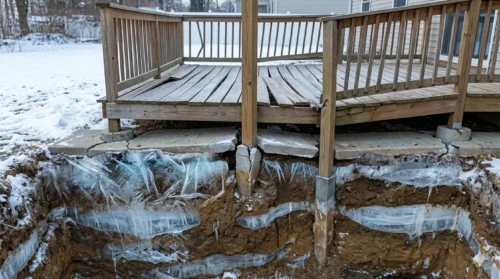
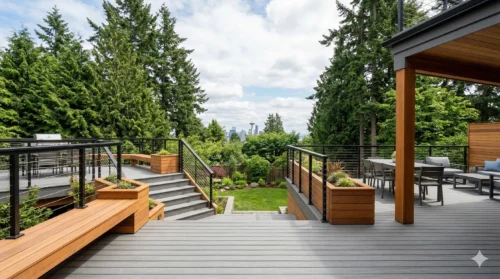
The best way to stain deck boards that already look weathered is not to reach for a brush first. It is to slow down and look at what the deck is actually telling you.
Faded color is one thing. Soft boards, raised grain, cracked edges, loose fasteners, and dark spots that stay damp are different problems. A wood deck can look tired and still be worth staining. It can also look “just old” from the house and turn out to be too far gone once you check the surface closely.
At Olympic Decks, we usually treat staining as part of the bigger picture. The outdoor space still has to feel safe, usable, and finished after the sun sets. That means looking at the deck floor, stairs, railing, lighting, shade, and drainage before deciding whether stain is enough. If the surface wear is deeper than it looks, resurfacing may be the smarter next step.
Start With the Outdoor Space, Not the Stain Color
A deck does not age evenly. One corner may sit in shade all winter. Another part may dry fast in the afternoon sun. The area near planters often holds moisture longer. Stairs, edges, and the path from the house usually take more wear than the quiet corner behind the seating.
That is why color alone can be misleading. A dark brown stain may cover uneven fading for a while, but it will not fix cupped boards or soft wood. Paint can hide flaws even more aggressively, which is not always a good thing.
Cleaning comes before staining, but so does judgment. A pressure wash can be useful when grime has built up, as long as the pressure stays controlled. Too much force can damage older boards. If the deck surface feels splintery, soft, or unstable, stain may hide the wear for a while, not fix it. This is where checking whether weather wear is only cosmetic matters.
Deck Lighting Changes How the Surface Looks
Deck lighting has more influence than people expect. A deck that looks even in daylight can show every patch and rough spot once the sun sets. Harsh light from one direction can make old boards look worse. A softer lighting plan can increase visibility, improve the overall ambiance, and make the outdoor space feel more comfortable after dark. It can also bring life back to a weathered deck without making the lighting plan feel overdone.
Good deck lighting should do more than look nice. It should increase visibility around stairs, railing edges, walkways, seating zones, and the route back to the house. The best setup is not the brightest one. It is the one that puts useful light where people need it, keeps the yard functional, and supports outdoor ambiance without making the space feel staged.
LED fixtures are a smart outdoor option because they use energy efficiently and perform well in cold weather.1 But in the Pacific Northwest, fixture quality matters. Powder-coated aluminum, brass, copper, stainless steel, and weather-resistant designs can handle damp conditions better than cheap metal that chips or rusts.
Overhead Deck Lighting Ideas That Work With Weathered Wood
Overhead deck lighting ideas should support the deck instead of stealing the whole scene. With weathered wood, warm light usually looks better than cool white light. Warm light can change how the whole deck reads. Gray tones soften. Stain looks richer. A warm light plan can make the outdoor space feel less harsh. That detail matters because deck lighting changes the way every finish looks. Gray can turn cold. Dark stain can feel heavy. Shadows can make the whole space less inviting.
A warm white range of about 2700K to 3000K usually gives the deck a soft glow and a more natural feel. It works with wood, planting, and evening seating without making the space feel harsh. Cooler light has a place in task areas, but on a compact deck or patio, it can feel too bright for relaxation.
Pendant lights can add a sophisticated touch above a dining table, especially when there is a covered section overhead. A pergola, roof, or porch cover gives the fixture a better setting and can enhance the overall ambiance without making the deck feel too formal. Still, the light needs to be outdoor-rated and protected from direct exposure if rain or heavy moisture can reach it.
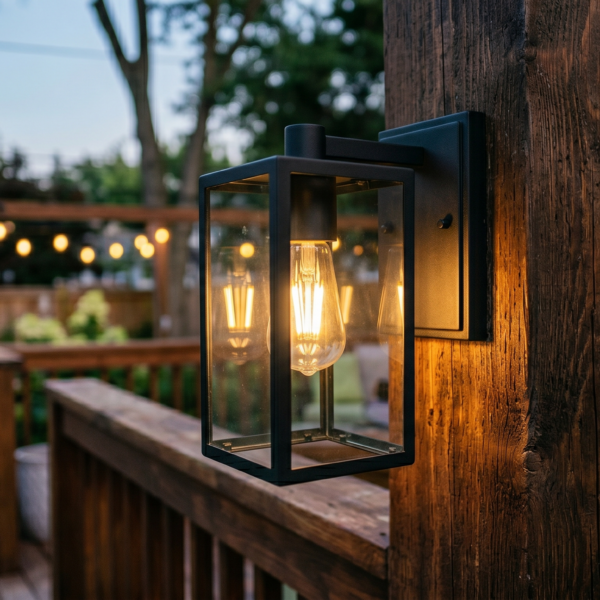
String Lights Are Easy, but Placement Still Matters
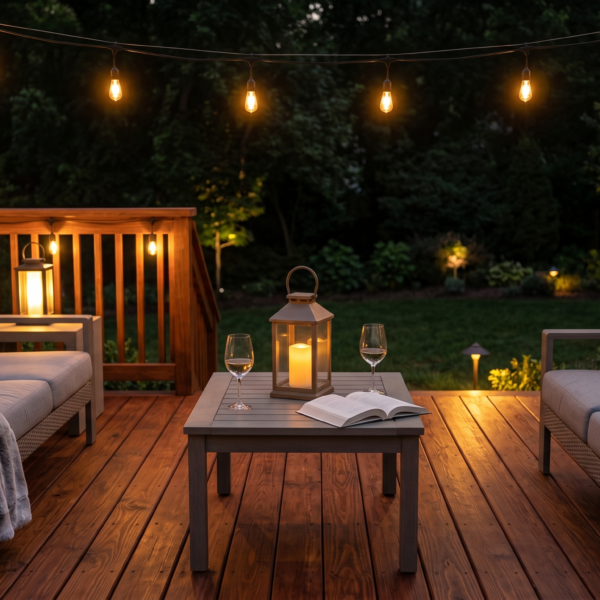
String lights are popular for a reason. String lights are one of the easiest ways to create instant ambiance without overbuilding the lighting plan. They are stylish, flexible, and quick to place in the right areas at a reasonable price. For many decks, that is the best bang for the price.
The catch is restraint. Too many strands can make a small deck feel visually crowded. A better plan follows the shape of the space: along a railing, above a seating area, across a covered patio, or between the house and a sturdy post.
Edison-style bistro lights add a warmer, more familiar backyard character and can double as a stylish detail above a seating area. Smaller LED string lights feel quieter and can work better on a tiny house deck, narrow back deck, or compact outdoor space. The goal is not to turn the deck into a display. It is to make it easier to relax after sunset.
Pendant Lights, Lantern Lights, and Tiny House Small Deck Ideas
Small deck ideas have to respect floor space. If every inch matters, lighting should not get in the way of chairs, side tables, plants, or access to stairs.
Pendant lights work when the deck has overhead structure. Lantern lights are more forgiving and can suit different occasions without changing the whole setup. Lanterns can follow the way people actually use the deck. Dinner at the table? Place them there. Conversation moves to the seating area? Move the lanterns, too. They can also hang from hooks or sit near steps and corners where a little extra light helps. Battery lanterns are useful when running wiring does not make sense, especially when the goal is a functional lighting layer rather than a permanent fixture.
Candle-style lanterns bring atmosphere, but they are not carefree. Open flames around wood, wind, pets, and outdoor furniture need real caution.2 Citronella oil lanterns can work as decorative outdoor pieces for different occasions, but they should not be treated as the main lighting source. They add mood and a stylish accent, but they do not provide reliable step or walkway visibility.
Deck Lighting That Helps People Move Safely
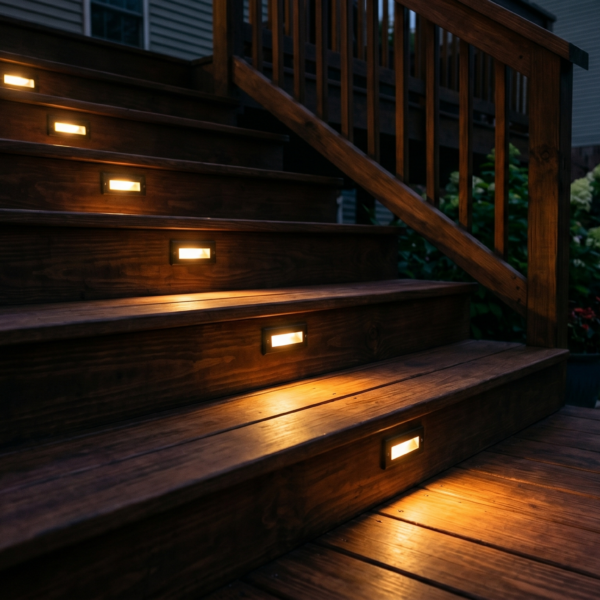
Some lighting should be mostly invisible until you need it. Stair riser lights, pathway lights, and in-floor fixtures fall into that category.
Stair riser lights are small LED fixtures installed into the risers of deck steps. They help illuminate the tread area and reduce the chance of missing a step at night. In-floor lighting can guide people across the deck floor without adding bulky fixtures. Pathway lights are helpful when the deck connects to a garden, patio, side yard, or walkways.
| Lighting choice | Useful number | Best use |
| Warm LED color | 2700K to 3000K | Softer ambiance on dark, rainy nights |
| Low-voltage LED system | 12V | More consistent brightness than many solar options |
| Outdoor protection rating | IP65 or higher | Better protection against dust and water jets |
| Stair riser lighting | 1 light per step zone | Helps brighten stairs and edges |
Low-voltage options are usually more dependable than solar, where cloudy weather is common. Solar lights can still work for decorative garden edges or a patio border, but they are not always the right choice when safety, maintenance access, and dependable visibility are the goal.
Do Not Install Lighting Over Problems You May Replace
Here is the part people skip: lighting should not be installed into boards that may need to come out soon.
Recessed lights, in-floor fixtures, and stair lighting all require planning. Once holes are cut and wiring is placed, changing the deck surface becomes more complicated. If resurfacing is likely, lighting should be planned at the same time as the new boards.
Staining works the same way. If the deck is nearing replacement, a fresh coat may make it look better for a season, maybe less. It does not strengthen soft boards or repair the structure below. Deck lighting can improve ambiance, but it will not solve rot, unstable stairs, or a railing that moves.
A Better Deck Design Works After Sunset Too
A good deck design does not disappear after dark. It still needs to make sense.
Light the stairs first. Then the edges. Then the dining or seating area. Keep access points bright enough to use comfortably. Let plants, planters, garden beds, and decorative corners stay softer unless they are meant to be a focal point.
On a small deck, this can make the space feel larger. Not because the deck changed size, but because the eye understands where to go. The backyard feels connected. The house feels closer. The outdoor space becomes useful for more than daylight hours.
Stain, Resurface, or Rebuild?
Stain makes sense when the boards are still in decent shape. It can bring back color and give the surface more protection. If the boards are too worn but the frame underneath is still strong, resurfacing may give the deck a better reset. The next question is material choice, because cedar, composite, and PVC all age differently once rain, shade, and daily foot traffic are part of the picture. For a closer look at how these options compare, see Olympic Decks’ guide to cedar, composite, and PVC decking choices. Weak structure? That is a different problem. Surface fixes will not carry it.
The deck should be checked in the right order. Inspect first. Clean next. Test the wood before committing to stain. After that, lighting should follow the way people actually move: across walkways, around seating, along railings, down stairs, and back to the house.
It is not the flashiest approach. It is the one that keeps a weathered deck from looking good for one season and disappointing you the next.
FAQ
What is the best way to stain deck boards with weather wear?
Check the boards first. If the wood is only faded, cleaning and staining may help. If boards are soft, cracked, loose, or uneven, resurfacing may be a better choice.
Should I pressure wash a wood deck before staining?
A pressure wash can help remove dirt, but it has to be done carefully. Too much pressure can rough up older wood and make the surface harder to finish cleanly.
Can deck lighting make an older deck look better?
Yes. Deck lighting can soften rough areas, improve visibility, and make the outdoor space feel more finished. It should not be used to hide structural problems.
Are string lights good for a small deck?
Yes. String lights are one of the easiest small deck ideas because they add warmth without using floor space. Choose weather-resistant lights rated for outdoor use.
Can pendant lights be used on a deck?
Pendant lights can work on a deck when they are made for outdoor use and installed under a suitable cover. Indoor fixtures should not be used in exposed outdoor areas.
What color temperature works best for deck lighting?
Warm white light around 2700K to 3000K usually works best for a relaxing deck or backyard setting, especially in dark or rainy weather.
Are solar lights enough for deck safety?
Solar lights can help with decoration, but low-voltage LED systems are usually more reliable for stairs, walkways, and safety lighting in cloudy climates.
When should I resurface instead of staining?
Resurfacing makes sense when the deck surface is too worn for stain to perform well, but the frame is still strong enough to support new boards.

Olympic Decks is your Seattle area Deck Company, We specialize in all your Decking needs – new deck installation, deck resurfacing, louvered roof and cedar wood fence installation.