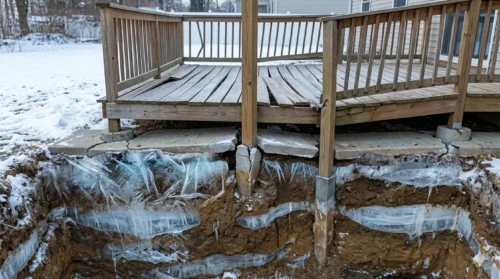
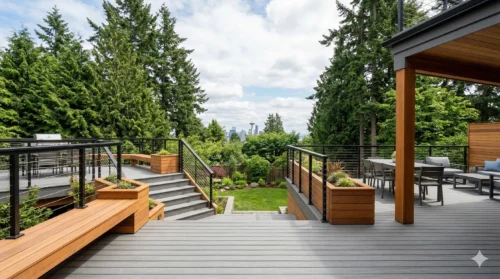
The best decking materials are not always the ones that look best in a sample board. A deck in Seattle has to deal with rain, shaded corners, moisture, soft ground near the house, wet stairs, and years of seasonal upkeep.1 That changes the conversation.
At Olympic Decks, the material choice usually starts with how the outdoor space will actually be used. A quiet wooden deck for weekend coffee does not need the same decking material as a high-traffic family deck with stairs, railings, pets, and bare feet running across it all summer. That is why building a deck around climate, use, and maintenance needs often leads to better decisions than choosing by color alone.
1. Best Decking to Use in Seattle Starts With Moisture
The best decking to use in the Pacific Northwest is the material that can handle moisture without turning into a constant repair project. Most decks here do not fail because homeowners picked an ugly color. They fail because the deck boards, fasteners, joists, railings, or stairs were not planned around damp conditions.
Seattle’s local climate makes rot, mold, slipping, swelling, and hardware corrosion more serious concerns. That does not mean every deck must be synthetic decking or that PVC or composite decking is the only reasonable answer. It does mean the decking material, deck framing, fasteners, and railings should be chosen as one system so the deck can keep its structural integrity through wet seasons. Stainless steel fasteners are also a smart choice for decking materials because standard hardware can fail faster in Seattle’s humid air.2
A dream deck is not just the one that looks good in August. It still needs to feel sturdy in February.
2. Composite Decking for Low-Maintenance Outdoor Space Planning
Composite decking has become a go-to option for homeowners who want a deck surface with less upkeep and minimal maintenance over the years. The boards are usually made from composite materials, including a combination of wood fibers and plastic, and some products include recycled material as well.3 Compared with traditional wood options, that can save a lot of maintenance time.
That does not mean composite can be ignored. It still needs cleaning, and the deck should still be inspected. But for many homeowners, skipping the regular staining and sealing required by real wood is the main appeal. For a new deck, composite can also offer strong long-term value because the upkeep is lower over the long run, especially when the owner wants consistent maintenance rather than seasonal refinishing.
The tradeoff is cost. Composite often has higher upfront costs than pressure-treated wood. Still, when staining, sealing, cleaning, and replacing boards are considered, long-term costs may look different.
3. PVC Decking When Water Exposure Is the Main Concern
PVC decking is not simply a wood alternative with a different surface. It is made from polyvinyl chloride and contains no organic wood fibers. That gives it a real advantage in damp areas, shaded decks, and places exposed to frequent moisture.
The price is usually where homeowners pause. Compared with many composite decking options, PVC often sits higher upfront. The appeal is lower long-term maintenance. PVC resists rot, does not require sealing, and is designed for constant outdoor exposure.
The material does have a different feel. Some boards can warm up in direct sunlight, and the appearance may not work for homeowners who want a convincing natural wood grain. That is where aesthetic preferences matter, especially when comparing PVC with wood-look composite or other materials.
4. Pressure-Treated Wood and Pressure-Treated Lumber
Pressure-treated wood is often the budget starting point. It is usually made from pressure-treated pine or similar lumber, and the initial cost is often lower than composite or PVC.
That does not make it the cheapest deck forever. Pressure-treated lumber can warp, check, split, or show wear faster when maintenance is ignored. It usually needs staining or sealing every few years, depending on exposure and product recommendations. In Seattle, damp conditions can make that maintenance schedule even more important.
For homeowners working with a tight budget, treated lumber may still make sense. Just be honest about the long run. A lower cost today can turn into more maintenance, more repairs, and more replaced boards later.
5. Cedar, Redwood, and Other Natural Wood Deck Material Options
Cedar has a natural appeal that is hard to fake. It looks warm, feels familiar, and brings real wood character into the yard. Western Red Cedar is naturally resistant to rot and insect damage, so it makes sense that it is still widely used for decks, fences, and exterior wood features.
But “naturally resistant” should not be confused with “no maintenance needed.” Western Red Cedar is naturally resistant to insects and rot, but in Seattle’s climate, it still requires biannual sealing and staining to help prevent decay. Cleaning and board inspections also help prevent moisture-related wear. If those steps are ignored, the deck can fade unevenly, soften near damp or shaded areas, or start showing damage around fasteners.
Redwood and hardwoods can look beautiful, especially on projects where appearance matters as much as performance. The issue is cost. These are often more expensive options, and some hardwoods become especially costly once sourcing, fasteners, labor, and upkeep are included. Hidden costs can also change the cedar comparison: after 15 years, regular staining and board replacements may make cedar more expensive than some composite options. When wood is selected, sustainably sourced products can also matter for homeowners who care about where the material comes from. Hardwoods can bring durability and deep color, but they still require proper fasteners, careful installation, and a maintenance plan that homeowners are actually willing to follow.
6. Deck Boards, Railings, and Stairs Should Be Chosen Together
Deck boards may be the most visible part, but railings and stairs carry plenty of daily stress. A deck should work as a full system, not as durable boards attached to weak support details.
Wood railings can bring warmth and consistency to cedar or natural wood decks. They do need upkeep, though. Cleaning and refinishing at the right intervals help protect the material. Composite, aluminum, cable, and glass panel railings can be lower-maintenance choices, but lower maintenance does not mean no maintenance. Cable systems may need tension checks. Glass panels need cleaning. Aluminum railings need occasional wipe-downs.
Code is part of that decision, too. Residential deck guidance in Seattle generally points to a 36-inch minimum guardrail height for decks more than 30 inches above the ground. Commercial and multifamily projects are usually treated differently, with 42 inches often required. Between balusters, the gaps should stay under the 4-inch sphere rule. Deck railings must also withstand a concentrated horizontal load of 200 pounds applied to the top rail at any point along its length, which helps support structural integrity and safety during use.
Stairs need practical planning, too. Wet treads, poor lighting, and slick materials can create safety problems long before the main deck surface shows any issue. That is why staircase planning that affects how the whole deck performs should be part of the material conversation early.
7. Compare New Deck Choices by Long-Term Costs and Upkeep
The best decking materials are easier to compare when homeowners look past the first invoice. Upfront costs matter, but maintenance, warranty protection, traction, moisture resistance, railings, replacement risk, and professional installation quality matter too.
| Decking material | Typical starting cost level | Maintenance level | Seattle fit |
| Pressure-treated wood | 1 of 4 | High | Budget-friendly, but upkeep-heavy |
| Cedar | 2 of 4 | Medium to high | Warm, real wood look with regular care |
| Composite decking | 3 of 4 | Low | Strong choice for moisture and lower upkeep |
| PVC decking | 4 of 4 | Low | Good for wet exposure, usually higher upfront cost |
This is not a universal price chart by linear foot because actual cost depends on product line, deck size, stairs, railings, framing repairs, labor, access, and property conditions. Still, the pattern is useful: wood often starts lower, while composite and PVC often aim for lower maintenance and better long-term value.
8. Best Decking Materials Are About the Whole Project
The best deck material depends on what is actually happening around the deck. Budget is part of it, but so are the home’s style, the local climate, the amount of maintenance the owner is willing to handle, sun exposure, and how the space will be used day to day. A shaded deck near trees faces a very different set of issues than a deck in full sun, and a compact yard may need a different layout than the ideas used for a larger outdoor area. For smaller properties, it can help to review practical little deck ideas for a small outdoor space before choosing boards, railings, or stairs.
Composite may suit homeowners who want to reduce routine maintenance. PVC can make more sense when moisture exposure is the main issue. Cedar may be right for someone who wants natural wood and accepts the care it needs. Pressure-treated wood can be a practical budget choice, as long as the maintenance side is clear from the beginning.
A warranty is worth having, but it cannot rescue a poorly built deck. A deck’s real strength still comes from the framing, joists, fasteners, ventilation, drainage, stairs, and railings. Before changing the layout or replacing the visible surface, homeowners should also understand when deck resurfacing before changing layout makes more sense than rebuilding around the same hidden problems. The surface material cannot compensate for poor building practices underneath it.
A good deck is not just a board choice. It is a full project, from the ground to the top rail.
FAQ
What is the best decking material for Seattle?
For Seattle weather, capped composite decking and PVC decking are often worth serious consideration. They handle moisture better than many traditional wood choices. Cedar can also be a solid option, but it needs regular care to stay in good condition.
Is composite decking better than wood decking?
Composite decking is typically the easier material to live with. It does not need the same level of sealing, staining, and routine upkeep. Wood has a natural feel that composite cannot fully copy, but that look comes with more maintenance.
Is PVC decking better than composite decking?
PVC decking is very strong against moisture because there are no wood fibers inside the board. Composite can be a better choice for homeowners who want a wood-like appearance and more price options.
Is pressure-treated wood still worth using?
Pressure-treated wood still has a place, especially on budget-sensitive projects. The important thing is to look beyond the starting price. Staining, sealing, warping, cracking, and board replacement can all affect the final value.
Does cedar decking last in Seattle?
Cedar can last in Seattle when it is installed properly and maintained on schedule. Its natural resistance helps, but it does not cancel out the effects of rain, shade, and trapped moisture.
Should railings match the decking material?
Not necessarily. Railings should suit the deck design, meet code, feel safe, and match the homeowner’s maintenance expectations. A composite deck can still work with aluminum, cable, glass, wood, or composite railings.
Do deck boards affect stair safety?
Yes. The board surface and stair tread layout affect how secure the stairs feel, especially after rain. Slip resistance and lighting are both important in a climate with long wet seasons.
How should homeowners compare long-term value?
A fair comparison should include more than the first quote. Maintenance, warranty coverage, moisture resistance, replacement risk, stair safety, railing choices, and long-term upkeep all matter.

Olympic Decks is your Seattle area Deck Company, We specialize in all your Decking needs – new deck installation, deck resurfacing, louvered roof and cedar wood fence installation.