
Deck Footing Frost Depth
At Olympic Decks, we know firsthand the challenges and rewards of building durable, beautiful decks that stand the test of time — and our unpredictable Pacific Northwest weather. Whether you’re a seasoned DIY enthusiast or just starting your new deck, understanding frost depth is essential to ensuring your deck’s stability and longevity.
In this article, we’ll explain everything a DIYer needs to know about frost lines and why they matter for your deck surface. You’ll learn not just the technical aspects but also the practical steps to measure and prepare your deck footings to withstand freezing conditions and varying loads.
At Olympic Decks, we’re passionate about empowering homeowners like you to build safe, reliable decks that become a cherished part of your house. So, grab your tools, and let’s get started understanding and mastering the art of deck footing frost depth for your DIY deck projects!
Understanding Frost Depth for Deck Footings
Deck footing frost depth is the depth below the ground where the supports of a deck should be placed to avoid damage from frost. In cold weather, the soil freezes and pushes upwards.
This push can move and damage a deck if its supports aren’t deep enough. The depth needed varies by location, depending on how cold it gets and how deep the ground freezes there. Most municipalities set rules that specify how deep to go to keep your deck safe from this kind of movement.
Even though the winters in the Seattle area aren’t extremely cold, the ground can still freeze, leading many homeowners to ask: how deep is frost line clearance? Knowing the deck footing frost depth is important because it helps ensure the deck’s stability. By installing the deck footings below the frost line, the builder prevents potential frost heave, which could cause the deck to shift or become uneven — especially in northern states where winters are harsher. Local contractors often rely on charts that show local frost depths to plan footing installations correctly. For example, builders in the Northeast must strictly adhere to the pennsylvania frost depth guidelines to ensure their structures remain level through severe freeze-thaw cycles.

How to Measure Frost Depth for Deck Footings
When preparing to build a deck, learning how to find the frost line for the footings is crucial to ensure the deck’s stability and longevity. Here’s a guide on how to do it:
- Frost Depth Rod or Soil Probe: This long, slender tool can be inserted into the soil to measure how deep the frost penetrates. Push it into the ground until you hit frozen soil, which will feel significantly harder than unfrozen soil.
- Auger: An auger can be used to drill into the soil, allowing you to examine the soil samples extracted to see at what depth the soil starts to freeze.
- Thermometer: For a more scientific approach, use a long-stemmed thermometer to measure the temperature at various depths to determine where the soil is at or below freezing.
How to Determine the Appropriate Frost Line Depth Based on Location
To accurately answer the question, “what is the frost depth in my area,” here’s a handy list of factors to consider when determining the appropriate frost depth by location for your deck footings:
- Consult Local Building Codes: The first and most reliable method is to check with your local building department, local building authority, or local authority. Building codes often specify the minimum depth for footings based on historical frost data for the area.
- Historical Data: Look up historical frost depth data for your area. Government or meteorological websites often provide this information. You can search specifically for local data, such as the arkansas frost line, to ensure accuracy for your specific region. Likewise, entering a query like “what is the frost line in pa” will help you find the precise measurements required for that state.
- Community Experience: Talk to local builders, contractors, or a local building inspector. These professionals have first-hand experience and can offer advice based on local conditions and specific requirements.
- Soil Type and Moisture Levels: These factors can affect how deep the frost penetrates. Clay soils and moist soils tend to freeze deeper. Consider these characteristics when deciding on the depth of your deck footings.
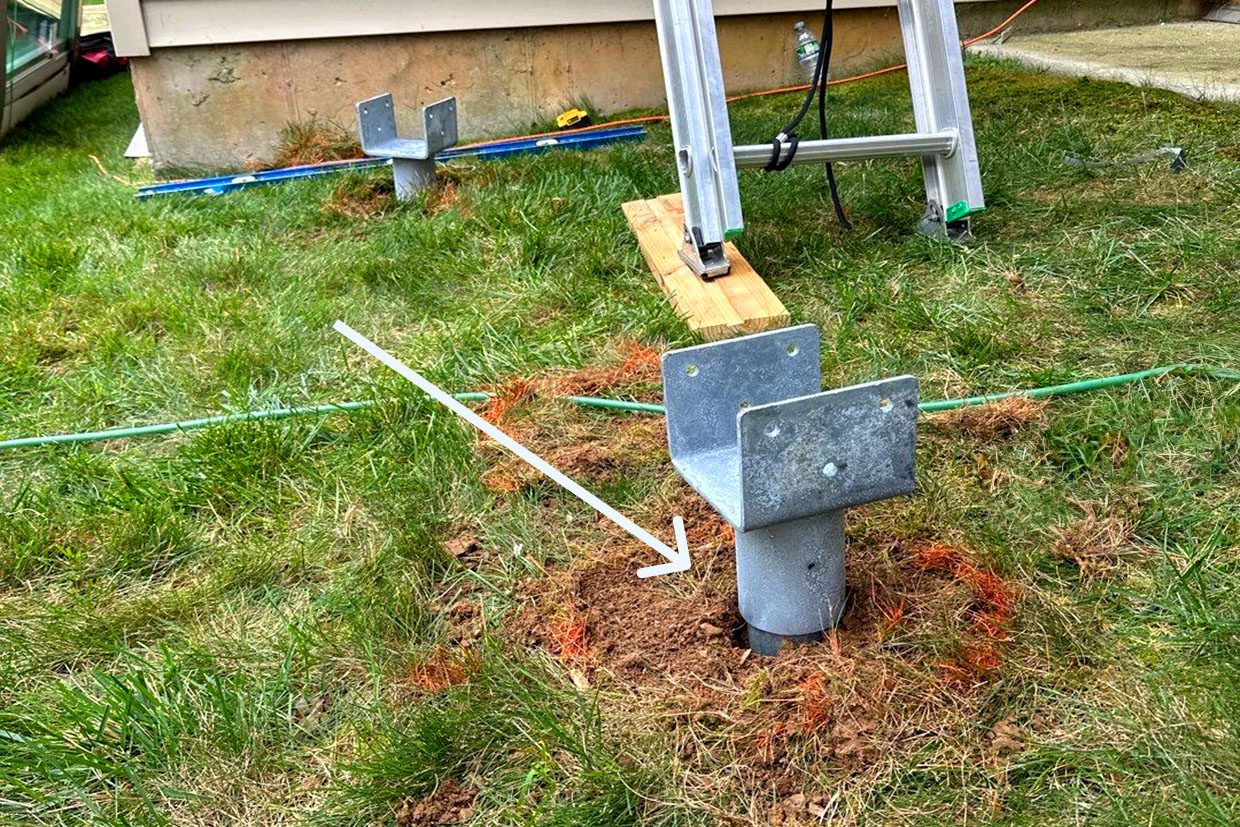
3 Steps to Measure Frost Line Depth
Using these methods and tools, you can accurately measure and prepare for the proper installation of deck footings tailored to your location’s specific conditions, ensuring frost protection for decks.
Step 1: Choose the Right Time
Measurements should be taken in the coldest part of winter when the ground is likely to be frozen to its maximum depth — often several inches or more.
Step 2: Use Your Tools
Using either a frost depth rod or an auger, measure the depth until you can no longer easily push the rod further or until soil samples show signs of freezing. This helps determine the correct grade for footing placement.
Step 3: Record the Depth
Mark the depth on your tool with tape or a marker, and use a tape measure to determine the exact depth of the frost line. Multiply this figure by the tributary area of your deck to calculate the approximate square foot live load each footing must support.
Using a Frost Line Depth Map
Using a frost line depth map is a practical way to assess the average frost depth in your area, which is critical for planning the foundation of any outdoor structure, including decks.1 Here’s how you can interpret and apply frost depth maps to your deck project:
- Understanding the Map: A standard frost depth map displays the average depth at which the soil is expected to freeze during the coldest part of the year. Interpreting a frost penetration map helps you identify the maximum depth the ground is likely to freeze in your specific region. These maps are often color-coded or use contour lines to represent different depth zones. For instance, areas that typically experience deeper frost will be marked differently from areas with shallower frost.
- Locate Your Area: Identify your specific location on the map. This will tell you the average frost depth Washington state residents (or those in your specific region) can expect during the peak winter months — for instance, in Minnesota, frost can reach several feet deep. Conversely, researching how deep is the frost line in Oklahoma might reveal a requirement of only 18 inches, illustrating the vast differences in regional climate.
- Check the Data Source: Understand the source of the data. Frost depth maps can be based on historical weather data, soil conditions, and other environmental factors. Knowing the source can help you assess the information’s reliability.
- Annual Variability: Remember that these maps provide averages. Yearly weather conditions can vary, so consider this as a baseline rather than an absolute measure.

Building Deck Footings
Building deck footings that are resistant to frost heave involves careful planning and execution. Before breaking ground, it is essential to clarify exactly what are frost footings: they are deep, concrete anchors designed specifically to reach below the freezing soil layer to stabilize your structure. Here’s an expanded guide on proper installation techniques, materials, and common mistakes to avoid:
- Digging to the Right Depth: Footings should extend below the frost line to prevent heaving. This depth can vary based on a frostline depth map and city building codes; for example, the frost line in nj typically requires footings to be at least 36 inches deep. Similarly, determining the correct frost depth in pa is vital, as local codes often require digging down 36 inches or more to prevent structural shifting.
- Use of Footing Forms: Concrete footing forms, such as tubes made from thick cardboard, are used to mold and support the concrete until it cures. These forms help maintain the shape and integrity of the footing deep in the soil.
- Pouring Concrete: Ensure the concrete is mixed to the right consistency and poured into the forms without air pockets. Properly consolidated concrete has fewer weak spots and is more resistant to cracking under frost conditions.
- Placement of Beams and Joists: Always ensure joists directly supported by beams are properly anchored and aligned along the edge of the deck for even weight distribution.
- Post Installation: Ensure all posts are buried below the frost line for stability and frost protection.

Materials and Methods to Protect Footings from Frost Heave
- Gravel Base: Placing a layer of gravel at the bottom of the footing hole can improve drainage and reduce soil moisture content around the footing, lessening the risk of frost heave.
- Concrete Additives: Using air-entrainment additives in the concrete mix can help prevent frost damage. These additives create tiny air pockets in the concrete, giving ice a place to expand without cracking the concrete.
- Insulation: Installing rigid insulation around the upper part of the footings can help keep the ground temperature around the footings above freezing, reducing frost penetration.
- Rebar Reinforcement: Adding rebar or mesh within the concrete can enhance the strength and durability of footings, helping to resist the forces of frost heaving.
- Wood: When framing above the frost line, always use treated wood rated for ground contact to prevent rot and damage.
Common Mistakes to Avoid
- Underestimating Frost Depth: This is a critical error that can lead to frost heave, especially in northern regions where the deep frost line maine experiences is a factor. Always adhere to local codes or consult a professional to confirm the correct depth.
- Poor Drainage: Footings placed in poorly drained locations can suffer from increased frost heave due to higher soil moisture levels. Ensuring good drainage around footings is essential.
- Inadequate Concrete Curing: Rushing the curing process or allowing the concrete to dry too quickly can weaken the structure, making it more susceptible to frost damage.
- Using Incorrect Materials: Non-rated or subpar materials may not withstand the stresses of freeze-thaw cycles. Always use materials suitable for below-ground use and capable of withstanding local weather conditions.

Contact Professionals for Proper Deck Construction
At Olympic Decks, we’re committed to helping you build a deck that not only looks great but is structurally sound and built to last. While DIY projects can be rewarding, certain aspects of deck construction — particularly frost-proof foundations — can benefit from professional expertise. Our team ensures each footing meets the proper live load per square foot, according to specific requirements from your local building department.
Here’s why and how you should consider enlisting professional help for your deck-building project:
Expertise in Local Building Codes and Standards
Building a deck that meets local building codes is essential for both safety and compliance. Professionals are well-versed in understanding and applying these regulations, ensuring that your deck passes inspections and avoids potential legal issues.
Advanced Techniques and Tools
Professional deck builders have access to advanced tools and techniques that might not be available to the average homeowner. This can be crucial when dealing with complex aspects like frost-proof footing installations, which require precision and expertise.
Avoiding Costly Mistakes
Incorrectly installed deck footings can lead to serious problems, such as shifting, sinking, or even collapsing decks. These issues not only pose safety risks but can also be very expensive to fix. Hiring professionals helps mitigate these risks by ensuring the job is done right the first time.
Saving Time and Stress
Building a deck is a significant undertaking that can be time-consuming and stressful, especially if you’re new to such projects. Professional builders can streamline the process, handling everything from planning and measuring to the actual construction and cleanup.
Customization and Deck Design Expertise
If you have specific design ideas or need custom solutions to match your home’s aesthetic or to overcome landscape challenges, professional deck builders can provide creative and effective designs that might not be achievable without their expertise.
Trust Olympic Decks to Build Your Deck — No Matter the Season
If you’re ready to take the next step in your deck construction project, here’s how you can reach out to us at Olympic Decks. Contact us to schedule a consultation. We can discuss your project, provide estimates, and explore various design options.
We’ll help you with all necessary plans and permits, which is crucial for ensuring that your deck is legally compliant and structurally sound. Our team will handle all aspects of construction, ensuring that every detail, from the depth of the footings to the choice of materials, meets the highest standards of quality and durability.
Building a deck is an investment in your home and your quality of life. By working with Olympic Decks, you ensure that this investment is secure, sound, and stress-free. Reach out today, and let’s turn your deck dreams into a stunning and safe reality!

Olympic Decks is your Seattle area Deck Company, We specialize in all your Decking needs – new deck installation, deck resurfacing, louvered roof and cedar wood fence installation.


