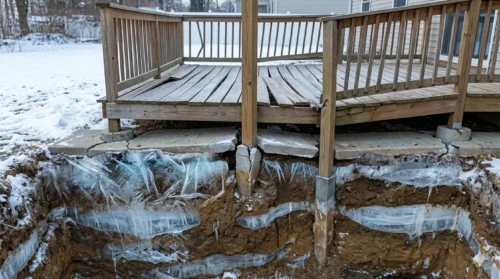
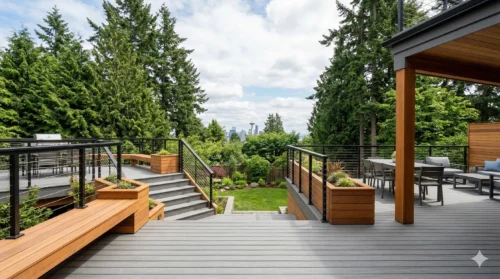
A Seattle deck often needs resurfacing earlier than many homeowners think. Usually, the warning signs show up before the deck feels obviously unsafe.
A few gray boards, stain that does not hold, a loose railing, or one slippery spot after rain may not look urgent. In Seattle, WA, though, small deck problems stack up because moisture sits, soaks in, dries halfway, and returns the next week.1
At Olympic Decks, we treat deck resurfacing as a timing decision, not just a design update. If the structure is still sound, resurfacing can restore the deck, improve protection, and help avoid a larger replacement project. If the frame is already rotting or the railing connections are weak, a new surface will not solve much.
That is why deck resurfacing before a full replacement becomes necessary is worth taking seriously. The goal is not to make an old deck look perfect for a season. The goal is to catch the wear while the existing deck is still worth saving.
Deck Resurfacing Is About More Than Fresh Boards and Surface-Level Deck Repair
Deck resurfacing can sound simple: strip the old surface, make minor repairs, and apply a new sealant, coating, stain, paint, new boards, or composite decking. Real projects are more complex because surface work only makes sense if the structure below can still support it.
Before work starts, the contractor needs to inspect the deck as a system. Boards matter, but so do joists, fasteners, stairs, railing posts, airflow, and the connection near the house. Proper ventilation beneath the deck is especially important because trapped moisture can lead to joist rot in humid climates. A quality inspection helps determine whether the crew can create a durable new surface or whether hidden damage needs attention first.
Wood rot inspection is critical before resurfacing. If the frame is failing, it has to be reinforced or replaced before new surface boards are installed. Otherwise, the finished product may look better, while the same weakness stays underfoot. High-quality work starts with that check, not with picking the nicest board color.
Sometimes the right answer is simple deck repair, sanding, power washing, and deck staining. Sometimes new boards make more sense. In damp Seattle weather, composite decking or Trex may also be worth considering. The material choice matters, and so do the manufacturer requirements for spacing, ventilation, fastening, and support.2 The inspection matters more.
1. The Wood Has Turned Gray and Stain No Longer Holds
Gray wood is not a disaster. In Seattle, it is almost expected. A gray deck may only need cleaning, sanding, and fresh stain. The problem starts when the stain stops doing its job.
If deck staining looks blotchy, peels quickly, or fades soon after application, the surface may be too worn for basic maintenance. Paint can hide some of that, but it does not fix tired wood fibers.
Good staining services can still do a lot when the deck is healthy. Stain brings back color, helps preserve natural beauty, and adds protection against weather. But there is a line. Once the surface is deeply worn, repeated stain jobs become more like delay than maintenance.
That is often when deck resurfacing makes more sense. The old decking can be assessed before the project moves too far. Once damaged boards are removed, the contractor can determine which resurfacing material fits the site, the frame, and the property better. Sometimes wood still makes sense. Sometimes composite or another option fits the site better and can create a cleaner, longer-lasting surface.
Composite decking is made from a blend of wood fibers and recycled plastic, giving homeowners a low-maintenance alternative to traditional wood decking. Capped composite boards add a protective shell that can enhance resistance to moisture and wear when the product is installed according to manufacturer guidance. In Seattle, WA, that is not a minor benefit.
2. Boards Are Cracking, Cupping, or Staying Slippery
A small crack in a wood board does not mean the deck is failing. Wood moves, dries, swells, checks, and ages. Long cracks, cupped boards, raised edges, soft spots, and slick areas after rain are different.
Older wood boards can trap moisture and become slippery. Shoes slide near the stairs. Splinters catch bare feet. Slowly, the space becomes less inviting, and the outdoors stops feeling like part of daily home life.
Power washing can help with surface buildup. Sanding can smooth some roughness. Stain can still protect wood in decent condition. But when cracking, softness, and moisture keep coming back, the goal is to enhance safety, comfort, and daily use rather than repeat the same surface fix.
That is when composite decking is often worth considering. It resists rot, splintering, and insect damage better than traditional wood, while Trex and other capped boards reduce sanding, sealing, staining, and repainting. It may cost more upfront, but reduced maintenance can help offset that cost over time.
3. The Railing Feels Loose, Even a Little
A loose railing is easy to ignore until it is not. Maybe it moves only when someone leans on it. Maybe one post feels less sturdy than the others. These small changes deserve attention before deck resurfacing begins.
Sometimes the fix is straightforward. A connection needs tightening. A post base needs reinforcement. A few boards around the railing need repairs, especially where stairs, gates, or a nearby fence meet the deck area. If the frame is solid, those issues can often be handled as part of the resurfacing process.
But if the railing is loose because rot has reached the framing, that is a bigger problem. Structural integrity comes before stain, paint, composite boards, or any finished product.
Seattle rules can also affect the plan. Resurfacing, repairs, railing work, and full replacement are not always treated the same way. In many municipalities, complete deck replacements require building permits and engineering reviews, while resurfacing often does not. Scope matters. So does deck height.
| What to check before work starts | Number that may matter | Why it matters |
| Seattle minor repair or alteration limit | $6,000 in 6 months | Some limited work may not need a permit if it stays within this city threshold |
| Deck height above ground in Seattle | More than 18 inches | Seattle states that decks above this height generally need a permit |
| Higher deck review trigger | More than 8 feet | Taller decks may need a different level of permit review |
| Common residential guard trigger | More than 30 inches above grade | Guard requirements often become important at this height |
| Common residential guard height | 36 inches | This is a common minimum guard height used for residential decks |
These numbers are not a substitute for a project-specific review. They simply show why a contractor should look at more than the deck surface. Railing condition, height, repairs, and installation details can all change the conversation.
4. Maintenance Is Starting to Feel Like the Same Job Again and Again: When Staining Services Stop Helping
Every deck needs maintenance. That is normal, especially with wood. Washing, sealing, treating, staining, and occasional repairs help protect natural wood from moisture and mildew. A well-maintained deck can look good for years. The problem starts when maintenance stops improving anything.
One board gets replaced. Then another. Stain fails faster than it should. Mold returns after cleaning. The surface feels rough again. The railing needs another adjustment. That pattern matters, especially for clients who want the deck to feel reliable without turning maintenance into a yearly project.
At some point, small repairs stop feeling practical. If the frame is still sound, deck resurfacing may be the better answer. It replaces the worn surface instead of asking the homeowner to keep patching the same boards, and it gives the team a cleaner base to create a safer, more useful deck.
That might mean new wood boards, a better stain system, composite decking for improved durability, or Trex for a cleaner look without the same stain and paint cycle. The right choice can enhance how the deck handles weather and how comfortable it feels throughout the year.
This is where practical resurfacing advice for aging decks helps. The decision should not be emotional. A good company should help the homeowner decide based on the structure, repair costs, materials, and how the outdoor space is actually used.
5. The Deck Still Works, But the Outdoor Space No Longer Feels Inviting
This is a real warning sign, even if it sounds less technical. A deck does not have to be unsafe to need attention. Sometimes it simply becomes a space people stop using. The boards feel rough. The stain is uneven. Paint lifts near the edges. Furniture wobbles on warped spots. Deck resurfacing can restore the appearance of a worn deck without a complete replacement, making it a cost-effective way to transform the space when the frame is still sound.
Resurfacing can replace the tired walking surface, improve appearance, and help the space feel like an extension of the house again. Wood keeps the look natural. Composite decking reduces maintenance. Trex can deliver a smoother result. Stain works when the boards are still solid enough.
The best option fits the deck’s condition, exposure, budget, and the level of maintenance the homeowner can keep up with.
Deck Staining, Composite Decking, or a New Deck?
This is not really a stain-versus-composite decision. It is a condition question. Deck staining works when the boards are still strong enough to keep. If the surface can be cleaned, sanded, and prepared correctly, stain can still bring back color, protect the wood, and preserve its natural character. For homeowners still comparing prep, weather timing, and product choice, this guide on the best way to stain deck boards explains why staining is part of building long-term protection, not just improving color.
Composite decking makes more sense when the homeowner wants fewer recurring chores. It handles rot, splintering, and insect damage better than traditional wood, and capped composite or PVC can be a strong fit for damp climates.
Replacement becomes necessary when the structure is already failing. Rotted joists, weak posts, or unsafe railing connections should not be covered with new surface material. That kind of fix may look less expensive at first. It usually is not once the real work catches up.
A professional company should start with the deck’s condition. Inspect it, explain the options, and separate repair from resurfacing and full replacement. A free estimate or free consultation can help homeowners choose the right path before the damage turns urgent, especially when the difference between surface wear and structural damage is not obvious from above. Homeowners need experienced deck specialists here, not just guys with tools covering old problems with new boards.
FAQ
What is deck resurfacing?
Deck resurfacing means restoring or replacing the worn surface while keeping the usable frame in place.
When is deck resurfacing better than replacement?
Deck resurfacing is usually better when the frame, posts, joists, stairs, and railing connections are still sound, and the main problem is the worn surface.
Can composite decking go over an existing deck frame?
Yes, composite decking can go over an existing deck frame if the structure is solid and suitable for the material.
Is Trex a good choice for Seattle WA decks?
Trex can be a good choice for Seattle, WA, because it needs less maintenance than natural wood, but the frame underneath still has to be inspected.
Does deck staining fix cracked boards?
Deck staining can protect healthy wood and improve appearance, but it does not fix deep cracking, rot, soft boards, or weak framing.
How do I know if my deck has structural integrity problems?
Watch for soft boards, loose railing posts, sagging areas, rotting wood, movement underfoot, mold around framing, or trapped moisture.
Does deck resurfacing require a permit in Seattle?
It depends on the project scope. Deck height, railing changes, structural work, and replacement details can affect Seattle requirements.
Can resurfacing restore an old gray deck?
Yes, resurfacing can restore an old gray deck if the frame and boards are still in good enough condition. If there is widespread rot or unsafe railing movement, replacement may be better.

Olympic Decks is your Seattle area Deck Company, We specialize in all your Decking needs – new deck installation, deck resurfacing, louvered roof and cedar wood fence installation.