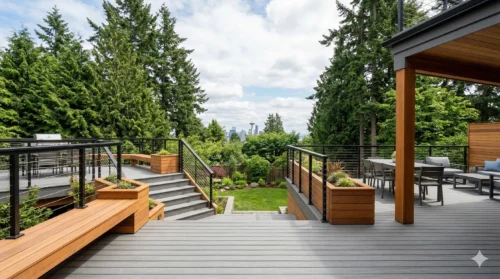
So, you’re dreaming of a stunning, splinter-free deck where you can sip coffee while mist hugs the evergreens? Welcome to the Pacific Northwest deck dream! But let’s be real: our “liquid sunshine” and moody weather aren’t exactly kind to traditional wood. That’s where Composite Deck Installation swoops in like a superhero in a raincoat. And hey, while we’re biased (we’re Olympic Decks, your local Seattle-area deck nerds), we’ve installed enough composite decks in this mossy paradise to know what works. Let’s dive in—before the next downpour. Proper planning is the foundation of any successful Composite Deck Installation in our region.
Why Composite Decking? Because PNW Weather is… Extra
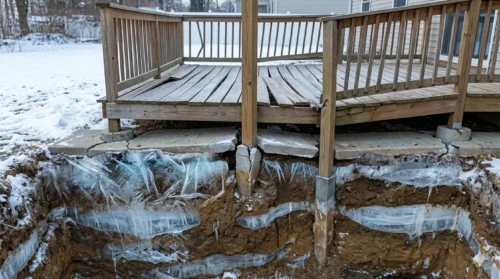
Rain. Moss. Mold. Mildew. Temperature swings that make your thermostat dizzy. Traditional wood decks here often warp, stain, or turn into a science experiment. Composite decking—a blend of wood fibers and recycled plastics—laughs in the face of our climate. It resists:
- Moisture damage (Goodbye, rot!)
- UV fading (Even during our 3 days of summer)
- Mold & mildew (Take that, green fuzz)
- Warping & splintering (Safety first, flip-flop fans!)
But not all composites are equal. More on that next.
PNW-Approved Materials: What Actually Survives Here?
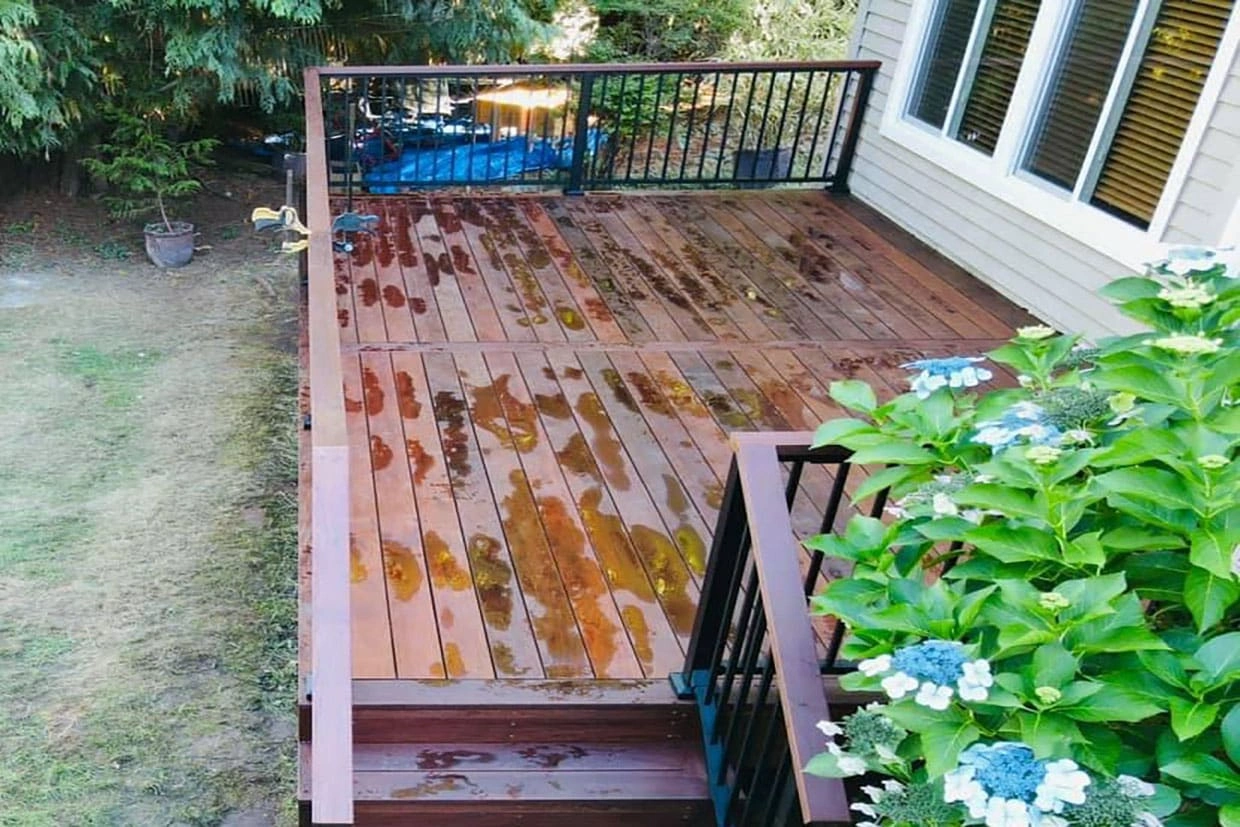
Skip the buyer’s remorse. For our damp, shaded corners, prioritize:
- Capped Polymer Decking:
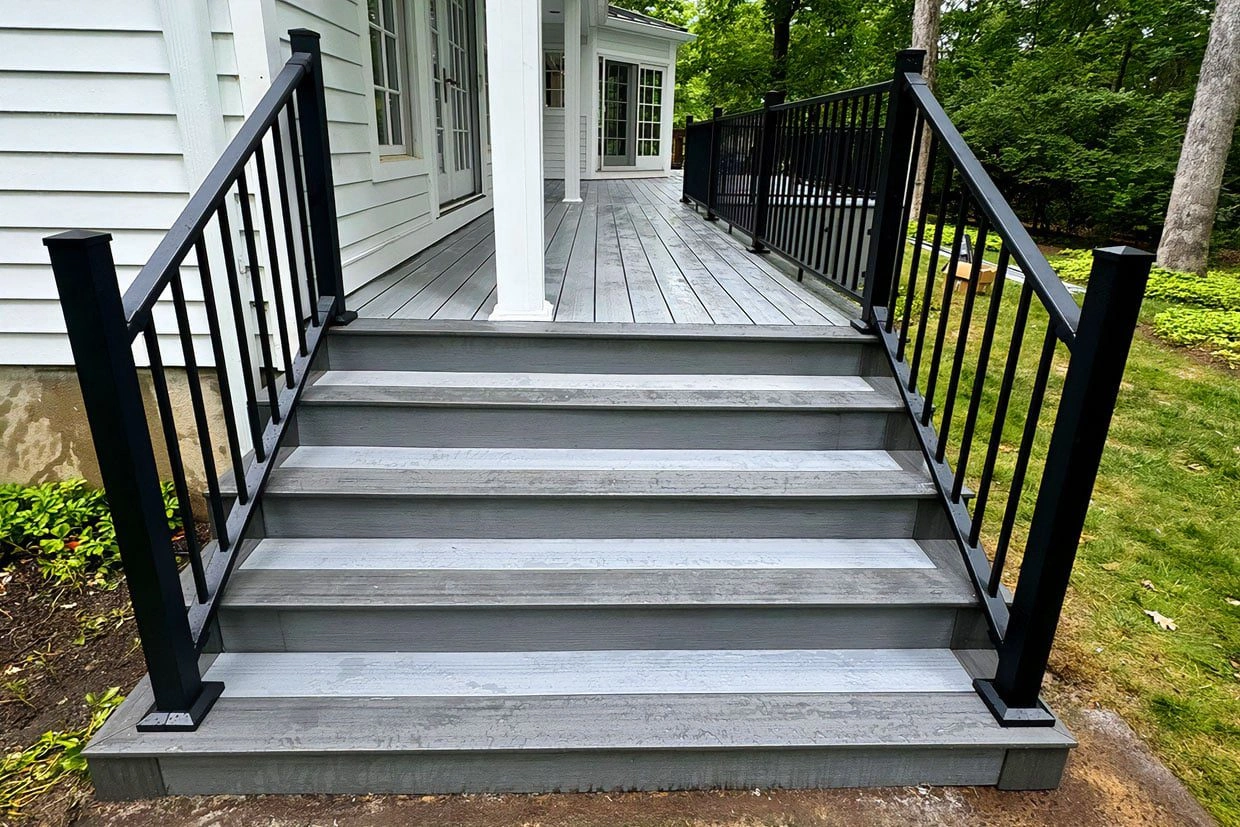
A protective shell wraps the core, fending off moisture, stains, and UV rays. Brands like TimberTech® Decking by AZEK® or Trex Transcend® Lineage® Composite Decking dominate local projects for good reason. - Slip Resistance:
Look for textured surfaces. Wet + smooth = slip-n-slide lawsuits. - Color Retention:
Darker shades hide algae but absorb heat. Lighter tones stay cooler but show dirt. Pro tip: Mid-tone grays/browns are Goldilocks winners. - Hidden Fasteners:
Avoid moisture-trapping screw holes. Clip systems (like Cortex) create sleek, gap-free surfaces where water drains under the boards.
Fun Fact: 73% of PNW composite decks we install use hidden fasteners. Your socks (and knees) will thank you. Material choices directly impact the longevity of your composite deck installation.
Climate Factors: Working With the Weather, Not Against It
Rain Management:
- Slope decks 1/4″ per foot for drainage.
- Use pressure-treated wood for framing.
- Leave gaps between boards for airflow—composites expand in humidity!
Ventilation:
Elevate decks 18″+ above soil. Trapped moisture = mold’s VIP lounge.
Sun & Shade:
North-facing decks? Prioritize mold resistance. South-facing? Focus on UV protection.
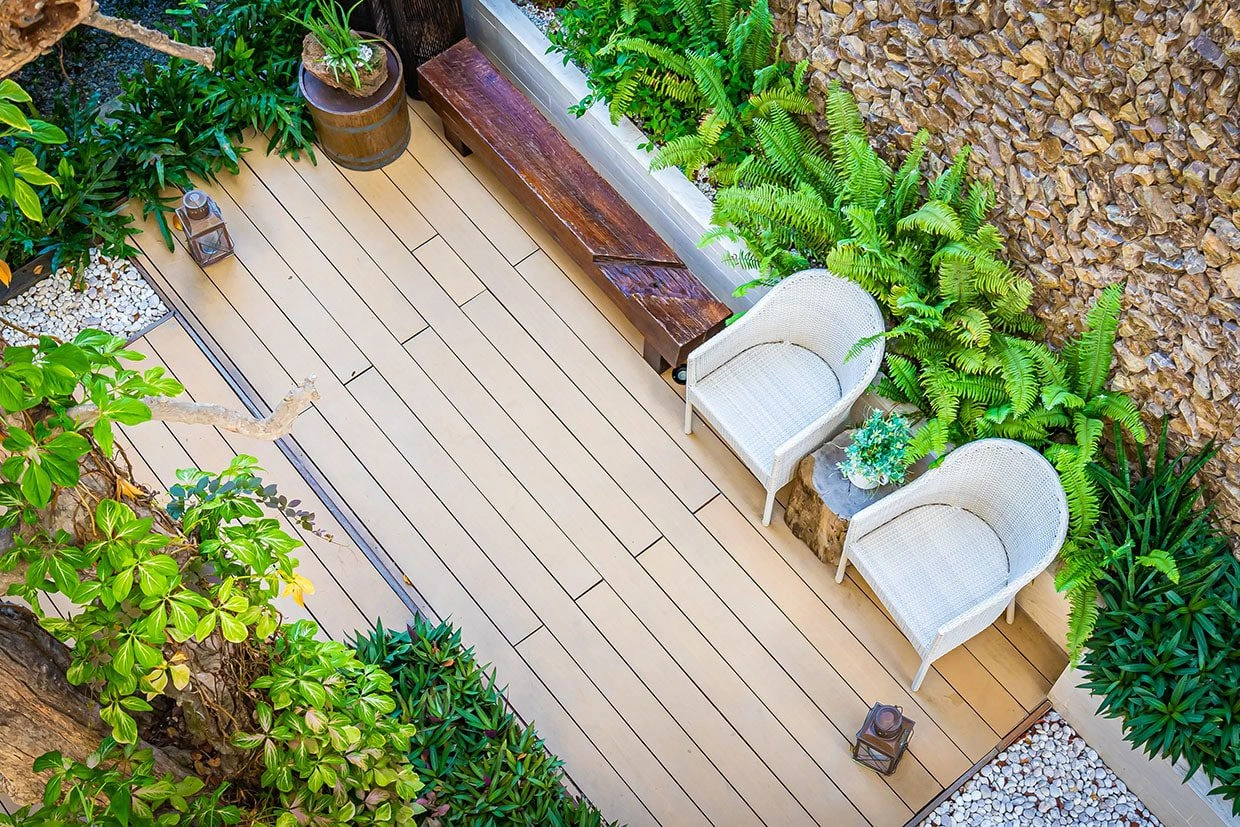
Cost Breakdown: Spoiler – It’s Cheaper Than Replacing Wood Every Decade
| Component | Average Cost |
| Composite Boards | Moderate material investment |
| Framing (PT lumber) | Standard structural component |
| Labor & Installation | Professional expertise required |
| TOTAL | Reflects quality and durability |
Why it’s worth it:
- Wood decks: While initially appealing, wood demands significant ongoing effort. Annual staining, sealing, and repairs become a recurring commitment.
- Composite materials: Require a slightly higher initial investment but deliver exceptional long-term value. Their minimal upkeep – simple cleaning with soap and water – saves considerable time, effort, and resources over decades.
- The Advantage: Composite decking offers superior longevity and dramatically reduced maintenance, translating to clear long-term savings and enjoyment. This makes planning and executing your composite deck installation a streamlined investment in lasting outdoor living.
Timeline: From Permits to Puget Sound BBQs
- Design & Permits (1–4 weeks):
Seattle’s seismic codes and drainage rules are no joke. We handle permits while you pick board colors. - Material Order (2 weeks):
Pro tip: Order early! Supply chains hate rain delays. - Installation (1–3 weeks):
- Demo old deck: 1–2 days
- Framing: 3–5 days (follow NADRA Deck Evaluation Guide)
- Decking/railings: 4–10 days
Total: 4–9 weeks (weather permitting, because PNW).
Pros & Cons: The Unvarnished Truth
👍 Pros:
- Zero staining/sealing (reclaim your weekends!)
- 25–30+ year lifespan
- Eco-friendly (made from recycled bags/bottles)
- Resists insects, rot, and PNW mood swings
👎 Cons:
- Higher upfront cost
- Can get hot in direct sun (rare here, but happens)
- Not 100% scratch-proof (Rover’s claws vs. deck = draw)
Why DIY Isn’t for the Faint of Heart (Especially Here)
Composite decking forgives less than wood during install. Crooked frames? Water pools. Gaps too tight? Boards buckle in humidity. We’ve fixed enough “YouTube specials” to know: PNW decks demand precision.
“But I’m handy!” Sure—but our 30° slopes, clay soil, and 40″ annual rainfall laugh at store-bought tutorials. Hire pros who speak “Seattle weather.” (Psst: We do this daily.)
Maintenance: Keep It Gorgeous Between Cloud Bursts
- Bi-Annual Wash: Use soap + water. Avoid pressure washers (they strip finishes).
- Mold Patrol: Spray vinegar/water mix on shady spots (EPA mold prevention tips).
- Debris Duty: Sweep leaves—they trap moisture and throw moss parties.
The Olympic Decks Promise: Built for Your Backyard, Not Arizona
We don’t install “cookie-cutter” decks. Why? Because your Lynnwood yard isn’t Phoenix. Our designs factor in:
- Site drainage & soil type
- Local building codes (we’re permitting ninjas)
- Your microclimate (yes, Ballard is wetter than Kirkland)
Conclusion: Your Rain-Ready Oasis Awaits
Composite decking in the Pacific Northwest isn’t a luxury—it’s a sanity saver. With the right materials, design, and install team, you’ll gain a stunning, low-maintenance oasis that thrives in rain or shine. No more sanding. No more rot. Just more time for grilling, gazing at cedars, and pretending you like fog.
Dreaming of dry feet and gorgeous views? Let’s build your forever deck.

Olympic Decks is your Seattle area Deck Company, We specialize in all your Decking needs – new deck installation, deck resurfacing, louvered roof and cedar wood fence installation.