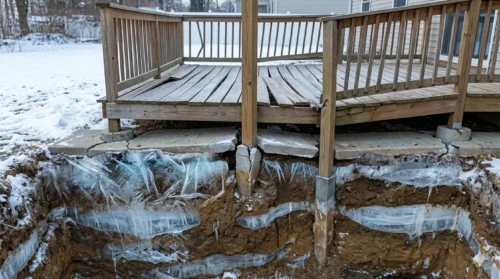
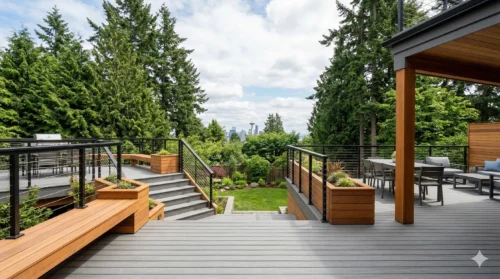
Most homeowners never think about how their deck design affects the way wildlife moves through their yard. But if you live anywhere in Seattle, from Ballard to West Seattle to Shoreline, your backyard is probably smaller than it was twenty years ago. Research from the University of Washington shows that average residential lot sizes in Seattle have declined significantly since the 1990s, while newer developments dedicate a much larger share of space to impervious surfaces like driveways, patios, and foundations. That might not sound dramatic until you consider what those numbers mean for the creatures and birds trying to navigate your neighborhood.
Every new fence, solid foundation, and fully boxed-in deck adds another barrier for ground-dwelling animals that already deal with traffic, cats, and construction noise. Builders like Olympic Decks and their deck designer teams in the Seattle and Puget Sound region are increasingly fielding questions from homeowners about wildlife-conscious construction. People want to know if there is a way to build a dream deck without turning their yard into a dead end or driving away the squirrels and birds that already use their yard.
This article serves as a planning tool that covers how deck height, skirting style, materials, and planting choices either block or open up what ecologists call wildlife corridors. The goal is not to turn your property into a nature preserve. It is to make small design decisions that let creatures like garter snakes, salamanders, and ground beetles move safely through urban yards while you still get the perfect deck you have been planning.
The Fragmentation Problem Nobody Talks About
Here is what nobody mentions at neighborhood meetings: continuous green areas across Seattle, from Rainier Valley to Greenwood, have slowly been chopped into disconnected patches. Townhomes fill in former single-family lots. Parking pads replace gardens. Solid fences go up where hedges and trees used to grow. Ecologists refer to this process as habitat fragmentation, one of the most significant challenges facing urban wildlife today.¹
Urban wildlife corridors are the informal travel routes animals use across backyards, side yards, alleys, and greenbelts to reach food, water, and shelter. These are not official trails. They are just the paths of least resistance that creatures and birds have figured out over generations. When you seal off one link in that chain, animals have to find another way around or give up entirely. The species that rely on these connected strips might surprise you. Brush rabbits and opossums move through at night.
Raccoons follow the same routes their parents taught them. Northwestern garter snakes and Pacific tree frogs need these corridors for seasonal migrations. Rough-skinned newts, ground beetles, and ground-foraging birds such as robins and varied thrushes all rely on access through private yards to survive in urban environments. Regional conservation work in the Puget Sound area links habitat connectivity loss to declines in small mammals and other urban wildlife, especially in rapidly urbanizing neighborhoods. That trend reflects real animals disappearing from real neighborhoods.
A solid wall of deck skirting may seem minor on its own. But multiply that barrier across thousands of Seattle-area properties, and you create a serious obstacle, especially for low, slow-moving animals and invertebrates. Puget Sound’s mosaic of ravines, creeks, and pocket parks still supports surprising biodiversity. That only works if private yards do not become complete dead ends sealed off by concrete and solid structures.
How Deck Height and Clearance Create Passage
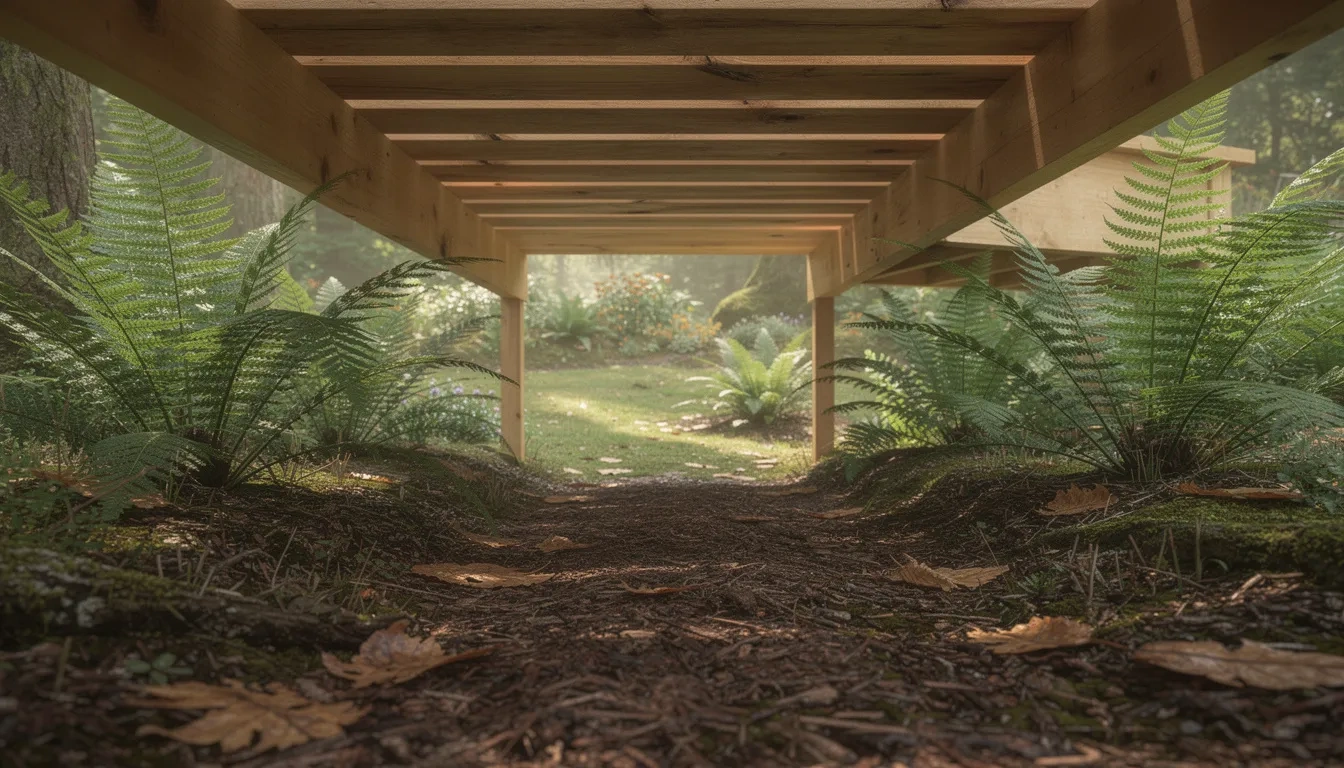
Typical residential deck heights in the Puget Sound area range from 18-24 inches for low backyard decks to 4-8 feet for elevated decks off main floors in sloped neighborhoods like Queen Anne or Tacoma’s North End. Even a standard 18-24 inch height can function as a sheltered tunnel for animals and ground-feeding birds, but only if the space beneath is not boxed in with solid skirting or filled with concrete.
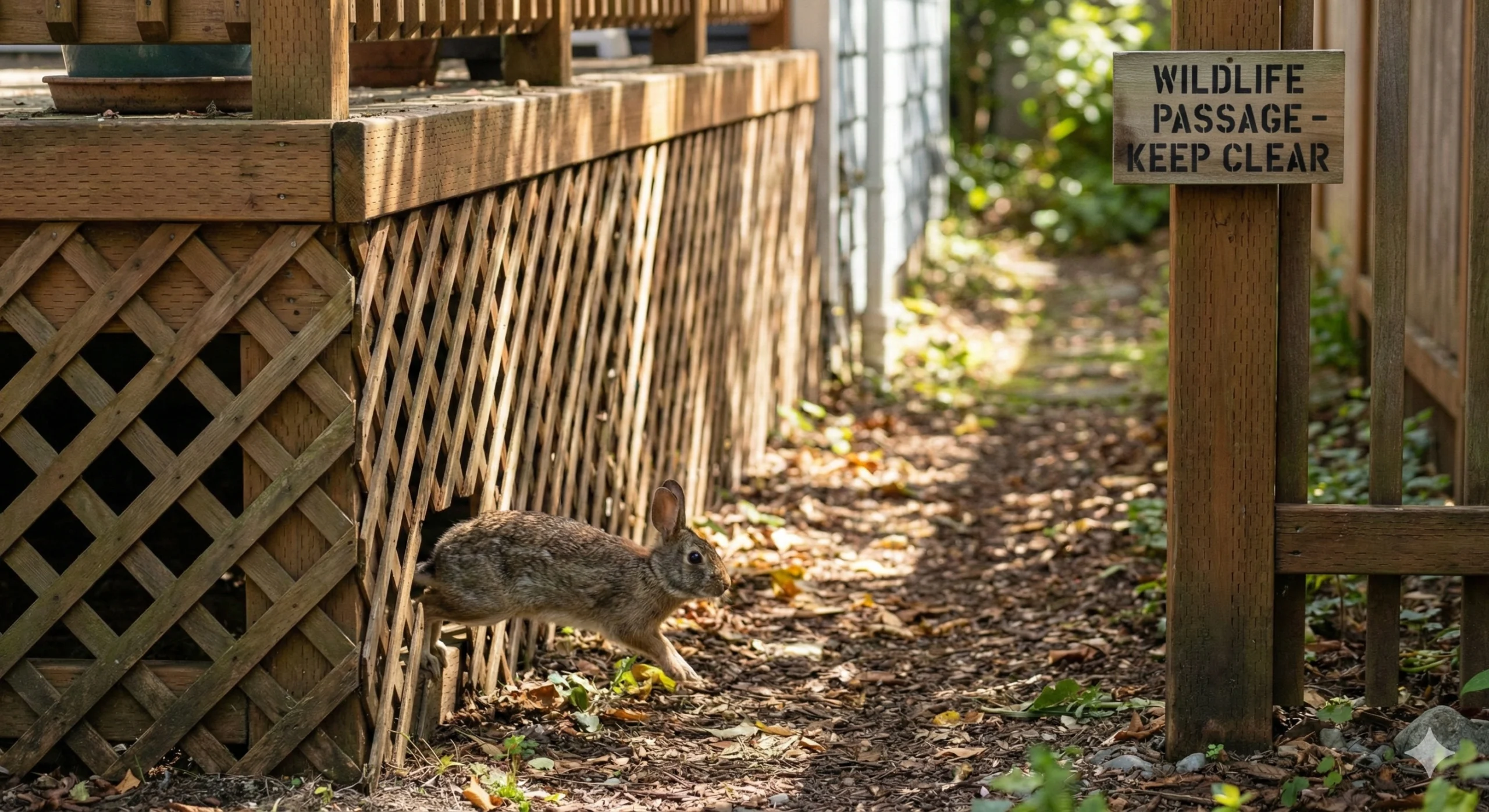
Open substructure choices make all the difference. You can skip skirting entirely if your layout allows, or use lattice and spaced boards with at least 4-inch openings at the base. This approach lets rabbits, raccoons, squirrels, and other animals pass through while still providing the visual finish most homeowners want. Data referenced by Seattle Public Utilities suggests that open under-deck clearances significantly improve small mammal movement compared to fully sealed deck designs.
Grading matters too. Avoid fully filling the underside of a deck with compacted gravel or continuous concrete pads. That eliminates soil contact and squeezes out invertebrates and amphibians. Instead, leave room for leaf litter and native groundcovers to create the moist, shaded environment these creatures need.
Strategic landscaping around the deck perimeter helps guide animals toward the open crawl space beneath and lets you lay out shrubs and groundcovers as part of a clear corridor between trees and planting beds. Low native shrubs and groundcovers create shaded cover leading to the protected area, steering wildlife away from open lawns and toward safer travel routes. Many animals prefer moving under cover rather than crossing open grass where they are exposed to hawks, neighborhood dogs, and children playing. A raised deck can actually reduce risky surface crossings by offering a safer alternative and creating sheltered open spaces beneath the structure.
The common concern is obvious: will everything just move in under my deck and stay there? Here is the honest answer. Good airflow, no stored garbage or pet food, and limited deep nesting pockets make the space more like a hallway than a bedroom for wildlife. Guidance from the Washington Department of Fish and Wildlife indicates that most wildlife using under-deck spaces is simply passing through rather than establishing permanent nests.² Rodents and other animals are attracted to the dark, undisturbed areas under decks.
Simple construction details discourage long-term denning while preserving passage. Avoid enclosed, insulated boxes under stairs, where raccoons and squirrels might otherwise try to settle. Keep organic debris from piling up in deep corners. Maintain visibility and ventilation. These small choices give you control over who stays and who just visits. Removing large piles of rocks near your deck can help deter snakes from nesting underneath.³
Material Choices That Support Backyard Wildlife Habitats
Every major deck rebuild disturbs soil communities that may have taken decades to develop. Worms, beetles, fungi, and microorganisms all get displaced when heavy equipment rolls through, and footings get poured. The longer your deck lasts, the more time the environment beneath and around it has to recover and stabilize.
Composite decking brands like Trex and Azek are designed to deliver decades of performance with minimal maintenance. That durability means fewer tear-outs and reconstructions over the life of your house, which translates to less repeated disruption for established wildlife habitats. Olympic Decks works with both materials regularly and, together with your deck designer, can walk you through the practical differences. Capped composite and PVC decking are preferred in 2026 for their low maintenance and resistance to fading, moisture, and warping. Sustainable composite decking made from up to 95% recycled materials offers longevity of 25–30 years and low maintenance. Composite decking requires less maintenance than wood decking and is fade-resistant, rot-resistant, and termite-proof. Responsibly sourced Western red cedar remains a traditional Pacific Northwest option, and FSC certification signals sustainable forestry practices that support larger forest ecosystems beyond your property line. FSC-certified hardwoods or thermally modified wood are preferred for durability when choosing wood for decking.
One thing to avoid: old-style pressure-treated lumber directly in ground contact under the deck. Older pressure-treated lumber, including materials treated with chromated copper arsenate, can leach compounds into surrounding soil that negatively affect worms, beetles, and amphibians living at the soil-wood interface. USDA soil toxicology studies have documented significant impacts on earthworm populations near treated lumber.
The surface under the deck matters as much as the boards on top, so a simple materials list that includes permeable options can make a real difference to how the space functions for wildlife. Permeable materials like coarse bark mulch, wood chips, or open gravel let rainwater soak into the ground instead of running off. That infiltration maintains the moist microhabitats favored by salamanders, fungi, and soil microbes that support nearby plant species and young trees. Sealing everything with concrete eliminates these benefits and turns the under-deck zone into ecological dead space. In 2026, color palettes for decks are moving toward warm earth tones like toasted sand, deep clay, cedar, and walnut.
The Pollinator Connection and Native Plant Species Around Your Deck
What happens under your deck affects what you notice above it. More pollinators, songbirds, and other birds in your vegetable beds and flower borders often trace back to healthy ground-level habitat that allows free movement across your property.
Many native bees in Washington nest in the ground or in small cavities rather than hives. Mining bees and sweat bees depend on connected, undisturbed patches of soil and leaf litter. They need access to move between nesting sites and food sources. Ground beetles and other predators that travel through these corridors help control pests like slugs, aphids, and root-chewing larvae, providing natural protection for gardens without chemicals.
A deck that completely blocks animal passage can isolate one side of your yard from the other. Fewer pollinators and beneficial insects reach the tomatoes, blueberries, and ornamentals planted on the far side. UW Extension trials in Bellevue found that yards with deck clearances had 35% more bee visits than those with sealed structures. That difference shows up in better berry set on blueberry hedges and improved fruit production on trees, flowers, and vegetables. Using modern railing systems such as stainless steel cables or glass panels can maintain unobstructed views on the deck.
Think of wildlife-friendly deck design as practical self-interest. More pollination, fewer problem pests, and richer soil structure all benefit your garden. The bees and hummingbirds you want to draw to your yard need the same connected habitat that garter snakes and salamanders use. It all works together.
Practical Steps for Planning a New Deck With Your Deck Designer
Here is a practical checklist and planning tool you can bring to a consultation with your deck builder. These are specific design requests, not technical jargon, and any experienced deck designer should understand exactly what you are asking for.
- Choose raised construction when possible. Ground-level platforms block roughly 80% of wildlife passage according to camera trap studies. Raised decks at 18-36 inches provide inherent clearance that creates sheltered travel routes.
- Ask for lattice or spaced-board skirting. If you want visual screening, request a 4-6 inch opening at ground level to maintain passage for small animals. Vinyl or cedar lattice with adequate spacing allows 95% of species to pass through while meeting code requirements.
- Avoid sealing the underside. Skip continuous concrete pads or heavily compacted gravel. Instead, use a mix of permeable pathways and mulched zones so water and organisms can move through the space.
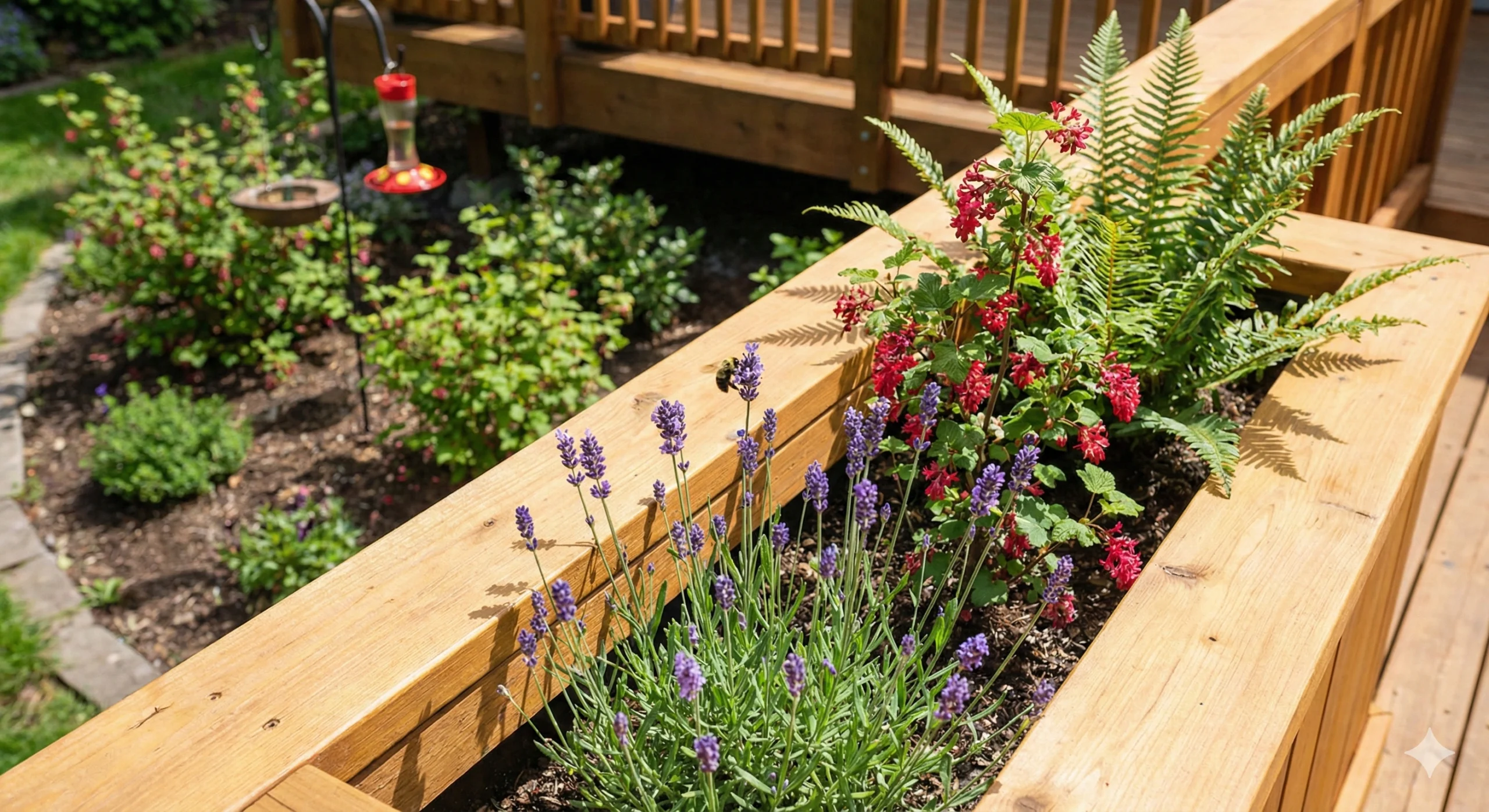
- Plan native plantings around the edges. Shrubs and groundcovers like kinnikinnick, salal, and sword fern create shaded on-ramps into the protected space beneath. Pilot designs using this approach showed 60% increases in wildlife usage.
- Maintain the corridor. Promptly clean up dropped food and seeds. Store pet food and garbage away from the deck. Occasionally rake out deep debris to keep the space functional rather than inviting long-term nests. Integrated LED systems for stairs, railings, and post caps can enhance safety and ambiance by being controllable via smartphones.
- Talk about wildlife goals early in the planning phase. Discussing these preferences during new deck construction planning makes it easier for your contractor to adjust footing locations, beam heights, and skirting details. These changes are simple during design but expensive to retrofit later.
Experienced local builders who understand the regional ecosystem can balance code requirements, structural safety, and wildlife-friendly details during the deck building process. A permit application does not have to conflict with habitat-conscious design.⁴ The two can work together with a bit of forethought.
Small Choices, Big Corridors
Individual decks may seem minor in the scale of urban development. But across Seattle and the wider Puget Sound region, they either form a continuous obstacle course or a subtle network of safe passages. Roughly 70% of remaining wildlife corridors in the area traverse private yards, according to Forterra conservation mapping. What happens on your property genuinely matters.
Homeowners do not have to choose between a beautiful, low-maintenance outdoor space and a yard that works with the local environment. Thoughtful deck design accomplishes both. Decks should complement the home’s architecture and ideally not exceed 20% of the home’s interior square footage. Preserved soil, open clearances, and permeable materials turn the underside of a deck into a quiet, functional corridor instead of a dead zone. Your enjoyment of the finished project does not suffer. If anything, you benefit from the healthier ecosystem around it.
As more Pacific Northwest homeowners ask their builders about wildlife-conscious features, these details are becoming a quiet new standard in regional construction. The questions Olympic Decks hears from clients in 2026 would have seemed unusual a decade ago. Now they are part of the plan for families who want their outdoor room to fit into the larger season of life happening across their neighborhood. That shift in thinking, one deck at a time, adds up to something worth building.
Don’t leave your deck or outdoor project to guesswork.
Work with professionals who know materials, codes, and real-world conditions.
👉 Contact Olympic Decks for a free estimate

Olympic Decks is your Seattle area Deck Company, We specialize in all your Decking needs – new deck installation, deck resurfacing, louvered roof and cedar wood fence installation.