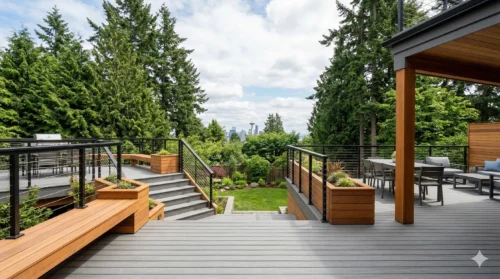
Little deck ideas matter most when the space is limited. A small deck does not need to look packed, overly styled, or copied from a catalog to feel complete. It needs a clear purpose, the right materials, and a few details that make daily use easier.
At Olympic Decks, small outdoor deck projects usually start with a practical question: how will people actually use this space? Morning coffee, quiet seating, grilling, dining spaces, or a simple back deck for relaxing all lead to different choices. That is why new deck planning that starts with the way the space will be used often matters more than chasing the newest deck decorating ideas.
Start With the Outdoor Space Your Small Deck Already Has
A compact outdoor space should not be treated like a large patio squeezed into a tighter footprint. That is how decks start to feel crowded.
Before choosing outdoor furniture or plants, decide what the deck is used for most often. Two chairs and side tables may be enough for a quiet outdoor living space. A small dining setup often works well when the deck has direct access to the kitchen. For a raised deck, the space underneath should not be ignored either. If it is visible from the yard, it becomes part of what people see and use.
That first layout decision influences almost everything after it, from furniture and railing to deck surface, skirting, and movement between the home and backyard.
Use Deck Skirting to Clean Up the Whole Look
Deck skirting can make a huge difference on a small deck because every exposed detail is easier to notice. Open framing, uneven ground, stored items, and visible posts can make an otherwise beautiful deck look unfinished.
Good deck skirting also has a functional purpose. Skirting can help the deck feel less like a platform sitting above open space.1 It covers the underside, helps discourage pests, and gives the design a more finished look. Still, it should never completely block ventilation. In Seattle’s damp climate, wood framing and nearby materials need proper ventilation and steady airflow so they can dry.2
Common material options include wood, vinyl, composite, and stone-look panels. Lattice remains popular because it covers the area while keeping air moving. Black vinyl lattice can work nicely when the house already uses darker trim, black railing, or a modern exterior style, especially when the goal is a visually appealing finish with a more modern aesthetic.
Compare Deck Skirting Ideas Before Choosing Materials
The right deck skirting should fit the house, the deck area, and the level of maintenance the homeowner is willing to handle. Wood looks warm, but it needs regular care to stay sharp. Composite deck skirting is a more durable solution with lower maintenance needs. Stone or brick veneer panels add aesthetic appeal and give the deck a stronger base visually, without the weight that comes with real masonry.
| Skirting option | Common material count | Practical note |
| Lattice panels | 3 common types: wood, plastic, aluminum | Cost-effective, classic, and often DIY-friendly |
| Composite deck skirting | 1 low maintenance category | Mimics wood while improving weather resistance |
| Stone or brick veneer panels | 2 common looks | Adds a rustic, sturdy appearance without solid masonry weight |
| Ventilation priority | 1 key requirement | Skirting should cover the underside without trapping moisture |
On a composite deck, the right skirting makes the structure feel complete rather than pieced together from boards, posts, and exposed framing. On a wood deck, horizontal planks can create a cleaner base line and visually lengthen the space.
Keep Deck Decorating Ideas Simple
Deck decorating ideas should support the space, not crowd it. Too many elements, including chairs, plants, rugs, and lights, can make the deck feel smaller than it really is.
A more focused approach usually looks better. Use a simple color palette and repeat it in a few deliberate places. Warm tones can help balance Seattle’s gray weather. A rug can define seating without becoming a visual barrier. String lights can add comfort after dark, but they should feel integrated into the deck design.
Potted plants add greenery without taking over the floor. Vertical gardening can add plants and flowers while leaving more room for movement.
Choose Small Deck Furniture That Works Harder
Small deck furniture should be chosen with restraint. The question is not “What can fit?” It is “What can fit and still leave the deck comfortable?”
Storage benches, folding chairs, compact patio furniture, and nesting side tables can help because they add seating and function without blocking circulation. Furniture delivered straight from a product page may look right online, but it still needs to stand up to rain, humidity, and temperature changes. In Seattle, damp weather is not occasional enough to ignore.
The goal is to leave space for people, not just furniture. Sitting, moving, relaxing, and using the outdoor living area should still feel easy.
Let the Composite Deck or Wood Surface Guide the Style
The deck surface sets the tone. A composite deck usually supports a clean, low-maintenance look. Natural wood feels warmer and more traditional, but it needs more care as weather, moisture, and foot traffic affect the boards.
Deck boards also influence how large or narrow the deck feels. Long wooden planks can help a small deck feel more open. Horizontal planks in the skirting can repeat that line and create a more seamless transition from the deck surface to the ground.
For a new deck, this is where finding a contractor who asks the right layout questions matters. The best design ideas usually come from how people will move through the space, not from a single inspiration photo.
Create Zones for a Raised Deck Without Overbuilding
Small decks can still have zones. They just need fewer of them. For homeowners working with steps, slopes, or changing elevations, split-level deck ideas can also help separate functions without making the footprint feel crowded.
A rug can mark a seating area. A narrow table can define dining spaces. Planters are useful because they can separate a grill from chairs without making the deck feel blocked off. They give the layout a little order while still keeping the space open. When details like this are handled well, the deck feels planned rather than leftover.
But a small deck needs restraint. It cannot hold a cooking zone, dining setup, lounge area, storage, plants, and decorative panels without starting to feel overloaded. One primary use and one secondary use usually make more sense.
Check Seattle Rules Before Expanding the Deck Project
Deck size and placement are not just design choices in Seattle. The Seattle Department of Construction and Inspections treats taller decks differently. Decks more than 36 inches above ground count toward lot coverage, and in neighborhood residential zones, that coverage is usually capped at 35 percent for lots of 5,000 square feet or larger. Decks more than 18 inches above ground also face limits on where they can sit near front, side, and rear property lines. These details become even more important when a second story deck, taller stair connection, or raised landing changes the height of the structure.3
| Seattle deck rule | Number to know | Why it matters |
| Height that affects lot coverage | More than 36 inches | The deck may count toward buildable lot coverage |
| Typical NR lot coverage limit | 35% | Applies to neighborhood residential lots 5,000 sq. ft. or larger |
| Front property line limit | 20 feet | Decks over 18 inches generally cannot sit within this front setback in NR zones |
| Side property line limit | 5 feet | Decks over 18 inches generally cannot sit within this side setback in NR zones |
This is one reason layout planning should happen early. A deck project can look simple on paper, then become more complicated once height, railing, setbacks, and lot coverage come into play.
Treat Black Vinyl Lattice, Skirting, and Railing as Part of the Design
Railing and skirting are not background details on a small deck. They are part of what people see first.
Simple railing can keep the view open, while dark skirting can make the deck feel grounded. White lattice panels may suit a classic home, while black vinyl lattice or composite panels may fit a cleaner exterior. The right skirting can enhance the overall deck design without making the structure feel heavy.
Step back before choosing materials. The deck, house, yard, paint colors, plants, panels, and railing should feel connected.
Finish the Back Deck With Details That Make Daily Use Easier
A finished deck does not need many extras. It needs the right details.
That can mean side tables near chairs, a place to set coffee, weatherproof storage, a few plants that can handle the exposure, lighting that makes the space usable after dark, and durable materials where rain hits hardest.
The best little deck ideas are usually practical first. They help the deck work better, look cleaner, and feel like a real outdoor room. When those choices line up, even a modest back deck can feel finished, comfortable, and connected to the house.
FAQ
What are the best little deck ideas for a small outdoor space?
Choose ideas that make the deck easier to use every day. Compact seating, simple deck skirting, weatherproof furniture, plants, and a calm color palette usually make the space feel more open and practical.
Does deck skirting make a small deck look better?
Yes. Skirting covers the open area underneath and helps the deck look more intentional. It can also help discourage pests if it is installed without blocking airflow.
What are popular deck skirting ideas?
Popular options include lattice panels, black vinyl lattice, composite deck skirting, horizontal planks, and stone or brick veneer panels.
Is a composite deck good for a small backyard?
Yes. Composite decking can be useful in a small backyard because it offers a clean surface with less routine upkeep. The deck still needs proper structure and ventilation.
How can outdoor furniture make a small deck more useful?
Outdoor furniture makes a small deck more useful when it stays scaled to the space. Folding chairs, storage benches, compact patio furniture, and side tables can add comfort while keeping the deck easy to move through.
Can deck decorating ideas make a deck feel larger?
Yes. Rugs, plants, lighting, and furniture placement can make the deck feel more organized when they are kept simple.
Why does Seattle weather matter for deck design?
Seattle weather makes moisture management important. Wood, composite materials, paint, panels, and skirting all need to handle damp conditions, airflow, and regular maintenance.

Olympic Decks is your Seattle area Deck Company, We specialize in all your Decking needs – new deck installation, deck resurfacing, louvered roof and cedar wood fence installation.