
Introduction
Composite decking, PVC decking, and pressure treated lumber are the top deck materials for snow, each offering distinct advantages for withstanding freezing temperatures, heavy snow loads, and harsh winter conditions. The best deck material for snow must resist moisture absorption, maintain structural integrity under extreme temperature fluctuations, and provide slip resistance when covered with snow and ice. Non-porous materials like PVC, composites, and aluminum are particularly recommended as they avoid damage caused by water absorption and subsequent cracking during freeze-thaw cycles.
Finding the right deck material for cold climates means understanding how freezing and thawing cycles affect different decking materials and choosing options that minimize maintenance while maximizing durability.
What This Guide Covers
This comprehensive comparison examines snow-resistant decking materials, their performance in harsh winter conditions, installation considerations for cold weather, and maintenance requirements. We do NOT cover basic deck design or general construction techniques – this focuses specifically on material selection for winter weather performance.
Who This Is For
This guide is designed for homeowners in snow-prone regions, contractors planning winter-ready decking projects, and property owners seeking low maintenance solutions. Whether you’re replacing a failing wood deck or planning a new decking project in cold climates, you’ll find specific guidance for choosing materials that perform reliably through harsh winter months. High-density hardwoods, while naturally resistant to rot and insects, are another option for cold climates but require more maintenance than composites. These tropical hardwoods are particularly durable and can withstand various climates, including cold weather, due to their natural resistance to decay and pests.
Why This Matters
Wrong material choices lead to cracking from freeze thaw cycles, warping from moisture absorption, and costly repairs after snow seasons. The right decking materials can provide decades of reliable performance with minimal maintenance, while poor choices result in frequent repairs and premature replacement. Some materials, like pressure-treated wood, require diligent sealing and staining to repel water and prevent damage over time, while composite, PVC, and aluminum require significantly less maintenance in winter.
What You’ll Learn:
- Best performing deck materials in snow and ice conditions
- How freeze thaw cycles affect different decking options
- Maintenance requirements for each material type in cold weather
- Cost-benefit analysis comparing upfront costs with long-term performance
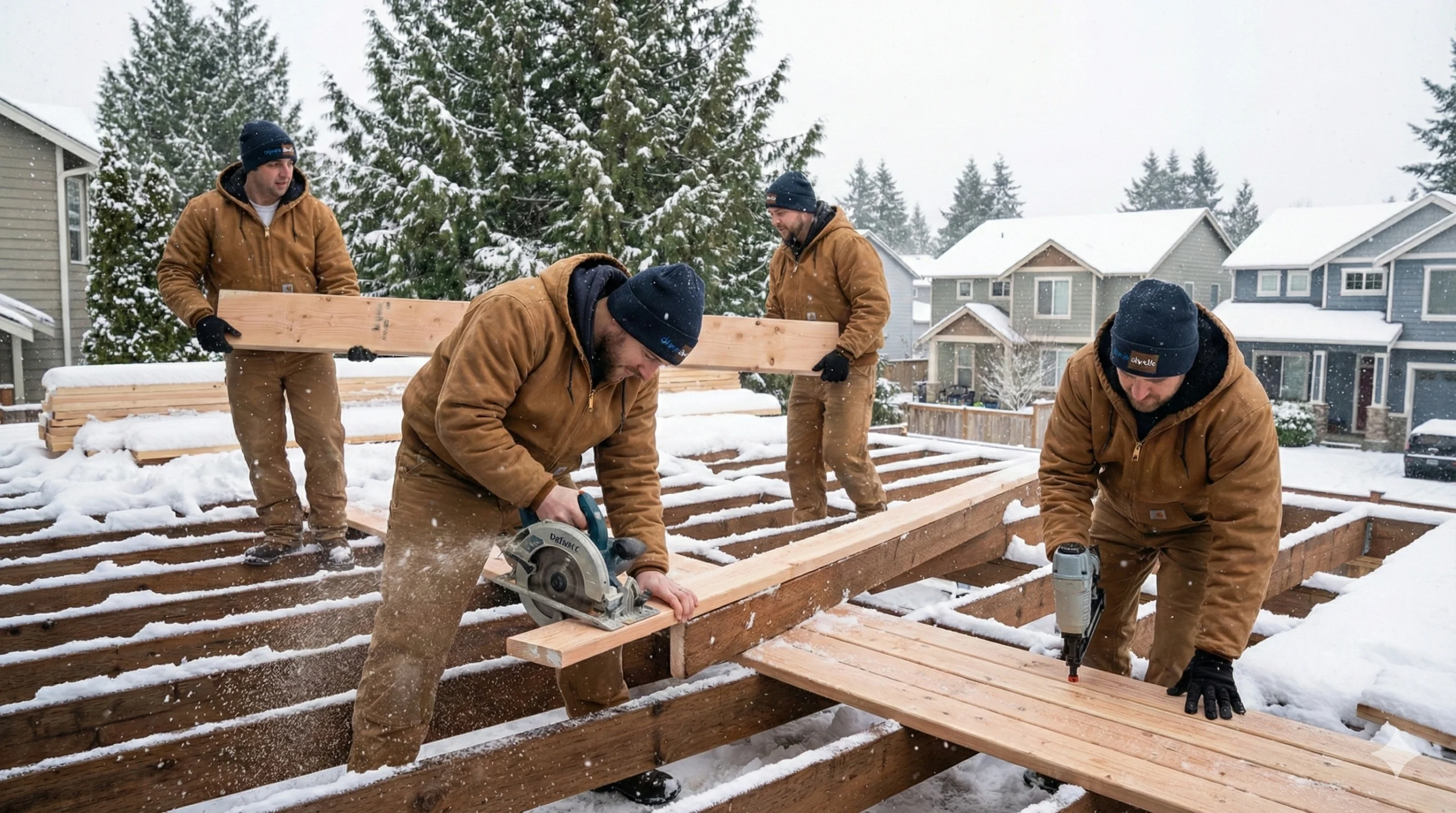
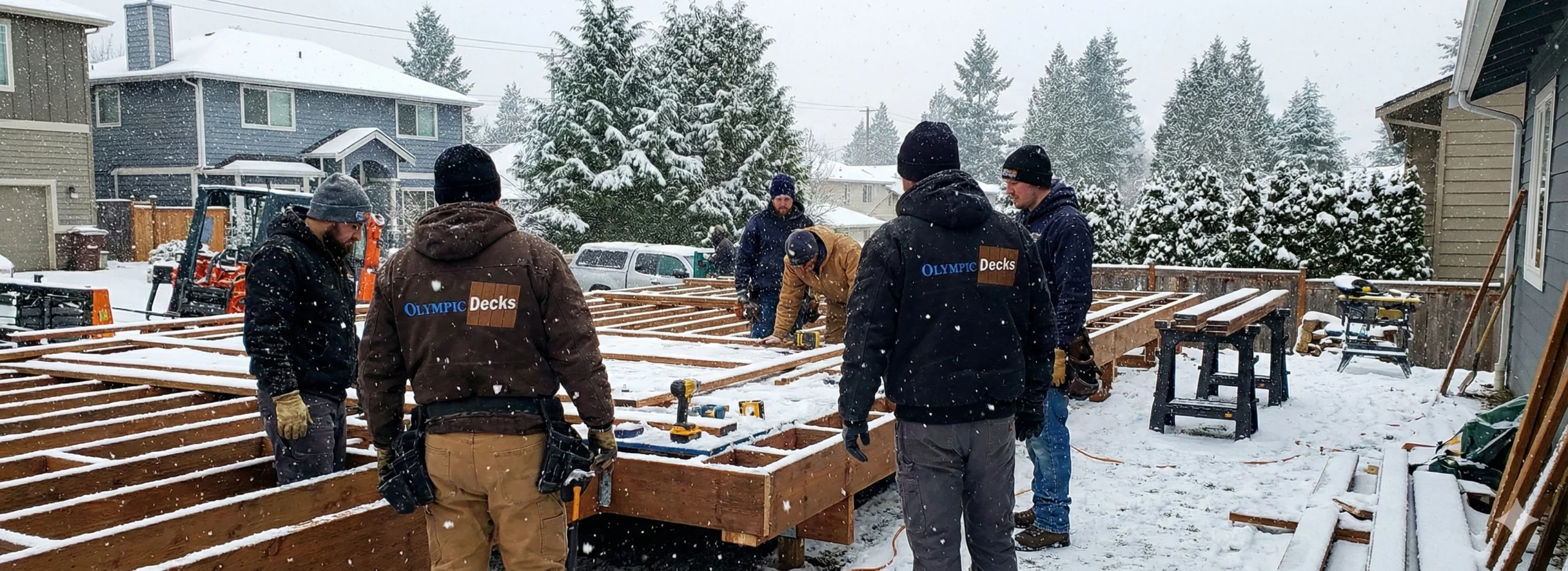
If you want a professional deck assessment tailored to your home, Olympic Decks specializes in designing and building winter-ready decks that can withstand the harshest Pacific Northwest conditions. Our team works with premium composite and PVC systems, ensuring each project meets local code requirements and long-term performance expectations.
Understanding Snow-Resistant Decking Fundamentals
Snow-resistant decking refers to materials specifically engineered to withstand moisture absorption, thermal expansion from temperature fluctuations, and structural loads from heavy snow accumulation. These decking materials must simultaneously address multiple winter challenges that standard materials cannot handle.
The key performance factors that determine winter success include moisture resistance (preventing water absorption that leads to freeze damage), thermal stability (maintaining dimensions during extreme temperature fluctuations), and structural integrity under load (supporting heavy snow without flexing or breaking). Regular wood decking fails in these areas because wood fibers naturally absorb moisture, expand and contract with temperature changes, and can lose strength when repeatedly stressed by freezing conditions.
Freeze-Thaw Cycle Impact
The freeze thaw cycle occurs when water enters material pores, freezes and expands, then thaws and contracts repeatedly throughout winter and spring. This mechanical stress causes dimensional changes, cracking, warping, and internal structural failure in materials that absorb water.
This connects directly to material choice because porous materials like untreated wood and poorly sealed decking absorb moisture and crack when frozen, while non-porous synthetic materials remain stable through countless freeze thaw cycles.
Snow Load Considerations
Heavy snow creates significant weight distribution challenges and structural demands that decks exposed to harsh winters must handle. Ground snow loads can exceed 300 pounds per square foot in extreme climates, requiring materials and substructures engineered for these forces.
Building on freeze-thaw impact, materials must not only resist moisture damage but also maintain structural integrity under substantial weight without flexing or breaking. This dual requirement eliminates many traditional decking options from consideration in cold climates.
Transition: Understanding these fundamental challenges helps explain why specific materials consistently outperform others in winter conditions.
Top-Performing Deck Materials for Snow Conditions
Materials that excel in snow conditions share common characteristics: low moisture absorption, dimensional stability, and structural strength under load. However, each top-performing option achieves these goals through different approaches and trade-offs.
Composite Decking Performance
Composite decking combines recycled wood fibers with plastic materials, creating a moisture-resistant surface that performs exceptionally in cold weather. Modern composite decking materials feature protective polymer shells that prevent moisture absorption while maintaining the natural appearance many homeowners prefer. Trex composite decking is engineered from recycled wood fibers and plastic, providing excellent resistance to mold, warping, and cracking during freezing conditions.
In freeze thaw cycles, composite boards experience minimal expansion and contraction compared to traditional wood decking. Leading composite decking options like Trex, TimberTech, and Fiberon use advanced capping technology that makes them virtually impervious to moisture damage. Snow removal advantages include smooth surfaces that allow easy clearing with a plastic shovel without surface damage, and resistance to salt and ice melt products that can stain or damage other materials.
Composite decks typically last 25-30+ years in harsh winter conditions with minimal maintenance requirements, making them a cost-effective long-term solution despite higher upfront costs.
Pressure-Treated Lumber in Snow
Pressure treated wood undergoes chemical treatment processes that resist moisture absorption and decay, making it a viable option for cold climates when properly maintained. The treatment penetrates wood fibers to provide protection against rot and moisture damage that destroys untreated wood in freezing conditions. Pressure-treated wood is treated with chemicals to resist moisture and rot, making it suitable for outdoor conditions, but it requires more maintenance than composite decking.
Unlike composite materials, pressure treated lumber requires seasonal maintenance including staining and sealing, but offers the natural beauty and traditional appearance of real wood. Cedar and redwood options contain natural oils that provide additional protection against harsh weather, though they still require regular maintenance to maintain performance.
Pressure treated lumber represents the most cost-effective option for snow-resistant decking, with lower upfront costs balanced against more frequent maintenance requirements and shorter lifespan (15-20 years) compared to synthetic alternatives.
PVC and Vinyl Decking Options
PVC decking and vinyl decking materials are non-porous synthetic materials with zero moisture absorption, making them virtually immune to freeze-thaw damage. These plastic decking options maintain temperature stability and resist cracking even in extreme cold conditions. PVC decking is impervious to moisture and resistant to mold, mildew, and insects, providing long-lasting durability in extreme climates.
PVC materials excel at easy snow and ice removal without surface damage, and many feature textured surfaces that provide slip resistance even when wet. Unlike wood decks or composite boards, vinyl decking requires no seasonal sealing or staining, making it the ultimate low maintenance option for harsh winter conditions.
The 30-50 year lifespan of quality PVC decking justifies the higher initial investment for homeowners seeking minimal maintenance solutions in cold climates.
Installation and Design for Maximum Snow Resistance
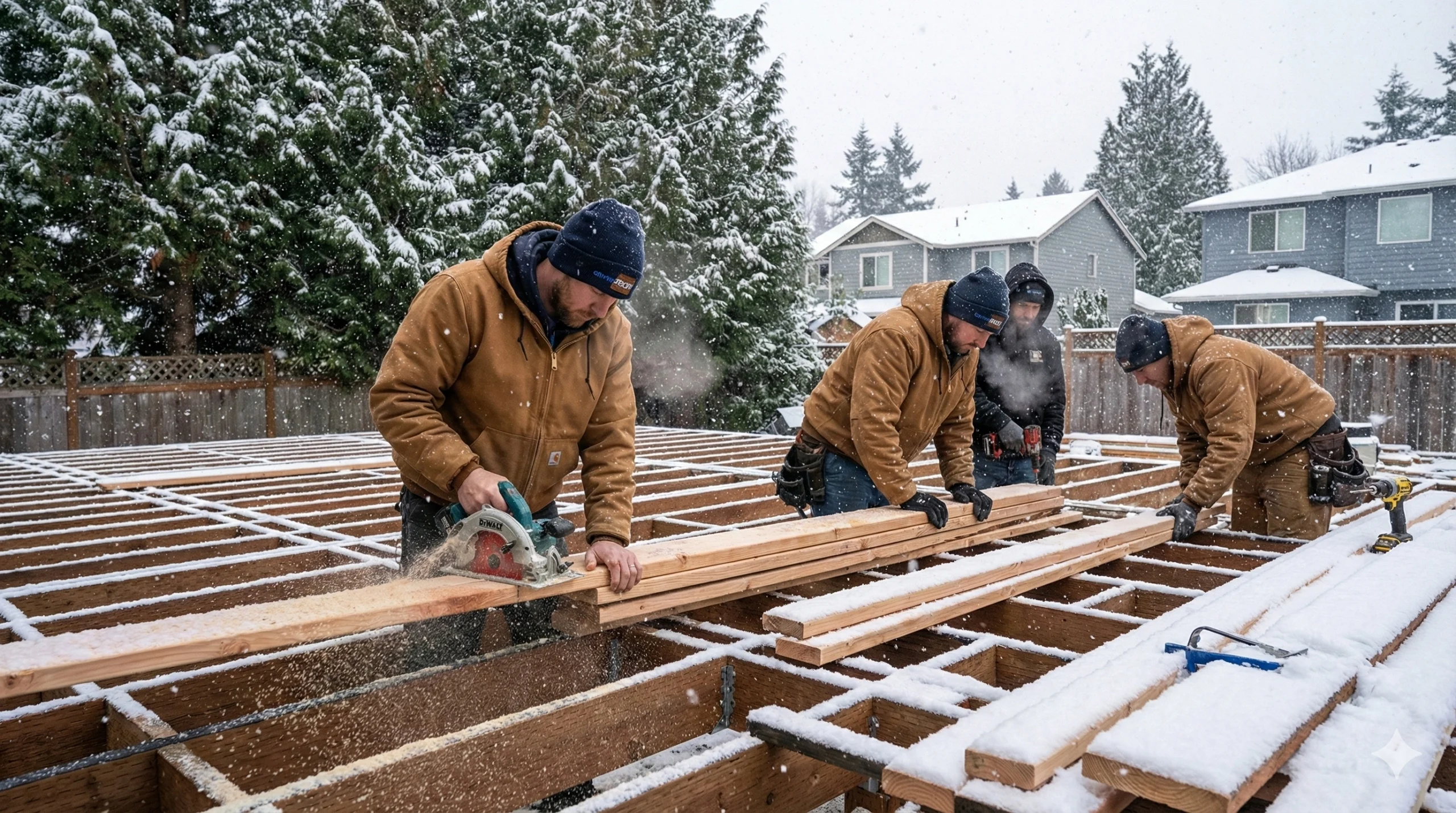
Proper installation techniques are crucial for maximizing the winter performance of any decking material. Even the best decking materials can fail if installed incorrectly for snow conditions, while proper techniques enhance the performance of all materials. Additionally, proper deck installation techniques can significantly enhance the insulation of your deck, reducing heat loss and preventing moisture buildup, which are critical factors in maintaining a durable and safe structure during winter.
Step-by-Step: Winter-Ready Installation Process
When to use this: For any decking project in regions receiving 20+ inches of annual snowfall or experiencing regular freezing temperatures.
- Calculate proper joist spacing: Reduce standard 16-inch spacing to 12 inches or less in heavy snow areas and ensure footings are installed below the deck footing frost depth to prevent sagging and structural shifting under snow loads
- Install moisture barriers: Apply waterproof membrane over structural elements to prevent water infiltration that causes structural damage
- Plan board spacing for drainage: Leave appropriate gaps between deck boards to allow melting snow and ice to drain freely. Using the correct gap between boards allows for better airflow and faster drying, which prevents ice accumulation and extends the deck’s lifespan.
- Select cold-weather fasteners: Use stainless steel or galvanized fasteners rated for temperature movement and corrosion resistance
Comparison: Capped vs Uncapped Composite Materials
| Feature | Capped Composite | Uncapped Composite |
| Moisture resistance | Excellent – polymer shell protection | Good – but wood core exposed at cuts |
| Fade resistance | Superior – UV protection built in | Moderate – may fade over time |
| Snow removal ease | Smooth surface, easy clearing | May catch on rough edges |
| Warranty coverage | 25-30+ years typical | 15-25 years typical |
| Price point | Higher initial cost | Lower initial cost |
Capped composite decking provides superior long-term performance in harsh conditions, making the additional investment worthwhile for most snow-prone installations. The polymer shell protection justifies the cost through extended lifespan and reduced maintenance.
Transition: Even with proper materials and installation, specific winter challenges require targeted solutions.
Common Snow-Related Deck Problems and Solutions
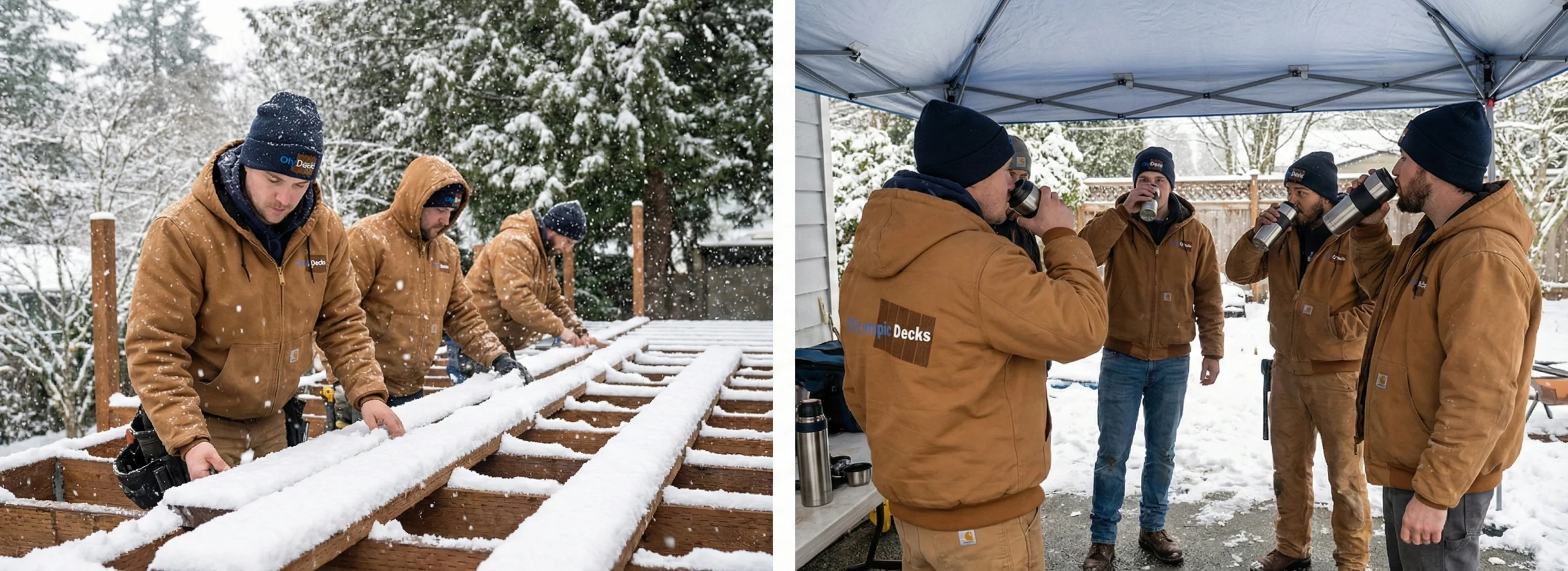
These winter-specific issues affect all outdoor structures, but proper material selection and maintenance practices can minimize or eliminate most problems in cold climates. Proper maintenance ensures your winter-resistant deck stays safe and looks great throughout the season, reducing the risk of damage and prolonging its lifespan.
Challenge 1: Ice Dam Formation
Ice buildup around deck edges and drainage points creates safety hazards and can damage decking materials through repeated freeze-thaw stress.
Solution: Design proper drainage with adequate board spacing and sloped installation to prevent water accumulation. Ensure gutters and downspouts direct water away from deck surfaces, and consider heated cable systems in areas prone to severe ice accumulation. Investing in a deck designed with proper drainage and spacing will help minimize the buildup of ice and snow, further reducing the need for maintenance. Additionally, using a deck cleaner before winter helps remove dirt and debris that could trap moisture under snow, ensuring better performance and appearance throughout the season. Heated deck mats can also be placed on the deck’s surface to melt snow and ice, providing a hassle-free solution for winter maintenance.
Challenge 2: Salt and Ice Melt Damage
Ice removal products containing salt or calcium chloride can stain, corrode, or chemically damage certain decking materials, particularly natural wood and some composite options.
Solution: Choose decking materials specifically resistant to chemical exposure, such as PVC or high-quality capped composite boards. Use deck-safe ice melting products based on magnesium chloride or calcium acetate rather than sodium chloride. Clean deck surfaces promptly after ice melt application to prevent chemical buildup.
Challenge 3: Snow Load Exceeding Capacity
Heavy snow accumulation can exceed the structural capacity of improperly designed decks, causing sagging, bouncing, or catastrophic failure.
Solution: Design decking projects for local snow load requirements (typically 20-50 psf for residential areas, up to 300+ PSF in extreme mountain regions) and implement regular snow removal schedules when accumulation exceeds 12 inches. Consult local building codes for specific winter requirements in your area.
Transition: Understanding these challenges and solutions provides the foundation for making informed material decisions and planning successful installations.
Conclusion and Next Steps
Composite decking and PVC materials consistently offer the best performance in snow conditions, providing superior moisture resistance, structural stability, and low maintenance requirements that justify their higher initial costs through decades of reliable service. Pressure treated lumber remains a viable budget option for homeowners willing to invest in regular maintenance. Aluminum decking, known for its structural integrity and immunity to organic decay, is another low-maintenance option that performs exceptionally well in harsh winters. Its high strength-to-weight ratio allows it to handle heavy snow loads without significant expansion or contraction due to temperature shifts, making it a reliable choice for extreme climates.
The right deck material choice depends on balancing upfront costs, maintenance preferences, and expected lifespan in your specific cold climate conditions.
To get started:
- Calculate local snow load requirements using your area’s building codes
- Request material samples from leading manufacturers like Trex, TimberTech, and quality PVC suppliers
- Consult local building codes for winter-specific installation requirements and permit needs
Related Topics: Consider exploring deck heating systems for ice prevention, specialized snow removal tools for different materials, deck maintenance tips and ideas, and winter deck safety measures including slip-resistant coatings and lighting systems.
Ready to upgrade your deck for the winter season? Contact Olympic Decks today to get a free estimate and explore the best materials and design options for your climate.

Olympic Decks is your Seattle area Deck Company, We specialize in all your Decking needs – new deck installation, deck resurfacing, louvered roof and cedar wood fence installation.


