
Key Takeaways
- A smart gazebo deck transition occupies just 3 to 6 feet but handles structure, water, and foot traffic all at once. Getting it wrong leads to trips, puddles, and that awkward “dropped UFO” look.
- Height differentials matter more than most homeowners realize. A 2-inch lip twists ankles, while a properly planned 7-inch step or graduated two-step system feels natural and safe.
- Washington State’s 150+ rainy days per year make drainage and flashing details critical. Slope transition zones at least 1/8 inch per foot away from the gazebo to prevent rot.
- Visual continuity comes from matching board widths (5.5 inches works well), carrying railing rhythms across both structures, and using pattern shifts to signal the change in space.
- Plan your transition with real measurements before choosing posts or roofing style. Walk the route, mark step edges with tape, and adjust until the path feels natural.
Introduction
Picture this: your guests arrive for a summer barbecue, and one by one they hesitate at the gazebo deck transition between your open cedar deck and your beautiful new roofed structure. There’s a 6-inch lip nobody quite expected. Water from last week’s Seattle rain still pools in the gap. Someone’s uncle nearly trips, and suddenly your relaxing outdoor community gathering feels like an obstacle course.
That narrow space between deck and gazebo is where 90% of structural problems actually begin. It becomes a water trap, a tripping hazard, and a visual speed bump that makes your entire outdoor living space look like two separate ideas that never quite met. It compromises the safety and general functionality of the design.
When we design outdoor living projects at Olympic Decks in Washington, the few inches between a deck and a gazebo can cause more headaches than the big beams. The gazebo deck transition is the physical and visual connection where a deck platform meets a roofed or partially enclosed structure, either on the same level or stepped. Get this wrong, and you’ll spend years watching wood warp, moss colonize shaded corners, and friends hesitate before stepping into your backyard shelter.
This matters for three reasons. First, safety. Trip points injure more people in their own yards than most realize. Second, durability. Water and seasonal movement attack the junction relentlessly, especially in the Pacific Northwest. Third, aesthetics. A thoughtful transition makes your deck and gazebo read as one unified outdoor room instead of mismatched add-ons that lower your home’s perceived value.
What follows are concrete numbers, specific measurements, and practical design tricks for that critical in-between zone. No generic gazebo advice here. Just the details that separate a sturdy, visually appealing project from an expensive regret.
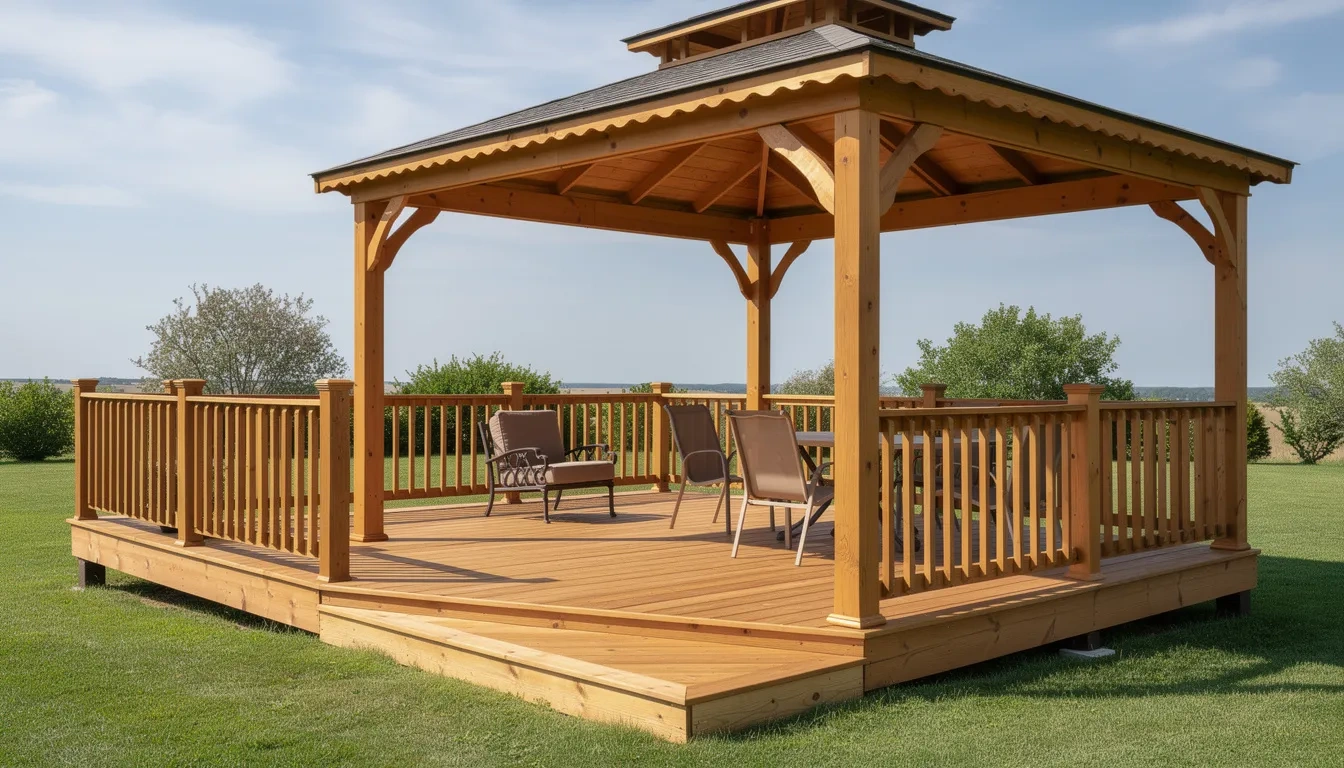
Foundation and Height Matching for Your Outdoor Living Space
Here’s the thing about decks and gazebos: they naturally fight each other. Your deck might be framed with 2×10 joists running 16 inches on center. Then you decide to add a gazebo, and suddenly the posts need to land exactly where those joists already run. Plus, finished floor heights rarely line up on their own.
Consider a typical Washington State example. You have an existing 12×16 composite decking platform sitting 18 inches above ground. Now you want a 10×10 cedar gazebo or a shaded pergola on one corner. The challenge isn’t just building new decks or gazebos individually; it’s making their floors align in a way that feels intentional rather than accidental.
Height differentials create real problems. A 2-inch lip is an ankle-twister waiting to happen. A single step within the 7 to 7.75-inch range can work nicely, matching what your body expects from indoor stairs. But when you’re dealing with a 12 to 15 inch difference, a graduated two-step system at about 6 inches each often feels more natural between an open deck and the more room-like shelter of a gazebo.
The “floating floor” approach solves many headaches. Frame the gazebo floor on 2×8 or 2×6 joists that bear on the main deck framing. Tighten joist spacing to 12 inches on center in the transition zone to handle point loads from posts and reduce bounce when someone steps through. This creates a sturdy foundation without rebuilding your entire deck.
Washington State building codes treat a roofed gazebo on a deck as a covered structure. That means post placement and load paths must run down to beams or separate concrete footings rather than just resting on deck boards. This complexity is often a deciding factor when weighing the pros and cons of DIY vs professional deck building. This isn’t optional. It’s what keeps your investment standing through years of rain and wind. Referencing the American Wood Council’s Deck Construction Guide can help ensure your load paths meet safety standards.1
Some specific layout tricks help immensely:
| Challenge | Solution |
| Post point loads | Double up rim joists where gazebo posts land |
| Transition bounce | Add blocking every 12 inches for 3 to 4 feet around the transition |
| Flush connection | Keep finished floor heights within 1/4 inch when aiming for no-step entry |
| Uneven ground | Use adjustable steel pedestals under gazebo framing for leveling |
Visual Continuity and Materials at the Junction
A heavy roofed gazebo sitting on a light, open deck can look like a dropped UFO if it appears without warning. That’s the visual “weight” problem nobody talks about until it’s too late. The gazebo deck transition needs to prepare the eye for what’s coming.
How you combine materials makes a real difference. Pairing a cedar gazebo with a medium-brown composite deck works well when you choose tones that complement each other rather than clash. Using 5.5-inch boards in both areas helps the eye read them as related, even when materials differ. The pattern matters more than perfect color matching.
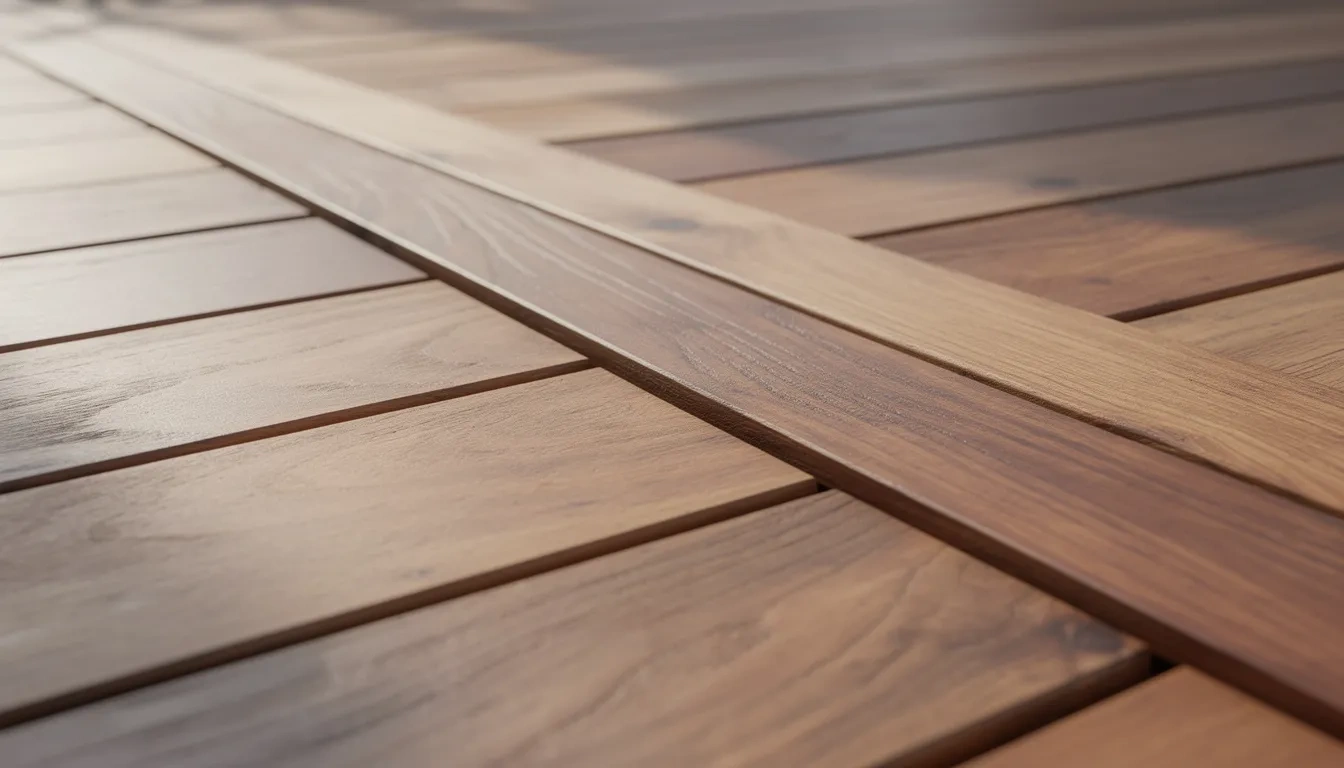
Pattern shifts create intentional design moments. On the open deck, boards might run perpendicular to the house for that classic look. Then at the gazebo deck transition, you create a 3-foot wide “border band” with boards running parallel to the beam before changing direction again under the gazebo. This inlay effect makes the space feel like connected rooms with different zones rather than a construction accident.
A breaker board acts as a visual and structural hinge. One single continuous board, often in a contrasting color, runs across the transition line. All field boards picture-frame into this strip. Think of it as the welcome mat between your open deck and covered patio space. It signals the change in footing while tying everything together.
Railing becomes the handshake between structures. Carry your post spacing rhythm from deck to gazebo. If posts sit 6 feet on center on the deck, maintain that rhythm into the gazebo perimeter. Keep top-rail height consistent at 36 to 42 inches. Use one continuous rail detail so the transition feels intentional rather than cobbled from two different ideas.
Here’s a counterintuitive tip: sometimes it’s better to slightly change color at the gazebo deck transition rather than hiding the junction completely. When your brain expects a change in footing, you naturally adjust your step. A subtle color shift can actually reduce trips by signaling “something different ahead” without jarring the overall look.
Is your deck structure ready for a gazebo addition?Get a Free Estimate to have our experts evaluate your transition zone.
Weather Protection and Drainage for Deck Boards
Let’s anchor this in Pacific Northwest reality. Many Western Washington locations see 150 to 170 rainy days per year. That’s not a typo. Those flat, shaded transition zones turn into moss farms within months if you don’t detail them correctly. The elements are relentless here.
Water behaves predictably at the junction, which means you can design for it. Rain sheds from the gazebo roof toward the deck. Wind-driven drizzle hits the transition band from every angle during those famous Seattle sideways rains. Trapped moisture between framing members can rot both structures right where they meet – a critical safety issue highlighted by NADRA (North American Deck and Railing Association).2
Flashing details separate amateur installations from professional work:
- Install continuous metal or flexible flashing along the entire length where gazebo posts meet deck surfaces
- Add flashing at any ledger-like connection touching the house
- Include a small 1/4-inch drip edge over the transition boards
- Use Z-flashing (26-gauge galvanized, 10-inch wide) over junction points
Board slope numbers matter for drainage. Aim for at least 1/8 inch per foot pitch away from the gazebo toward the open deck for that 3 to 4 foot transition zone. Water should never sit at the door opening or step line. This simple slope prevents 90% of rot problems before they start.
Thermal movement differences between materials demand attention. Composite deck boards expand and contract more than cedar gazebo flooring. Leave manufacturer-specified gaps (often 3/16 inch) at ends and between boards in the transition rather than forcing a tight, “perfect” joint. That gap becomes protection against buckling in summer and cracking in winter.
Moss and maintenance require upkeep planning. Keep at least 1/4-inch air gap between the bottom of gazebo skirting and the deck surface near the transition. Design the zone so you can easily sweep or hose it. Hiding the junction behind immovable trim looks great for photos but creates a moisture nightmare requiring expensive repairs later. Intelligent design ensures that low upkeep doesn’t mean no access.

Finishing Details to Enhance Outdoor Living Flow
Start with how people actually move. Picture the typical path from your sliding door to the grill, then into a gazebo seating area where friends gather with favorite beverages. A cramped 24-inch wide step-through feels awkward. Everyone shuffles sideways. But a generous 48 to 60 inch gazebo deck transition walkway lets people flow naturally, maybe pausing to chat without blocking traffic.
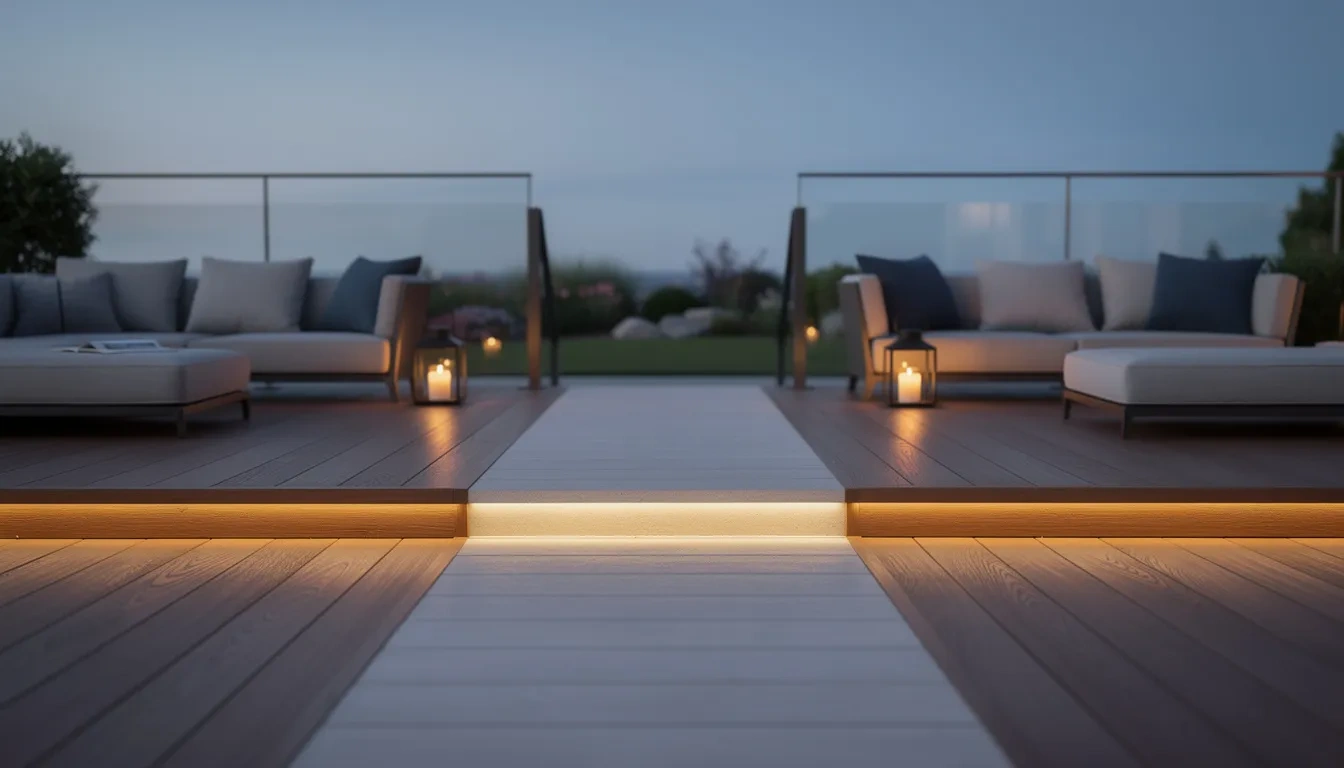
Lighting transforms evening use from hazardous to inviting. Warm, low-voltage step lights at any elevation change reduce trips dramatically. Place fixtures within 12 inches of the actual riser so the eye catches the edge naturally. Add small recessed lights or rail-mounted fixtures guiding feet into the gazebo. Bright lanterns hanging at the center create ambiance, but functional step lights create safety.
Built-in planter “bridges” solve multiple problems at once. Cedar or composite planters, 16 to 18 inches tall, flanking the transition opening visually connect deck and gazebo while keeping the center clear for traffic. Fill them with shade-tolerant greenery that thrives in damp Washington springs. The plants soften the architecture while the containers define the space without walls.
Built-in seating respects the flow when positioned thoughtfully. A short bench running perpendicular to the transition works beautifully for relaxing, but stop it at least 36 inches before the opening. This frames the entry instead of blocking it. Tables for morning coffee can sit nearby without pinching circulation.
Furniture scaling in the transition zone follows a simple rule. If your gazebo measures 10×10 and the deck extends another 10 feet, find pieces that suit the scale of the transition, like a modest 30-inch wide bistro table right at the edge. It buffers different zones without creating a bottleneck. Larger tables belong in the center of each space, not in the pathway between them.
In rainy climates, pairing your gazebo deck transition with nearby louvered roof options or future deck resurfacing projects creates a more flexible, weather-aware outdoor layout. Storage accessories, sleek modern furniture with quick-dry cushions, and properly angled roof drainage all accommodate the enjoyment of your yard through more of the year.
Don’t let a tricky transition stop you from building your dream space.Get a Free Estimate from Olympic Decks today.
Conclusion: Planning Your Gazebo Deck Transition
A successful gazebo deck transition seamlessly handles height differences, structural loads, water management, and foot traffic. Miss any one of these, and the flaw becomes a daily annoyance; handle all four, and the space functions effortlessly.
Focused design choices in this small zone protect your investment against Washington State’s relentless rain and freeze-thaw cycles. Whether your style is traditional or minimalist, the right materials and drainage details are essential for longevity. If you want to ensure your project is built to last, Olympic Decks is here for your next outdoor renovation.
Before building, sketch your transition with real measurements – changes are cheap on paper but expensive in wood. Walk the proposed route with tape or chalk to mark steps, ensuring the path feels natural in real life. That physical test reveals more than any photo inspiration and ensures your extended outdoor season starts on the right foot.
Frequently Asked Questions
Can I add a gazebo to my existing deck without rebuilding the whole structure?
In most cases, yes. Check your beam sizes and joist spacing near where the transition will occur. Posts for a gazebo create point loads that need to transfer down to beams or new concrete footings, not just rest on deck boards. If your deck uses 2×10 joists at 16-inch centers with doubled beams below, you can often add blocking and post bases without major reconstruction. Consult your local building department about whether your existing structure can accommodate the added roof load.
What is a comfortable step height between my deck and gazebo?
Standard indoor stairs use 7 to 7.75 inch risers because that height matches natural walking rhythm. Apply the same thinking to your gazebo deck transition. Avoid tiny 2-inch “bump” transitions that trip people who don’t see them coming. For height differences of 12 to 15 inches, a two-step system at roughly 6 to 7 inches each feels more comfortable than one tall step. Always include adequate tread depth, around 10 to 11 inches, for safe footing.
How do I keep moss from taking over the transition area in Washington?
Moss thrives in shaded, damp conditions between 40 and 60 degrees Fahrenheit, which describes much of Western Washington from October through May. Maximize sunlight exposure by keeping gazebo skirting open to airflow. Maintain 1/4-inch gaps for drainage rather than trapping moisture against framing. Clean the transition zone twice yearly with a borate-based wash, and sweep debris regularly. Avoid creating permanently damp corners where deck meets gazebo posts.
Is composite or cedar better for the transition zone?
Both work well with different tradeoffs. Cedar offers natural grip when wet and a warm, traditional appearance that many homeowners prefer under a roofed structure. Composite decking provides great option for low maintenance in the exposed areas and resists moisture absorption. Mixed-material transitions can look amazing if you match board widths (5.5 inches is common) and align patterns. Cedar expands and contracts more than composite, so leave appropriate gaps and expect to replace cedar in the transition zone before you’ll need to touch the composite sections.
Do I need a permit for a gazebo deck transition in Washington State?
Building permit requirements vary by county and city, but any roofed structure typically requires a permit in Washington. The transition zone itself usually falls under the gazebo permit rather than needing separate approval. Your local building department will want to see that post loads transfer properly to footings and that the connection to any existing deck meets current code. Request a quick sketch review before construction to catch issues early and avoid money spent on changes later.

Olympic Decks is your Seattle area Deck Company, We specialize in all your Decking needs – new deck installation, deck resurfacing, louvered roof and cedar wood fence installation.


