
Ground Level Deck: How To Build it the Right Way
At Olympic Decks, we pride ourselves on being Seattle’s top deck builder. Our aim is to turn our homeowners’ outdoor space dreams into stunning realities! Are you thinking about enhancing your home with a place to host dinner parties under the stars, or maybe a cozy corner for morning coffee on a serene deck? Consider the charming simplicity of a ground level deck and how to build it the right way.
With years of experience constructing safe, long-lasting, and gorgeous outdoor spaces, we want to share our expertise and teach you how to build a ground floor deck the right way. Believe us, there are lots of wrong ways to build a ground-level deck, and even a small mistake in planning can lead to structural issues later. So skip the amateur YouTube videos and get your direction from the experts at Olympic Decks.
Check out our other services to see how we can help bring your outdoor vision to life!

Planning Your Ground Level Deck Design
Building your own DIY ground deck begins with careful planning and thoughtful design. At Olympic Decks, we’ve perfected our approach through years of building perfect outdoor spaces, and we’re excited to guide you through the initial steps.
- Visualize Your Deck’s Purpose. Decide early on the purpose and shape of your deck. Start by envisioning the activities you’ll enjoy on your new deck. Whether it’s hosting vibrant summer barbecues, enjoying quiet afternoons with a book, or gathering friends for a stargazing night, each scenario might influence the size and layout of the deck.
- Assess Your Yard’s Terrain. Your yard’s physical characteristics play a significant role in where your deck should be placed. Look for a flat area to minimize extensive ground leveling. If no flat area is available, consider whether you need to incorporate steps or tiered sections into simple deck ideas.
- Sunlight and Shade. Consider how the patterns of sunlight and shade throughout the day will affect your comfort and the usability of the deck. You might want to position the deck where it can receive morning sunlight but is shaded during the hottest part of the afternoon.
- Drainage Below the Deck. Proper drainage is critical to prevent water from pooling underneath, which can lead to wood rot and a shorter lifespan for your deck. Assess the natural slope of your yard for water run-off. The ideal setup allows water to drain away from both the deck and your house.
- Enhance Drainage as Needed. To further enhance drainage, consider designing your deck with a slight slope away from your home. A gradient of about 1 to 2 degrees is subtle but effective in promoting water runoff, ensuring that moisture does not accumulate under your deck.
- Ventilation Considerations. To prevent moisture buildup, ensure adequate ventilation beneath your deck. This can be achieved by leaving sufficient gaps between the decking boards and ensuring that the sides of the deck allow air to circulate freely.
Also, prepare concrete blocks or pads if your design requires additional stability in certain areas.
By thoroughly planning your ground level deck and addressing these key considerations, you set the footings — both literally and figuratively — for a successful build.
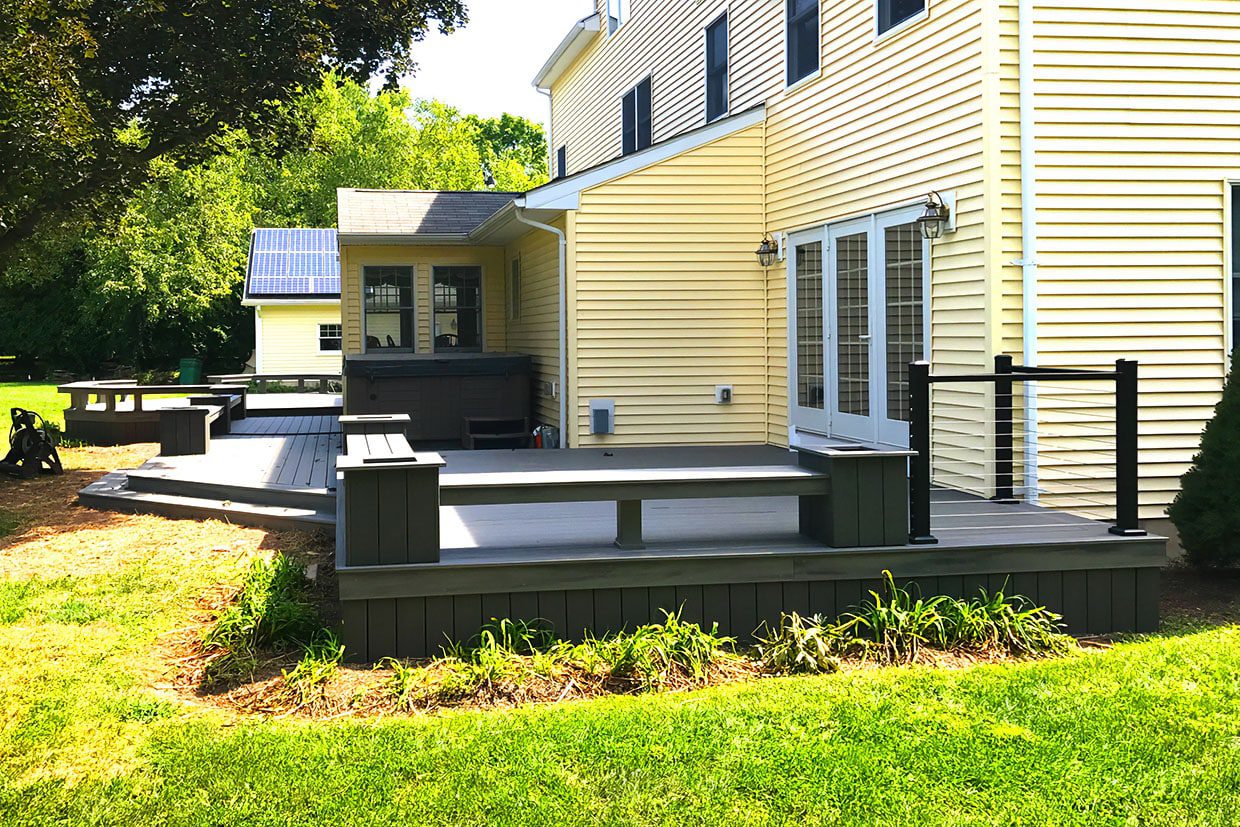
Materials Needed for Ground Level Deck Construction
Building a DIY ground deck requires a careful selection of materials and tools to ensure the structure is durable, aesthetically pleasing, and able to withstand the elements. Here at Olympic Decks, we recommend using specific types of materials that are best suited for the moist and variable Seattle climate. Below, you’ll find a detailed list of essential materials and tools, along with recommendations for choosing the most weather-resistant options.
- Framing Material: Since part of your deck’s structure may be close to or on the ground, opting for pressure-treated lumber is crucial. This wood is specially treated with preservatives that protect it against rot, decay, and insect infestation, making it ideal for ground contact applications. For the framing, ensure the lumber is rated for ground contact.
- Decking Material: You have a choice between traditional wood and composite materials. While wood is a classic choice, composite decking might be preferable due to its durability and low maintenance requirements. Composite materials are resistant to mold, warping, and fading, which are important considerations in the damp Pacific Northwest.
- Fasteners and Hardware: Use galvanized or stainless steel fasteners, angle brackets, and hardware to prevent corrosion. These materials are designed to resist the deteriorating effects of outdoor exposure, particularly in wet conditions.
Don’t forget the tools for ground level deck construction:
- Measuring Tape and Level: Precision is key in deck construction, so a reliable measuring tape and a level are essential to ensure your deck is perfectly dimensioned and level.
- Circular Saw: A sturdy circular saw is necessary for cutting lumber or composite materials to the right dimensions.
- Drill and Drill Bits: A high-quality drill, along with various sizes of drill bits, will be required for making pilot holes and driving screws.
- Hammer or Nail Gun: Depending on your preference and the materials used, a hammer or a nail gun will be needed to assemble the deck components.
By selecting the right materials and tools for your DIY ground deck, you ensure not only a smoother construction process but also a long-lasting, durable outdoor living space that will host countless memories.
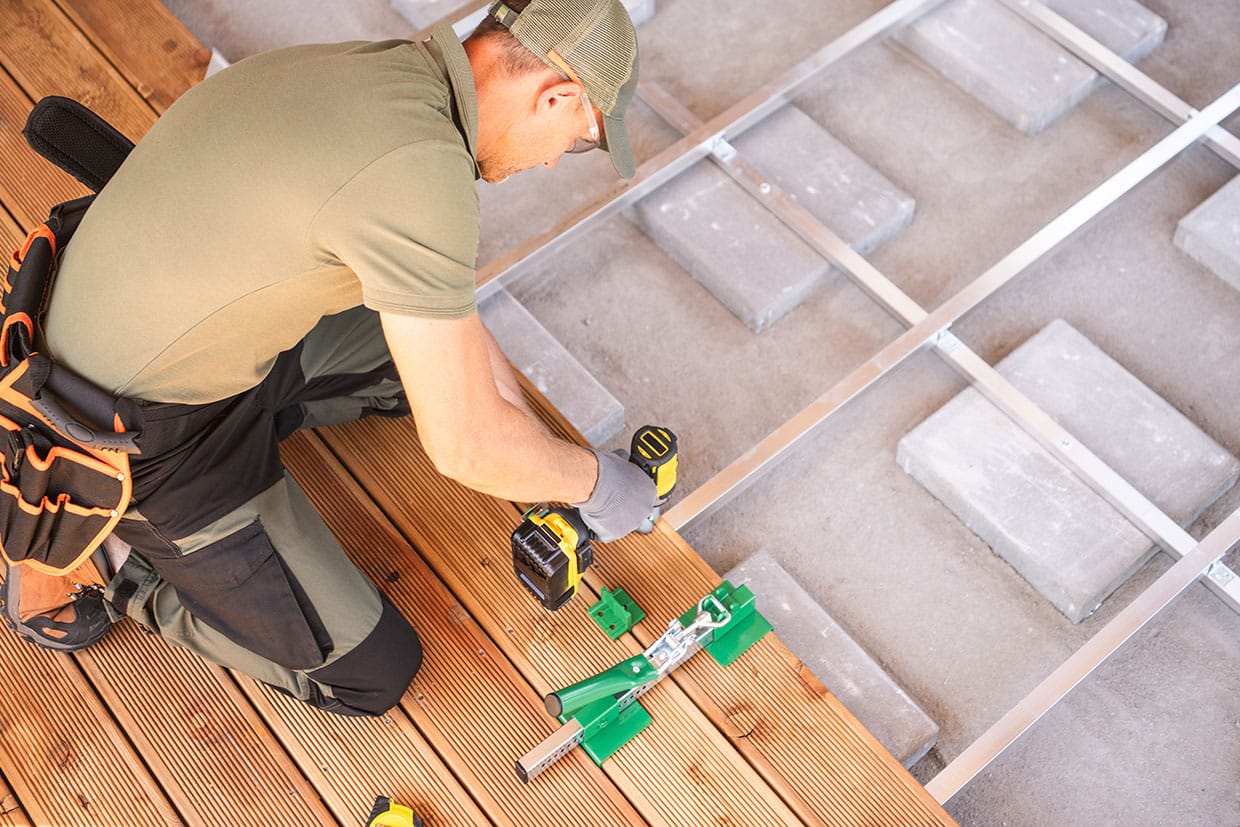
How to Build a Ground Level Deck: Step-by-Step Instructions
Building a low deck can transform your outdoor space into a beautiful and functional area perfect for many different outdoor activities. A well-built deck needs to be done right, so we’ve put together comprehensive step-by-step instructions to guide you through the process from start to finish.
Step 1: Site Preparation
- Clearing the Area: Begin by clearing the deck area of any vegetation, rocks, and debris. This includes removing grass and, if necessary, any existing structures or paving. Mark your perimeter clearly before any excavation begins.
- Leveling the Ground: Use a shovel and rake to level the ground. For areas with significant slopes, you may need to excavate or add soil to create a flat surface. Compact the soil to prevent settling, and use a long level or a laser level to ensure the area is even.
Step 2: Deck Frame
- Marking the Layout: Use stakes and string to outline your deck’s footprint. Measure diagonally between opposite corners to check for squareness; adjust if necessary until both diagonal measurements are equal.
- Installing the Joists: Place pressure-treated beams directly on the ground, running perpendicular to the final deck board direction. Ensure each beam is level and properly supported along its entire length. Before attaching any hardware, verify that your ground level deck framing plans account for proper airflow to prevent moisture from being trapped beneath the structure. Secure the joists to the beams using galvanized screws or joist hangers.
- Adding Blocking: Where necessary, add blocking between joists to increase stability and prevent the joists from twisting. If the surface is uneven, use shims to fine-tune height differences.
Step 3: Building the Platform Deck
- Choosing Boards: Select decking boards that are straight and free of significant knots. If using wood, pre-treat the cut ends with a wood preservative to extend their life.
- Laying the Boards: Start laying your decking boards from one point of the deck, working towards the other. Ensure each board is aligned and straight as you progress.
- Spacing the Boards: Use spacers to maintain consistent gaps between the decking boards for drainage and expansion. Typically, a gap of about 1/8 inch is advisable.
- Securing the Boards: Fasten the decking boards to the joists using decking screws. For a cleaner look, consider using hidden fasteners or screws that can be countersunk and filled.
Step 4: Finishing Touches
- Adding Edging: Install trim boards around the edge of your deck to create a neat finish and hide the ends of the deck boards. This can be made from the same material as the decking or a contrasting material.
- Installing Skirting: Skirt your deck to cover the structure underneath and prevent animals from nesting under it. Skirting can be made from lattice, vertical boards, or other decorative elements that match the decking. You can even include low railings if your design transitions to a slightly raised platform.
- Sealing and Staining: If your deck is wood, apply a sealant or stain to protect it from the elements and enhance its color. Even composite decks can benefit from a clean and occasional mildew-preventative treatment. For ease of maintenance, choose finishes that require minimal upkeep and can be reapplied without sanding.
By following these detailed steps, you can build a ground level deck that will impress your friends and be robust and long-lasting. If any step is outside your comfort zone, don’t hesitate to call in professionals like us at Olympic Decks for assistance.
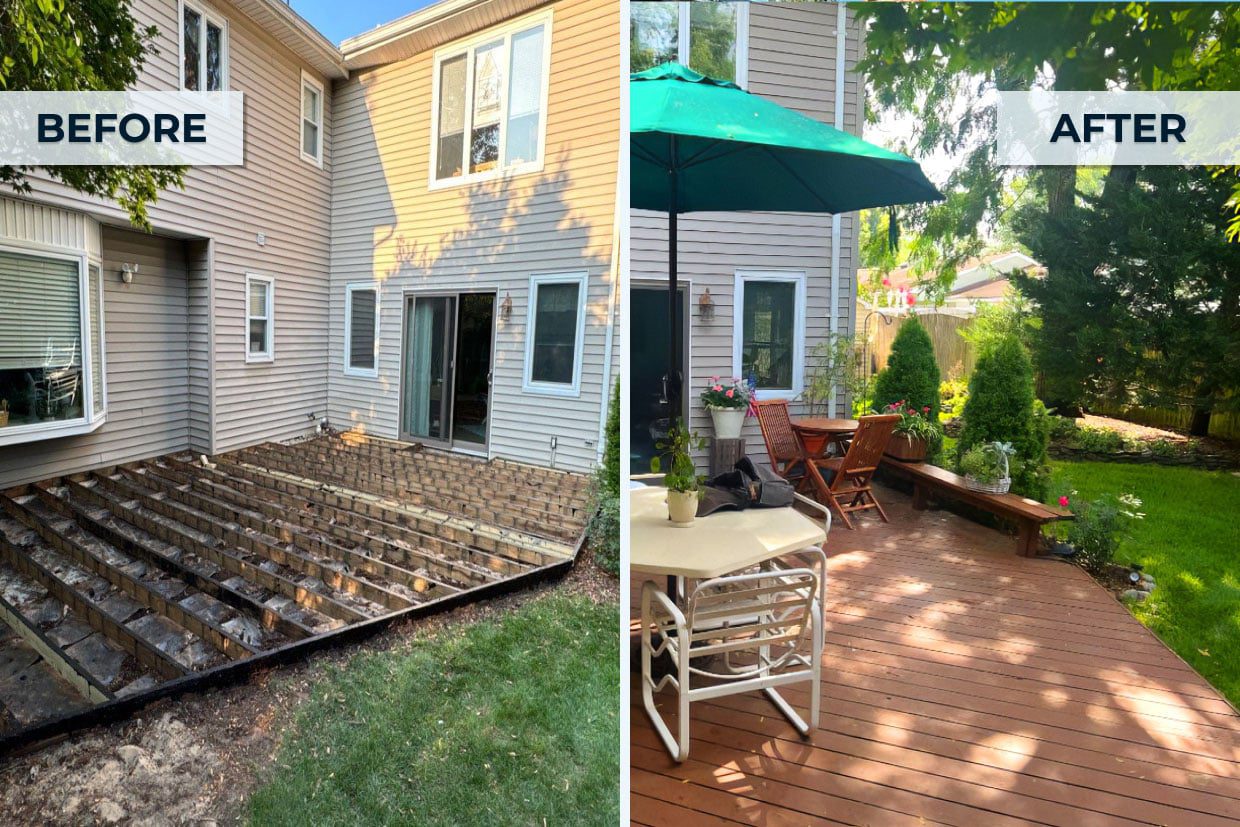
Bring Your Ground Level Deck to Life with Olympic Decks
If you ever feel unsure, there’s no shortage of helpful review videos and tutorials across the internet, but remember — nothing replaces professional expertise. When choosing the location, remember that proximity to your home can influence design and material cost, while accessibility affects usability. If you want to save time and avoid unnecessary back-and-forth, you can link directly with our design team for fast, expert feedback and an answer to every question. Working with Olympic Decks means less guesswork, fewer errors, and more confidence knowing your on ground deck is built to last.
And if you’re feeling inspired and ready to start your deck project, consider adding a bigger connected section or built-in seating area that complements your home’s outdoor aesthetic. At Olympic Decks, we ensure every piece of your project fits together perfectly — never moving out of alignment over time — so your deck remains safe, strong, and stunning for years to come. Don’t let hesitation hold you back from the deck of your dreams. Contact us today to discuss your project, and let’s lay the groundwork for your future outdoor oasis.

Olympic Decks is your Seattle area Deck Company, We specialize in all your Decking needs – new deck installation, deck resurfacing, louvered roof and cedar wood fence installation.


