
Key Takeaways
- Seattle averages 38+ inches of annual rain spread across 150+ wet days, which means a rain ready gazebo must focus on water management rather than the impossible goal of complete waterproofing. Water will find its way in, so your job is controlling where it goes.
- Flat or low-slope roofs, undersized gutters, and poor site drainage cause most gazebo failures in the Seattle area. A typical cedar wood gazebo with a 2:12 pitch and standard 4-inch gutters will show rot at beam ends within 3 to 7 years because water pools instead of shedding.
- Engineering specifics matter: aim for at least a 4:12 roof pitch, 5-inch K-style gutters for a typical size gazebo, 1/8 to 1/4 inch per foot ground slope away from the footprint, and 3/16-inch gaps between deck boards.
- Washington weather presents unique challenges including Pineapple Express storms delivering 5 to 10 inches in 48 hours, aggressive moss growth, and the October through June wet season when nothing truly dries. Westside locations near Puget Sound see 160+ rainy days annually.
- A rain ready gazebo works with water flow rather than against it. Smart details during construction prevent the ongoing maintenance headaches that plague most new decks and outdoor gazebos in the Pacific Northwest.
Why a Rain Ready Gazebo Matters In Washington
Picture November in Seattle. Grey skies stretch from horizon to horizon. A steady drizzle has been falling for three days straight, and the forecast shows more of the same through the weekend. This is not a storm. This is just Tuesday.
In Washington, the problem is not just how much rain falls but how long everything stays wet. From October through June, the region experiences what locals call the “9 months of grey,” a period when wood, fabric, and unsealed surfaces rarely achieve the dryness they need to resist rot and mold. Your outdoor room becomes a humidity chamber.
Here is the truth most pop up soft top gazebos and catalog structures ignore: no gazebo is perfectly sealed. Water will always find tiny gaps in flashing, work its way under shingles, and wick into end grain. The goal is not mythical “waterproofing” but rather controlled water management. After building outdoor structures through multiple Washington winters, the team at Olympic Decks has learned that drainage is not an afterthought but the foundation of every design decision.
Walk through any Puget Sound neighborhood and you will see the evidence of poor planning. Sagging roof lines on gazebos provide shade but also trap puddles. Green streaks of algae mark where moisture never fully dries. Posts meet concrete with no gap for airflow, and the wood has turned soft and punky at the base. A rain ready gazebo addresses each of these failure points before the first raindrop falls.
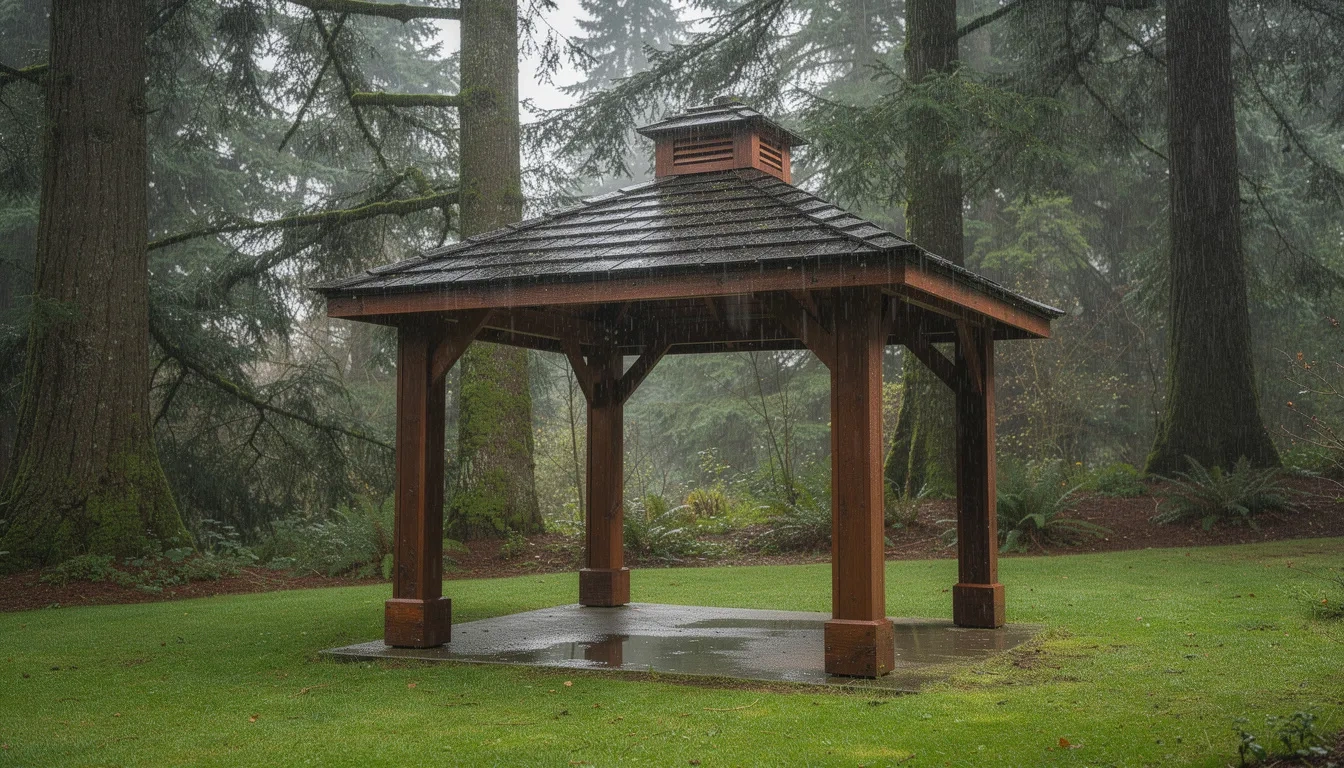
Understanding Pacific Northwest Rain Patterns
Seattle receives approximately 38 inches of annual rainfall. That number alone does not tell the full story. The rain arrives across 150+ days with measurable precipitation, creating consistent moisture that prevents materials from drying between storms. Limited sunlight hours, often fewer than 1,500 annually, slow evaporation to a crawl.
Why is 150 days of drizzle harder on your gazebo than 20 intense summer downpours? The answer comes down to physics. Light, steady rain at 0.1 to 0.25 inches per hour saturates materials through capillary action. Water wicks 6 to 12 inches into wood pores and joints without the surface runoff that heavier rain produces. In contrast, a thunderstorm sheets water off quickly, often before deep saturation occurs.
This is why the choice between covered vs. uncovered decks in Seattle is so critical; your outdoor living space faces the worst of both worlds in the PNW.
Wind-driven rain during Pineapple Express weather systems creates another challenge entirely.1 These atmospheric rivers push moisture sideways at angles up to 45 degrees, forcing water under typical 12-inch overhangs and into areas designed only for vertical rain. Exposed locations along the Everett, Bellingham, and West Seattle waterfronts feel this effect most intensely. Horizontal wind speeds during storms average 20 to 40 mph, imparting enough force to drive water 6 to 12 inches under eaves.
Moss and algae thrive in these conditions. They grow fastest on north-facing surfaces where sun is weakest, coating cedar, composite, and shingles alike. Beyond the slippery hazard, moss traps moisture against roofing materials and accelerates the breakdown of protective granules on asphalt shingles. Your gazebo stay dry depends partly on keeping these organisms under control.
Westside Washington, from Olympia to Bellingham along Puget Sound, experiences the highest sustained moisture. Tacoma averages 39.3 inches annually with 160+ rainy days. Eastside communities like Spokane and Yakima sit in the rain shadow of the Cascades and see far less precipitation. However, a rain ready gazebo built to westside standards will perform well anywhere in the state.
Freeze-thaw cycles add another layer of stress. Wet November and December conditions often give way to occasional winter freezes. Water trapped in cracks and joints expands by 9% when it freezes, widening gaps in wood grain, cracking poorly applied sealants, and separating flashing from structural elements. This cycle repeats with each cold snap, accelerating damage to any structure not designed to withstand the environment.
Roof Design And Water Evacuation For A Rain Ready Gazebo
Roof design is the heart of any rain ready gazebo. Flat or very low slope roofs represent one of the biggest failure points in Washington climates. Water that cannot escape fast enough pools on the surface, adding 5 to 10 pounds per square foot before finding its way into seams and sheathing. Within two to three wet seasons, this leads to leaks, sagging, and structural damage.
Minimum Roof Pitch
Specify a minimum 4:12 pitch for hard roofs in the Pacific Northwest. This means 4 inches of vertical rise for every 12 inches of horizontal run, creating an 18.4-degree angle. Testing shows a 4:12 pitch evacuates 95% of runoff in under 5 minutes. Compare that to a 2:12 pitch, where only 20% of water clears in the same timeframe. The difference between these two slopes often separates gazebos offer protection for decades from those needing replacement after five years.
Overhang Requirements
Roof overhangs of 12 to 18 inches on all sides push water farther from posts and deck edges. This dimension is not arbitrary. According to ASCE 7 wind load standards, a 24 to 36 inch overhang blocks 90% of wind-driven rain at 30-degree angles.2 Even a modest 12-inch extension reduces splash-back significantly and slows moss growth along the gazebo base. Every inch counts for protection from the elements.
Gutters For Any Size Gazebo
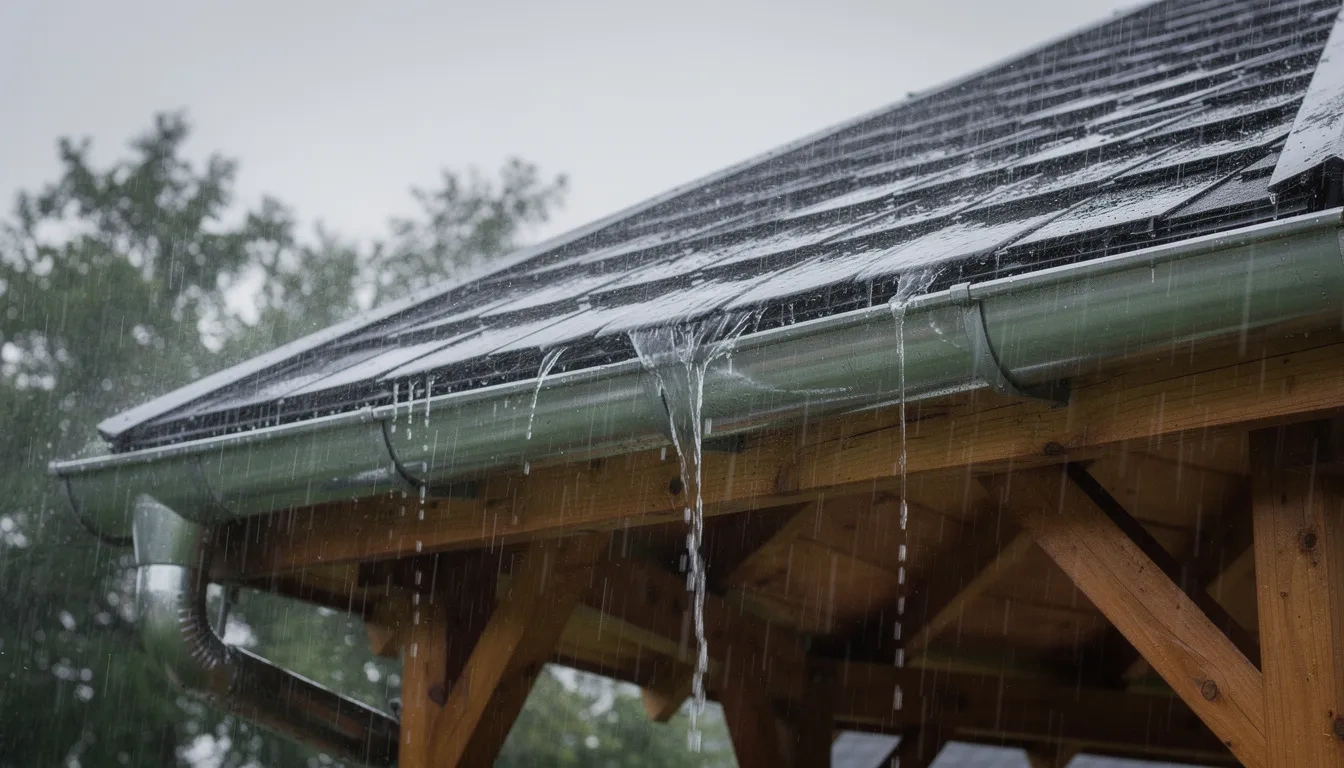
For a typical 12×12 foot gazebo roof, specify 5-inch K-style gutters with at least one 2×3 inch downspout per 300 square feet of roof area. This sizing handles standard rain with margin to spare during Pineapple Express events. Undersized 4-inch gutters overflow during heavy storms, directing water back toward walls and foundations.
Common gutter mistakes include:
| Mistake | Consequence |
| Undersized outlets | Water backs up and overflows at edges |
| Too few downspouts | Single points become overwhelmed |
| Corner dumping | Creates mud pits and undermines footings |
| Missing gutter guards | Debris clogs system during fall needle drop |
Metal vs. Shingle Roofs
Metal panels shed water and moss more easily than asphalt shingles. In PNW conditions, metal roofing typically lasts 40 to 70 years with minimal maintenance, while standard asphalt shingles show wear within 17 to 25 years. Moss struggles to grip the slick metal surface, and the steeper effective pitch helps rain evacuate quickly.
Metal does require careful fastening and sound control. Heavy rain on a metal roof creates noise that some find relaxing while others find distracting. Foam closures at panel edges resist wind uplift rated to 110 mph. Shingles remain a viable option when selected with 110 mph Class H impact rating and algae-resistant granules, though expect to replace them sooner in constant moisture.
Drip Edges and Flashing
Properly installed metal drip edges at eaves and rakes prevent water from wicking back under the roof edge and into fascia or sheathing. This detail is often skipped on DIY gazebos and many catalog kits. Use 2 to 3 inch galvanized steel drip edges that extend water 12 inches beyond the wall line.
Flashing at post connections, ledger boards, and any attachment to the house requires 26 to 28 gauge galvanized or aluminum material. Step flashing with 12-inch lengths lapped 4 inches under shingles, combined with counterflashing into posts at 4 inches, prevents the intrusion that leads to hidden rot.
Ventilation
A small ridge vent or breathable roof design lets moist air escape. Without ventilation, condensation forms on the underside of roof sheathing during cool, damp nights, effectively soaking rafters from the inside. Size vents to approximately 1 square foot per 150 square feet of roof area to exhaust moisture effectively.
Is your current yard drainage ready for a new structure? Don’t let water undermine your investment.Contact Olympic Decks today for a site evaluation and ensure your new gazebo sits on solid ground.
Foundation Drainage Systems Beneath A Rain Ready Gazebo
Water not caught by the roof or gutters ends up at ground level. The most invisible failures occur under the gazebo where homeowners rarely look. Standing water beneath the structure creates persistent humidity that rots floor joists and post bases from below.
Site Grading
Before construction begins, grade the site with a minimum slope of 1/8 to 1/4 inch per foot away from the gazebo footprint. This ensures surface water flows away from the structure rather than ponding underneath. A 12-foot gazebo should direct water to a point at least 10 feet from the nearest post.
Sub-Base Layers
A layered approach provides the best long-term performance. Place 3 to 4 inches of compacted crushed gravel, preferably ASTM D448 No.57 stone, beneath pavers, concrete pads, or deck footings.3 This gravel layer creates space for water to move horizontally rather than saturating the soil directly below the structure.
| Foundation Option | Drainage Performance | Durability | Best For |
| Gravel with stepping stones | Excellent | High | Maximum drainage, natural look |
| Pavers on sand/gravel base | Good | High | Finished appearance with runoff |
| Concrete pad | Fair | Highest | Stability, requires perimeter drainage |
| Bare soil | Poor | Low | Not recommended in PNW |
Overflow Planning
When gutters overflow during heavy storms, water sheets off roof edges at high volume. Design a gravel or river rock drip line around the gazebo perimeter to absorb impact and prevent mud from splashing onto posts. A 12-inch band of decorative stone serves both functional and aesthetic purposes in your landscape.
High Water Table Considerations
Low-lying areas of western Washington, particularly around south King County and parts of Olympia, experience seasonal high water tables. In very wet yards where standing water appears after heavy rain, consider a French drain or daylighted drain line at the downhill side of the gazebo area. This moves groundwater away and prevents the saturation that wicks up through concrete footings.
Material Choices For Rain Ready Outdoor Living
In a Washington rain ready gazebo, materials must handle constant moisture rather than occasional storms. Many catalog gazebos are designed for drier climates and use materials that struggle in 150+ days of annual precipitation.
Wood Options
Western red cedar contains natural thujaplicins that resist rot, making it a traditional choice for outdoor structures. However, even naturally resistant cedar darkens quickly and grows moss in Puget Sound conditions. Without regular cleaning and sealing every 2 to 3 years, cedar fails after 5 to 7 years as constant moisture overwhelms its natural oils. Testing shows cedar rots 40% faster than treated alternatives when exposed to 100% humidity conditions year round.
Pressure-treated lumber offers better rot resistance at lower cost, though it lacks the stylish aesthetic appeal of cedar. For structural elements hidden from view, treated lumber is a suitable option that makes practical sense. Visible components benefit from the appearance of cedar if you commit to ongoing maintenance.
Composite Decking
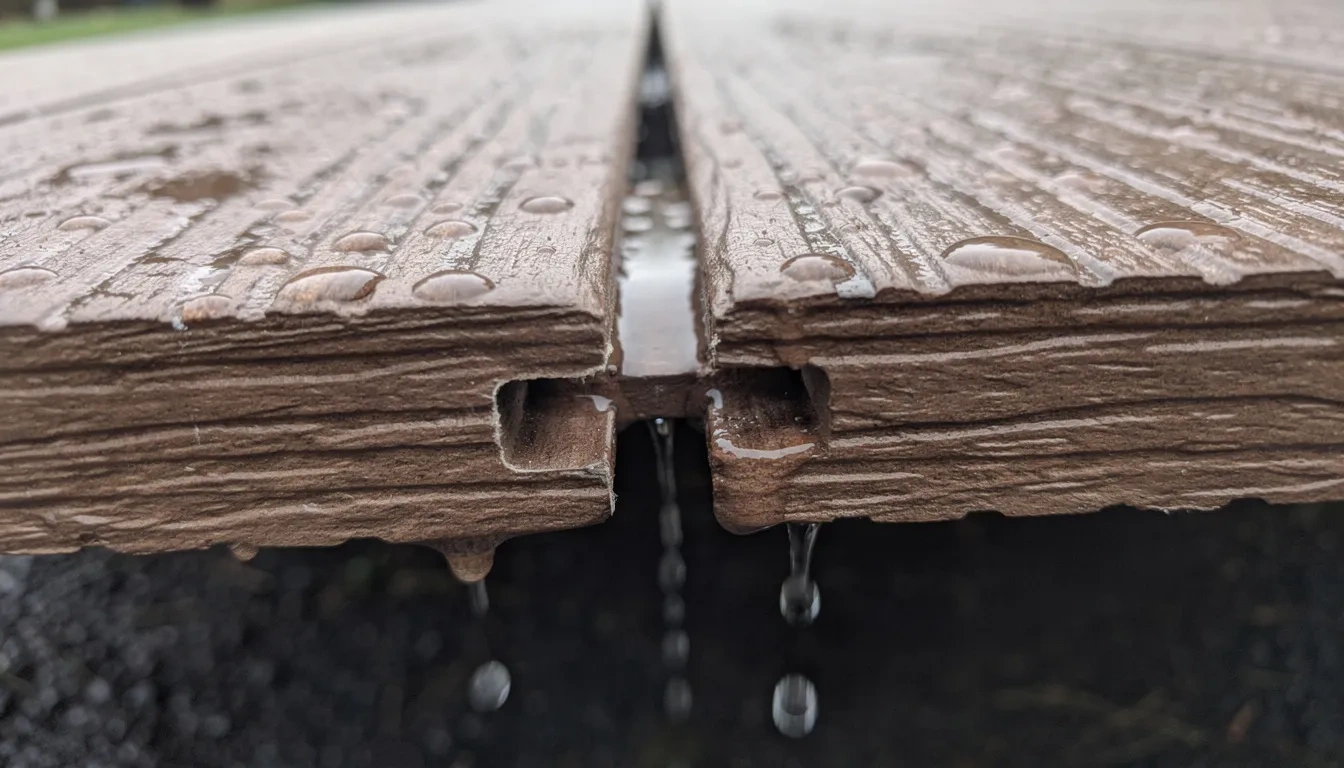
Composite decking brands like Trex Transcend or TimberTech feature hidden drainage channels that reject 99% of water retention. These materials maintain consistent 3/16-inch gaps between boards, allowing debris and water to escape. Composites carry 25-year to lifetime warranties and show less cupping than wood in wet conditions.
The tradeoff is higher initial cost and a different aesthetic than natural wood. For a floor surface or gazebo deck that receives constant exposure, using sustainable deck materials delivers long lasting use with less maintenance than wood alternatives.
Roofing Materials
Standing seam metal panels outlast asphalt shingles by decades in PNW conditions. Metal roofs installed properly show 0.5% annual failure rates compared to 2% for shingles. The durability justifies the higher installation cost for homeowners planning to enjoy their outdoor furniture and living space for 20+ years.
If budget drives the decision toward shingles, select products with algae-resistant granules and expect to clean the roof surface annually to control moss accumulation.
Fasteners and Hardware
Rust proof fasteners are essential in coastal and persistently damp environments. Hot-dipped galvanized screws resist corrosion for 15 to 20 years in most conditions. For gazebos within 5 miles of salt water, upgrade to 316 stainless steel hardware. Avoid aluminum in structural applications, as it pits and corrodes within 2 to 3 years in acidic PNW rain with pH levels of 4.5 to 5.5.
Sealants
Specify high-quality polyurethane or silicone-modified polyurethane sealants like NP1 at critical joints and penetrations. These products endure 20+ years with 500% elongation capacity, accommodating seasonal wood movement. Standard acrylic caulks crack after 3 wet seasons in PNW conditions. Even the best sealants need inspection and likely touch-ups every 5 to 7 years.
Long-Term Maintenance And Problem Prevention
Even the best-designed rain ready gazebo in Washington needs periodic maintenance. The long wet season and persistent moss growth take a toll on any structure regardless of material quality.
Deck Board Spacing
Whether using wood or composite beneath or around the gazebo, maintain 3/16-inch gaps between boards. This spacing lets water and debris escape, reducing standing moisture at joist interfaces. Boards with proper gaps dry 50% faster than tightly spaced alternatives. In winter, expect gaps to close slightly as materials expand, so starting at 3/16-inch ensures adequate drainage year round.
Common Moisture Traps
Watch for these design elements that hold water:
- Railing bottoms touching deck surfaces without drainage gaps
- Post bases set directly on concrete without standoffs or spacers
- Decorative trim creating hidden pockets where water sits
- Enclosed corners where debris accumulates
- Privacy curtains or mosquito netting designed to keep out insects that trap moisture when wet
Each of these features seems minor but can accelerate rot in specific locations. Bug protection screens and curtains should be removable for the wet season.
Flashing Inspection
Encourage visual inspection of drip edges, post bases, and any ledger connection to the house every year or two. Look for separation at joints, rust streaks indicating corrosion, or gaps where sealant has shrunk. Catching these issues early prevents the water intrusion that leads to hidden rot in structural members.
The 5-Year Checkpoint
Schedule a thorough maintenance session every 5 years:
- Full wash of roof and structure using gentle cleaning solutions
- Gutter cleaning and downspout flow testing
- Reseal exposed end grain on wood members
- Check for early decay at beam ends and fastener locations
- Tighten any loose parts or hardware
- Evaluate condition of weatherstripping and sealants
Moss and Algae Control
Clean moss and algae growth once or twice per year, especially on north and west exposures where sun is weakest. Use products safe for nearby plants in your garden and backyard. Slippery surfaces create fall hazards, and the moisture trapped beneath moss accelerates shingle deterioration. Zinc strips installed near the roof ridge release ions that inhibit moss growth for 10 to 15 years.
When Damage Occurs
When water damage appears on existing gazebo decks, “deck resurfacing” solutions using composites often prove more durable than repeated repairs with standard lumber. Replacing rotted sections with matching wood leads to recurring problems at the same locations. Transitioning to weather resistant materials breaks the cycle.
Ready to build a gazebo that lasts? Skip the maintenance headaches and start your project with the experts. Get a free estimate from Olympic Decks and let’s design a space that loves the rain.
Conclusion: Building With Water, Not Against It
A rain ready gazebo in Washington functions as a complete water management system. Every element works together, from the 4:12 roof pitch and properly sized gutters to the gravel sub-base and strategic gap spacing in deck boards. Each detail serves the goal of moving water away from structural components efficiently.
One counterintuitive insight emerges from all this engineering: small gaps and vents are your allies. Trying to seal everything tight traps moisture inside and actually speeds rot during the long wet season. A structure that breathes and drains outperforms one designed to keep every drop out.
Thoughtful design tuned to Seattle and broader PNW weather patterns means more usable space for family gatherings, entertaining, outdoor dining, and relaxing outdoors. Fewer repairs, less frustration, and a spacious design that still looks solid after a decade of grey winters become the reward for planning well.
Before breaking ground on your next outdoor living experience, plan with local rain patterns in mind. The investment in proper drainage, appropriate materials, and correct roof geometry pays dividends for 20+ years. Patner with Olympic Decks for your next project, because building with water rather than fighting against it turns your backyard gazebo from a maintenance burden into the summer and winter retreat you envisioned.
Frequently Asked Questions
What is the best roof pitch for a rain ready gazebo in Seattle?
While many catalog gazebos use 3:12 or even lower slopes, a 4:12 pitch or steeper is ideal for the Pacific Northwest. This angle allows water to sheet off at approximately 1.5 feet per second, clearing 95% of runoff within 5 minutes even during steady drizzle. Steeper pitches like 6:12 perform even better but increase material costs and wind exposure. Avoid any design with less than a 3:12 slope, as these retain water 20 to 30% longer and risk ice dams during winter freeze cycles.
Can I use a soft top fabric gazebo year round in western Washington?
Soft top gazebos struggle with the long wet season characteristic of Puget Sound climates. Fabric tops pool water during extended rain events, stretching material and creating weight that stresses frames. Winter storms with wind gusts exceeding 40 mph tear fabric and collapse lightweight structures. Soft top options work best as seasonal structures that are removed or placed in storage during late fall, typically by October. For year round use, invest in a hardtop permanent gazebo with metal or polycarbonate panels rated for your area’s wind and snow loads.
How far should my gazebo be from the house in a rainy climate?
Place freestanding gazebos at least 5 to 8 feet from house siding. This separation prevents splash-back from gutter discharge or roof runoff from soaking the home’s foundation or walls. If attaching a gazebo directly to the house, careful flashing installation becomes critical. Use step flashing integrated with house siding, ledger board flashing with proper slope, and ensure downspouts direct water away from both structures. Many homeowners underestimate how much water a gazebo roof concentrates into a small area.
Do I need permits to build a rain ready gazebo in Washington?
Most Washington cities and counties require permits for structures based on size, height, and whether utilities are included. Typical thresholds trigger permits for a carport, shed, or gazebo exceeding 120 to 200 square feet or 10 to 12 feet in height, though requirements vary by jurisdiction. Washington building codes reference snow loads (often 25+ pounds per square foot in some areas), wind loads up to 110 mph in exposed locations, and seismic considerations that influence how the gazebo must be constructed and engineered. Check with your local building department before construction.
Are louvered roofs a good option for Washington rain?
Well-designed louvered roofs can work in the Pacific Northwest if louvers close tightly and integrated gutters handle runoff properly. When closed, quality louvered systems achieve an effective pitch similar to a 4:12 roof. However, they still need careful drainage planning for overflow situations and regular cleaning to prevent debris from clogging the closing mechanism. Fallen needles from nearby evergreens create particular challenges. Budget for annual maintenance if choosing a louvered pergola style design. In very exposed locations with frequent sideways rain, traditional solid roofs typically outperform louvered alternatives for consistent protection.

Olympic Decks is your Seattle area Deck Company, We specialize in all your Decking needs – new deck installation, deck resurfacing, louvered roof and cedar wood fence installation.


