Hiring a deck builder in Seattle should not start with the prettiest photo in a portfolio. That photo matters, of course. But a good deck has to do more than look sharp for the first summer.
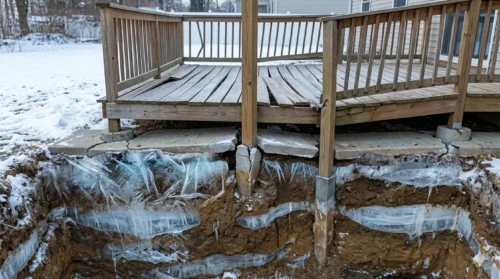
Seattle, WA is hard on outdoor structures, especially around shaded backyards, sloped lots, wet soil, and homes that sit under heavy tree cover. Damp winters, moss, moisture, drainage issues, and strict permitting requirements all shape the project. A deck that works in a dry climate may not hold up the same way here, whether the home is in Seattle, Bellevue, Kirkland, Renton, Shoreline, Edmonds, or another nearby community. That is why homeowners need better questions before choosing between deck builders, deck contractors, or the contractor with the lowest bid.
At Olympic Decks, we believe a deck should fit the house, the property, the Pacific Northwest climate, and the way people actually use their outdoor space. A dream deck is not just a design. It is planning, construction, materials, safety, and detail.
1. Best Deck Builders Near Me: Are They Registered and Insured in Washington?
Searches for best deck builders near me can bring up plenty of names. That does not mean every contractor is ready for your deck project. In Washington, homeowners should verify a contractor through the Department of Labor & Industries lookup tool before signing anything.
That check can help confirm:
- active contractor registration;
- bond and insurance information;
- workers’ compensation status;
- possible safety or construction citations.
It is not rude to check. It is basic protection for your property.
A trusted deck builder should be comfortable sharing registration details. If a company avoids the question, gives vague answers, or asks you to skip paperwork, that is a bad sign.
Ask directly: Are you registered in Washington, insured, and able to provide proof before deck construction starts?
2. Deck Building: Do They Understand Seattle Permits?
Deck building in Seattle is not only about lumber, railings, and a strong crew.
The Seattle Department of Construction & Inspections states that a permit is needed for decks more than 18 inches above the ground, roof decks, and decks in Environmentally Critical Areas.1 Many new deck projects and major replacements need permit review. If a property sits in an ECA, extra surveys or review may be required.
A reputable builder should know how permitting works in Seattle and should also understand when nearby cities may have their own review process. More importantly, they should explain it without making the homeowner chase every detail alone. A good company will file the paperwork in its name, coordinate city inspections, and keep the process clear from the first permit question to the final walkthrough.
Ask: Who handles permits and inspections, and how will you tell me what is required for my property?
| Question to ask | Number or requirement to know | Why it matters |
| Does my deck need a Seattle permit? | More than 18 inches above ground | SDCI generally requires a permit above this height |
| Is my property in an ECA? | Site-specific | ECA locations may need added review or surveys |
| Is the contractor registered? | Active WA registration | Washington homeowners can verify through L&I |
| What warranty is offered? | Often 1 to 10 years for builder warranties | Terms vary by builder, service, and materials |
| What material warranty applies? | Often 25 years to lifetime for some composite products | Coverage depends on manufacturer and product line |
3. Custom Deck: Will the Design Fit Real Life?
A custom deck should not be a generic platform with nicer boards. It should match the homeowner’s vision, the backyard, the budget, and the way the outdoor living space will be used.
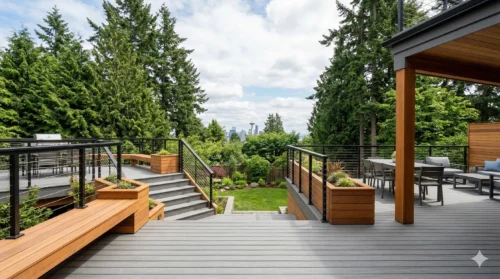
Some Seattle homeowners want quiet outdoor living with a small dining area. Others need a larger deck for family gatherings, a covered area for rainy months, or a layout that connects the house to an uneven backyard. In places like Bellevue, Kirkland, Renton, and Shoreline, the right plan may include patios, porches, pergolas, covered decks, cable railings, or space for year-round enjoyment. A family may need safe stairs and durable railings. Another homeowner may want a deck that changes how the house meets the backyard.
With custom deck design, the process should start with a no-obligation consultation and design planning. Homeowners should leave with a clear picture of the custom plan before anyone starts building. Some builders also use 3D modeling, which helps turn the idea into something easier to understand and protects the quality of the final design.
4. Deck Builders and Deck Contractors: Do They Specialize in Seattle WA Site Conditions?
Seattle is not flat, dry, or predictable. In the greater Seattle area, a deck builder needs to understand the site before talking seriously about the final plan.
Several site details can affect the deck’s structure and material choice:
- slope;
- drainage;
- wet soil;
- shaded areas;
- existing patios;
- moisture exposure;
- ventilation around the framing.
These details matter in Seattle, but they also matter across nearby service areas such as Redmond, Woodinville, Bothell, Everett, Lynnwood, and Normandy Park. The Pacific Northwest climate is hard on poorly planned decks. Wood rot, warping, moss, and worn surfaces can show up quickly when ventilation, framing, drainage, or materials are treated like afterthoughts.
That is where Pacific Northwest experience matters. A good builder should not struggle to explain ventilation, footing depth, fastening systems, framing repairs, or which materials make sense in high-moisture conditions. They should also know how rooftop decks, multilevel decks, hillside lots, and deck resurfacing projects change the structure, access, budget, and planning.
5. Composite Decking, PVC Decking, or Cedar Decks: What Materials Do They Recommend?
The right material can help the deck last. The wrong one can create problems early. Material quality matters here as much as style.
For Seattle-area decks, the builder should be able to compare options such as:
- composite decking, including Trex and other composite lines;
- PVC decking for lower-maintenance rainy-weather performance;
- cedar for natural warmth and a classic wood look;
- high-performance composite for resurfacing when the existing frame is still sound.
Composite decking combines wood fibers with plastic, helping the boards resist moisture, mold, and decay. Many lines are designed to resemble natural wood while reducing the amount of upkeep. Warranty terms vary, but some composite decking products are backed for 25 years or even a lifetime.
PVC decking is another low-maintenance material that can perform well in Seattle’s rainy conditions. Capped composite and PVC brands may also offer algae resistance and better slip resistance when the surface gets wet. Cedar is different. It gives a deck real warmth, natural beauty, and a classic style that can enhance a Seattle backyard, but it needs proper sealing and ongoing maintenance to survive the Pacific Northwest climate. For resurfacing projects, some homeowners may also consider #1 grade pressure-treated lumber or high-performance composite if the existing frame is still sound. In Seattle, wood is usually the more demanding choice, so both material quality and installation quality matter.
That does not mean composite or PVC is always the answer. It means the builder should walk through the tradeoffs instead of pretending there are none.
6. Deck Construction: What Is Included in the Process?
A deck construction process should not feel mysterious. Most deck installation projects include several moving parts:
- consultation;
- design;
- material selection;
- permitting;
- scheduling;
- construction;
- inspections;
- cleanup;
- final walkthrough.
At Olympic Decks, the process is built around consultation, design, installation, and clear communication so homeowners understand what happens before work begins. The homeowner should know who is coming, what happens first, when decisions are needed, how changes are handled, when the crew will install each major part, and how quality is protected at each step.
Look for attention to detail. Before the conversation moves to color samples, the builder should be able to talk through practical construction details, including:
- structural framing;
- railings;
- drainage;
- stairs;
- hardware;
- how the deck will attach to the house;
- safety and durability.
A stress-free project is not one with no questions. It is one where the questions are answered early.2
7. Covered Decks, Cable Railings, and Other Features: Do They Build the Whole Outdoor Space?
A deck often becomes part of a larger outdoor project. The plan may include more than boards and railings, especially when the homeowner wants the space to work in Seattle weather.
Common add-ons may include:
- covered decks for rain protection;
- cable railings to preserve a view;
- pergolas or patios;
- stairs and lighting;
- a cedar fence for privacy;
- a louvered roof system for more control over sun and rain.
These features should enhance the outdoor space, not feel added as an afterthought. They also affect the deck design, budget, permits, and construction schedule.
A company that only thinks about boards may miss the bigger picture. Outdoor living is about how the whole space works. Railings, shade, seating, access, privacy, and materials all shape enjoyment.
8. Best Deck Builders: What Do Past Clients Say After the Project?
The best deck builders should have more to show than polished marketing. Look for reviews that sound specific.
Strong homeowner feedback often mentions:
- happy clients;
- steady communication;
- expert craftsmanship;
- clean project management;
- how the team handled details during the job.
A photo can show what the deck looked like when the work was finished. Homeowner feedback tells you whether the company was reliable getting there.
Warranties matter too. Many deck builders offer coverage that may range from 1 to 10 years, depending on the services and materials involved. Material warranties may cover manufacturing or workmanship defects, but the terms are not all the same. Some manufacturers offer lifetime warranties on select products. A good builder should explain what is covered, what is excluded, and where the homeowner’s responsibility begins.
What to Look for Before Choosing a Deck Builder
Before signing, slow down. The right deck contractors should be able to answer questions without pressure. You want a locally owned company or an experienced local team that understands Seattle, WA conditions and nearby communities such as Federal Way, Auburn, Puyallup, Burien, SeaTac, and Des Moines. You also want a builder that uses only high quality materials, explains the budget honestly, supports permitting, and turns the design into a clear construction plan. Just as important, they should tell you when resurfacing is enough instead of pushing a full new deck.
That is what to look for before choosing a deck builder: proof, clarity, local knowledge, and the ability to connect design with construction.
For larger or more complex projects, especially multilevel decks, inspections matter even more. Understanding why deck inspections matter for multilevel decks can help homeowners avoid unsafe assumptions about framing, posts, railings, and load support.
The right builder will not just help you create a beautiful deck. They will help you build a durable outdoor space that fits Seattle weather, your property, neighborhood conditions, and the way your family actually uses the backyard.
FAQ
How do I choose the best deck builder in Seattle?
Start by checking Washington contractor registration, insurance, local experience, permit support, materials, warranties, and past client reviews. The best deck builders should explain both design and construction clearly.
Does a new deck need a permit in Seattle WA?
Many new decks in Seattle require a permit, especially if the deck is more than 18 inches above ground, is a roof deck, or is located in an Environmentally Critical Area.
Is composite decking good for Seattle’s wet climate?
Yes, composite decking can work well in Seattle’s wet climate because it resists moisture, mold, and decay better than many traditional wood materials.
Is PVC decking better than cedar?
PVC decking usually requires less maintenance than cedar, especially in wet conditions. Cedar has natural beauty, but it needs sealing, staining, and regular care to stay in good condition.
What should be included in a deck installation estimate?
A deck installation estimate should include materials, labor, permits, railings, stairs, demolition if needed, cleanup, timeline, warranty details, and any possible financing fees.
Can deck builders help with financing?
Some deck builders offer financing plans or work with financing partners. Homeowners should still review the total cost, including materials, labor, interest, and fees.
Why are inspections important for multilevel decks?
Multilevel decks have more complex load paths, posts, stairs, railings, and connections. Inspections help confirm that the structure is safe, stable, and built for long-term use.
Should I choose resurfacing or a full replacement?
Deck resurfacing can refresh an existing deck if the structure is still sound. Full replacement is usually better when framing, posts, or major safety elements are no longer in good condition.

Olympic Decks is your Seattle area Deck Company, We specialize in all your Decking needs – new deck installation, deck resurfacing, louvered roof and cedar wood fence installation.