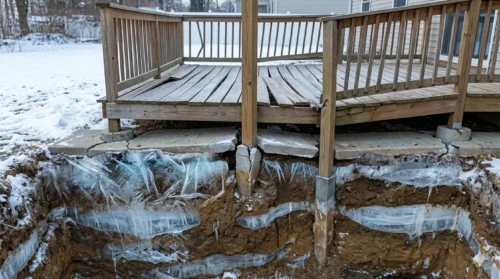
Maybe you’ve seen it yourself: a day or two after heavy rain, the siding where the deck meets the house is still damp, and a quick poke with a screwdriver into the ledger board reveals soft, spongy wood. That situation shows up again and again on East Coast properties and is usually a sign of trouble with the deck’s drainage. Many homeowners don’t notice it until the damage is advanced. The starting point for a reliable deck drainage system and real deck drainage fixes is understanding why the ledger — the board fastened directly to the house rim joist — is the single highest-risk location for water intrusion. At Olympic Decks, we see this pattern repeatedly: water from multiple sources converges at the ledger area, and without proper management, rot can compromise both the deck frame and the house structure within a few seasons.
The ledger sits at a junction where deck runoff, roof overflow, and splashback from siding all meet. Unlike freestanding deck elements that enjoy natural airflow, the ledger lacks ventilation. At the deck-to-house joint, moisture that can’t drain away does what it always does: it stays trapped against the wall, wicks into cut end grain, and gives decay fungi exactly the environment they need if no waterproofing or drainage detail is in place. 1 That’s why ledger attachment keeps showing up as the top failure point in industry reports. Poorly detailed flashing lets water travel behind the siding and into the sheathing, where the damage remains invisible until parts of the structure start to weaken. In a rainy climate like Seattle, with well over 150 wet days each year, proper deck drainage at this connection isn’t optional — a well-detailed deck drainage system here is the main defense against rot, mold, and long-term structural issues.
What actually causes water to collect where the deck meets the house and around deck joists
Understanding the path of water through your overall drainage system helps explain why drainage problems at the house tend to concentrate at the ledger. The sequence typically begins with roof runoff overwhelming gutters during heavy rain. Clogged downspouts or undersized gutters fail to handle typical rainfall volumes, and overflow dumps directly onto the upper deck surface near the ledger. This creates splashback that can reach several feet up the wall and toward the underside of the deck.
Ground-level factors compound the issue. Improper grading is an early warning sign. When the yard slopes toward the foundation instead of away, surface runoff heads back toward the deck structure. On many East Coast lots, clay-heavy soils keep that water in place and create saturated bands that can pull moisture upward through capillary action. If the deck boards or joists are also sloped the wrong way — back-pitched toward the house — water pools in the joist bays and ends up at the ledger and rim connection rather than draining clear of the structure after a heavy rain or a spring melt.
Debris traps in gutters and at the deck perimeter block normal flow, forcing water laterally toward vulnerable areas. The tight seal between deck framing and house exterior prevents evaporation, creating conditions where wood moisture content exceeds the threshold for decay. Without proper flashing lapped under siding, water collected by any membrane drainage system can leak onto the underside of the framing and directly onto house sheathing if not diverted elsewhere.
Quick diagnosis: early signs of drainage house trouble
Catching problems early prevents expensive repairs. Look for these indicators around the deck-house connection:
- Standing water near the ledger-siding junction that persists for hours after rain stops is a clear sign that your deck drainage system is not moving water away fast enough.
- Dark staining or discoloration on the ledger board or adjacent siding often signals a slow leak developing along the drainage system near the ledger.
- Mildew or mold appearing as black spots on wood surfaces near the house
- Soft or punky wood when probed with a screwdriver, indicating rot has started
- Buckling or cupping siding near the deck attachment point
- Musty odors from the gap between deck and house or from the underside of the framing
- Small gaps widening between deck rim and house wall
A simple hose test helps confirm suspected issues: spray water at the roof-deck junction and observe where it flows and pools. If water collects at the ledger area rather than draining away, your deck drainage system needs attention.
The fixes that usually work, in the right order
Priority matters when addressing any deck drainage system. Start with roof water control, because uncontrolled runoff accounts for most ledger saturation. Clean gutters thoroughly and verify downspouts drain at least five to ten feet from the foundation. Adding splash blocks or extensions keeps water moving away from the deck structure so the deck surface can stay as deck dry as possible between storms.
Next, address grading as part of the overall drainage system. Soil should slope consistently away from the house at a positive pitch. Sometimes this requires adding fill material or regrading to redirect surface flow laterally from the ledger area and free up the under deck area as usable dry space rather than a saturated zone. During a new deck installation, these details integrate easily without retrofitting costs.
Then focus on ledger detailing, waterproofing, and flashing during installation. Install Z-shaped metal or vinyl flashing under house siding and over the ledger top, with overlaps of several inches to divert water outward. Laid out properly, each element overlaps the next and creates a shingle-like path so water is pulled away from the wall by gravity. That keeps the most vulnerable joint in your deck drainage system from becoming a constant source of leaks. Adding joist tape on top of the joists before the boards go down is a similarly simple detail. It stops water from resting on bare framing and slows the rot that would otherwise start along those lines. 2
The last step is making sure the deck surface itself helps, not hurts. Boards need consistent gaps and the entire surface should fall gently away from the house. Those gaps give water somewhere to go, and the pitch helps carry it off the deck and away from siding, doors, and any living space under the structure.
Under-deck drainage systems and dry space solutions: helpful, but not the same problem
Under-deck drainage systems excel at intercepting water that drips through deck board gaps, protecting the space beneath and creating a dry area for storage or additional living space, effectively turning that under deck area into a predictable dry space that can function as storage or a covered patio. 3 Many under deck drainage systems can be installed during initial deck construction or retrofitted to an existing frame, and most are designed to protect the deck frame against moisture and deterioration rather than just catching drips. 4 However, these systems do not directly address water pooling at the house connection where surface runoff targets the ledger.
Above-joist membrane systems drape shallow troughs over joists to funnel drips to edge gutters, acting as a simple deck drainage system above the framing. They shield deck joists from below-deck moisture but leave the upper ledger exposed to house-directed flows and sun, snow, and wind-driven rain. Below-joist under-deck systems sit under the frame, catch runoff, and often make the underside look like a finished ceiling while keeping the space below dry. The flip side is that, if they’re not designed with airflow and drainage in mind, they can trap moisture against beams and joists. Many higher-end systems use aluminum or EPDM rubber membranes specifically because they resist long-term moisture exposure and UV better than basic materials.
They’re excellent for protecting the substructure and turning under-deck space into something usable, but they still rely on proper house-side details — especially flashing around the ledger — to complete the drainage picture. Think of them as handling the “under-deck” piece of water management, not as a one-stop deck drainage system. On some projects, that dry cavity is fully finished with a real finished ceiling, lighting, and ceiling fans, so what started as a catch basin ends up helping you create a full-fledged outdoor room.
Slope and runoff guidance for deck joists and joist spacing without fake numbers
Drainage only performs as intended when the structure and the site are pitched correctly. Joists should fall away from the house, deck boards should follow that slope, and the surrounding soil should be graded in the same direction so gravity can move water without help. Membrane manufacturers are specific about this in their specs, calling for defined slopes to keep water flowing and prevent puddles in the system. In the Seattle market, above-joist deck drainage is commonly detailed with a minimum slope of around 1/4 inch per foot toward gutters, scuppers, or a deck drain. On low-slope decks framed over a plywood subfloor, vinyl membranes can form a fully sealed, usable surface as long as that minimum pitch is respected during installation. Rather than fixating on any single number that may change with the product, focus on verifiable pitch: water should visibly flow away from the house when applied to any surface. For traditional open decks where a “dry-below” space is not required, the main goal is simply to move water away from the structure as quickly as possible.
Site-built systems using membrane materials require graduated swales between each joist bay to channel water toward perimeter gutters and reduce the risk of leaks. Overlaps in any membrane or flashing should lap under siding by several inches, maintaining the shingling principle that keeps water moving in the intended direction and supports long-term waterproofing performance.
DIY vs pro: when to stop patching and inspect a recently installed deck
DIY repairs work well for gutter cleaning, adding splash blocks, or minor grading adjustments where simple tools and a free weekend are enough to handle the job without outside assistance. But certain triggers signal the need for professional inspection: recurring water pooling at siding after attempted fixes, suspected flashing failure shown by stains under siding, soft wood in the ledger or rim joists, deck movement or creaking from weakened attachments, and interior moisture signs like wall dampness or basement mustiness tracing to the ledger area.
For planning and design that fits your site conditions, consider working with specialists in custom decks near you who can assess drainage challenges before they become expensive problems.
New build vs retrofit: protecting the under deck area early to avoid expensive fixes later
During new deck construction, ledger flashing, proper joist pitch, and integrated drainage details add minimal cost because framing access allows seamless installation and avoids wasted time and materials in the future. Retrofitting these elements demands opening siding and framing, escalating labor costs significantly. Elements like draping membrane materials before decking goes down take hours during initial installation but can require partial deck removal and tear-out to retrofit later.
This timing difference explains why most ledger failures occur in older decks where drainage was not addressed during the original build.
Frequently Asked Questions
What causes deck drainage problems near the house?
Roof runoff, splashback, poor grading, and back-pitch concentrate water at the ledger. The tight connection between deck and house prevents evaporation, trapping moisture against framing where rot develops faster than in well-ventilated areas.
How can homeowners spot early signs of poor deck drainage near the house?
Look for persistent water pooling after rain, dark staining on the ledger or siding, mildew patches near the house connection, soft wood when probed, and siding that buckles or cups near the deck attachment.
What are the best deck drainage fixes?
Address roof water first through gutter maintenance and downspout extensions, correct soil grading to slope away from the house, install proper ledger flashing, and ensure deck surfaces drain away from the structure.
How do gutter/downspout layout and grading affect drainage?
Properly functioning gutters capture roof runoff before it reaches the deck surface. Downspouts extended away from the foundation and soil sloped away from the house prevent water from collecting at the ledger.
Can an under-deck drainage system solve deck drainage at the house?
Under-deck systems protect the area beneath your deck from dripping water but do not address surface runoff or splashback that targets the ledger. They complement house-side fixes rather than replacing them.
What slope is typically needed for drainage systems?
Consistent pitch away from the house per manufacturer specifications ensures proper flow. The exact angle varies by system and site conditions, so follow product guidelines or consult a professional.
When should you call a pro for deck drainage issues instead of DIY fixes?
Call a professional when pooling recurs after attempted fixes, you suspect flashing failure, probing reveals soft wood in structural members, the deck shows movement, or you notice interior moisture that traces to the deck connection.
What deck drainage fixes are easiest to do during a new build vs expensive to retrofit later?
Ledger flashing, joist pitch, and integrated drainage membranes install easily during construction with full framing access. Retrofitting these elements often requires removing decking, opening siding, and structural modifications that multiply costs.

Olympic Decks is your Seattle area Deck Company, We specialize in all your Decking needs – new deck installation, deck resurfacing, louvered roof and cedar wood fence installation.