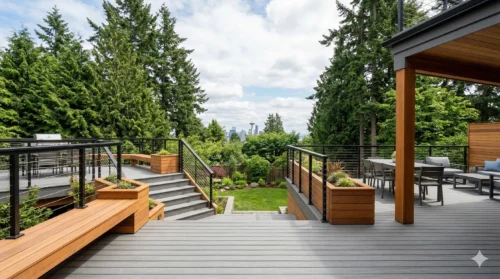
Under-deck waterproofing deck systems transform wasted space beneath elevated decks into functional outdoor living spaces by capturing water and channeling it away from the area below. They turn the area under a custom deck into usable outdoor living for your Seattle, WA home. Olympic Decks specializes in integrating these systems into Seattle builds, handling permitting and coordinating with waterproofing specialists to deliver reliable, long-lasting results. In a city like Seattle, where “chance of showers” feels like the default forecast, an under-deck system can be one of the most practical upgrades for squeezing more use out of the space under an elevated deck.
This guide breaks down the two main system styles — joist-top and ceiling-mounted — and explains typical cost factors, retrofit options for existing decks, and the maintenance that makes sense in a wet Pacific Northwest climate. Whether you’re hiring a local deck builder for a brand-new project or trying to improve a deck that’s already in place, you’ll see what to ask during the first consultation and which design and structural details are worth understanding before permits and materials are locked in. Seattle deck projects also have to clear local rules, including Seattle Municipal Code limits that often hold elevated deck and structure coverage to roughly 35% of the lot in many residential zones.1 Solid deck companies usually design the project with you, provide a clear drawing set with an itemized bid, and help you match the final scope to your budget before work begins.
An under-deck system works by creating a waterproof barrier directly under the decking. Water that slips through the gaps hits that surface, flows into built-in gutters, and then into downspouts, so the area below stays dry enough to use. You get the best results when this is tied into a full moisture management plan: appropriate surface waterproofing, properly detailed flashing where the deck ties into the house, and joist tape protecting the framing members that see the most water.
Under-Deck Waterproofing Deck Systems Seattle: What They Are and How They Work in Custom Deck Building
Under-deck waterproofing turns the underside of a raised deck into a controlled drainage surface instead of a constant drip zone. The system forms one continuous plane under the framing so water never reaches the patio. In the Seattle area, most seasoned deck builders do this with heat-welded vinyl membranes or with interlocking ceiling panels that seal tight across the underside and tie into the home’s drainage layout.
When it rains, water lands on the deck boards, slips through the gaps, and hits that sloped waterproof layer. It’s pitched just enough — usually about 1/8 to 1/4 inch per foot — for gravity to do the work.2 The water runs into built-in troughs, then into perimeter gutters, and finally down through downspouts that carry it away from the foundation.
In Seattle’s climate, that kind of setup earns its keep quickly. With more than 150 rainy days a year and over 37 inches of annual precipitation, a deck that leaks unchecked almost guarantees mold, rot in the framing, and an under-deck space that is basically off limits from October through May.3 For homeowners seeking comfortable outdoor living spaces despite Washington’s weather, deck waterproofing creates sheltered areas that remain functional regardless of conditions.
Two Main Approaches Used by Custom Deck Builders: Joist-Top vs Ceiling-Mounted Systems
Deck builders in Seattle WA typically recommend one of two primary approaches, each suited to different situations, priorities, and the overall custom deck project. The same principles used by deck builders around the world apply here, but local climate pushes the design toward reliable drainage. Before recommending a specific system, most deck builders use a collaborative design process and ask detailed questions about how you want to use the space, because the way you entertain, store items, or extend indoor living space into the outdoors directly affects which under-deck solution makes the most sense.
Joist-Top Systems (Over-Joist)
Joist-top systems apply a waterproof membrane directly on top of deck joists before installing decking boards or composite decking. This creates a fully sealed substrate that supports the deck surface while directing all water over the edges or through integrated scuppers and into the planned drainage design.
Materials typically include vinyl or TPO membranes that are heat-welded at seams for reliable water resistance and low maintenance performance over the years. Because Seattle is known for sustainability, many deck builders pair these membranes with sustainable decking materials such as composite decking or responsibly sourced wood; composite decking requires minimal maintenance, while wood decks need annual maintenance to combat moisture and protect the structure. These systems excel in new construction where access to joists is straightforward, allowing a custom deck builder and their team to deliver superior load distribution, clean lines, and minimal visible ceiling interference below.
Pros: Complete water capture even in wind-driven rain, no drop ceiling reducing headroom, durable performance over years of use.
Cons: Higher upfront labor costs for new builds, requires coordination during the deck building process, potential warranty considerations with certain decking products.
Ceiling-Mounted Systems (Under-Joist)
Ceiling-mounted systems install interlocking panels or vinyl sheets suspended from the underside of joists, forming a drop ceiling that catches water dripping through deck board gaps and protects the outdoor living spaces below. Water routes via troughs along joists to gutters at the perimeter, so the project can often be completed without disturbing the surface above.
These systems work well for retrofits because experienced deck builders can install them without modifying the deck surface above, even on older homes in Seattle, WA. Panels typically snap into place, and the finished appearance resembles a soffit ceiling that matches the style of the home and surrounding outdoor living areas.
Pros: Easier retrofit installation, serviceable components, clean aesthetic finishes.
Cons: Potential sagging under debris accumulation if slope is inadequate, penetrations for lights require careful sealing, reduces headroom slightly.
| Criterion | Joist-Top | Ceiling-Mounted |
| Installation complexity | Higher, requires new build or tear-off | Lower, mounts below existing deck |
| Cost range (per sq ft) | $12 to $18 typically | $8 to $12 typically |
| Appearance | Invisible from below | Finished ceiling look |
| Maintenance access | Limited without removal | Access panels available |
| Best application | New construction | Retrofit projects |
Neither approach is universally better. The right choice depends on whether you are building new or retrofitting, your budget, and your priorities for the space below. A brief consultation with a deck builder in Seattle WA helps align the project scope, budget, schedule, and specific needs so your team makes decisions with confidence.
Can It Be Added to an Existing Custom Deck
Retrofitting under-deck waterproofing on existing Seattle decks is realistic when joist undersides are accessible without major obstructions, and many deck builders treat this as a targeted improvement project rather than a full rebuild. Most homeowners start by reaching out to a local deck builder to confirm whether their structure is a good candidate. For decks under 12 feet high, scaffolding provides adequate access for installation at most Seattle WA homes.
The process involves cleaning joist surfaces, inspecting for rot or damage, and installing ceiling-mounted panels. An experienced team can typically complete the installation over several days, depending on the deck size and complexity, and will set a clear schedule so you understand how long the project will take and when your outdoor space will be usable again.
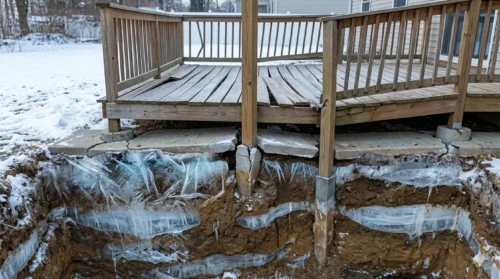
However, partial rebuilds make more sense when structural issues exist. If joists show rot, ledger attachment is compromised, or the deck lacks proper slope, waterproofing systems will not fix these underlying problems. In such cases, addressing structural concerns first as part of a broader deck design and repair project ensures longevity and reliability of the waterproofing investment.
Assessment factors that affect feasibility:
- Deck height and access requirements
- Joist spacing and condition
- Existing slope and drainage patterns
- Attachment to the home structure
For decks over 15 feet high, access costs increase substantially and can shift the economics of the project. Spans exceeding 20×20 feet with existing problems often warrant full replacement with a new deck to avoid future failures and give deck builders a clean structural starting point.
What These Systems Solve for Composite Decking and Wood Decks — and What They Do Not
Under-deck waterproofing systems effectively eliminate drip-through from deck board gaps, preventing water stains, mold proliferation, and wasted patio space below. Homeowners gain year-round use of their outdoor living space and the covered living space under the deck, even during Seattle’s dominant wet season.
These systems also reduce slip hazards on the surface below and slow wood rot progression by keeping moisture away from vulnerable areas, which helps protect the best deck features you paid for and keeps the assembly closer to a low maintenance solution.
However, these systems do not fix:
- Structural rot already present in joists or beams
- Poor ledger flashing that allows water intrusion at the house connection
- Inadequate deck slope causing ponding on the surface above
- Blocked drainage from debris or design flaws
Realistic expectations matter. A waterproofing system assumes your deck has sound structure and proper design, whether it is a simple platform or a complex custom deck. If underlying problems exist, address them as part of a repair project before investing in waterproofing so your home and living space stay protected.
Lighting, Fans, and Access Panels: How Builders Keep It Serviceable
Seattle custom deck builders plan for serviceability by pre-installing sealed access panels and electrical rough-ins during waterproofing installation, often coordinating these details with the broader deck design. Access panels, typically 2×2 feet, allow future maintenance and modifications without major disassembly and give your maintenance team clear points to reach wiring and products that may need replacement over time.
Fans require 12 to 16 inch penetrations with rubber gaskets for airtight seals, so those openings should be coordinated in the design phase rather than drilled late in the project. Positioning mid-span provides optimal airflow for the space below. LED strips can run along joist bays via low-voltage wiring chased through pre-drilled holes sealed with caulk.
Planning these features upfront adds 10 to 20 percent to project cost but ensures the system remains serviceable over time and aligned with your custom deck or new deck layout. A short design consultation is usually enough to lock in these details and adjust the schedule. Removable panel sections allow inspections and adjustments as needs change.
Maintenance for the Pacific Northwest
Pacific Northwest conditions require consistent debris management if you want the system to stay as close to low maintenance as possible. Quarterly sweeps of panel tops and gutters prevent clogs from leaves and pine needles common in Seattle’s evergreen landscape and are easy for homeowners or deck builders to work into a seasonal maintenance routine at the home.
Biannual gutter cleaning maintains proper flow so the system continues to perform for years.4 Seasonal checks in fall and spring should include inspecting seams, penetrations, and downspouts for leaks or potential ice dam buildup during rare freezes.
Annual pressure washing at low PSI helps maintain appearance without damaging seams or sensitive waterproofing products. Gutter guards reduce maintenance calls substantially and add longevity to the system.
Common Failure Points and How to Avoid Them
Common failures include:
- Leaks at joist-to-house transitions: Prevent with proper Z-flashing and sealant
- Clogged discharge lines: Mitigate with screens and minimum 2 percent slope
- Fastener penetrations loosening: Use self-sealing screws torqued to specification
- Poor slope causing ponding: Verify with laser level during installation
- Inadequate flashing at rail posts: Pre-plan boots and seals
Prevention involves coordination between your deck team and waterproofing subcontractors, third-party inspections when warranted, and ensuring warranty coverage from experienced deck builders who stand behind the project.
FAQ
What are under-deck waterproofing deck systems, and how do they work in Seattle weather?
These systems create barriers beneath decks that capture water via membranes or panels and route it to gutters. In Seattle’s 37+ inch annual rainfall, especially around Seattle WA, they prevent sub-deck flooding through sloped drainage and keep the outdoor living spaces below drier and more usable.
Which deck systems are better: joist-top systems vs ceiling-mounted systems?
Neither is universally better. Joist-top suits new construction and maximum durability when you want the best deck structure from the start. Ceiling-mounted works well for retrofits and provides aesthetic ceiling finishes that can be integrated into the existing deck design.
Can deck builders install an under-deck system on an existing deck?
Installation on existing decks is possible when joists are accessible and structurally sound, and a deck builder has confirmed the framing can support the added system. Rebuild when rot, poor slope, or ledger problems exist, and treat that work as a separate structural project.
How much do under-deck waterproofing deck systems cost in the Seattle area?
Costs typically range from $8 to $18 per square foot. Drivers include deck height, electrical integration, finish selections, access requirements, and whether the work is bundled with a larger new deck or resurfacing project, which a short consultation can clarify.
What problems do under-deck deck systems solve, and what they don’t?
They solve drip-through, mold growth, and space loss. They do not fix existing structural rot, flashing failures, or slope problems.
How do deck builders handle lighting, fans, and access panels?
Through sealed penetrations and pre-planned access panels installed during the waterproofing phase for long-term serviceability.
What maintenance do under-deck waterproofing systems need in the PNW?
Quarterly debris sweeps, biannual gutter cleaning, and annual inspections of seams and penetrations.
What are the most common failure points with under-deck deck systems?
Transition leaks, clogs, and penetration failures. Avoid with proper flashing, screens, quality fasteners, and professional installation.

Olympic Decks is your Seattle area Deck Company, We specialize in all your Decking needs – new deck installation, deck resurfacing, louvered roof and cedar wood fence installation.