Cable deck railing looks simple at first glance. A few clean posts, thin cable lines, open views, done. But in a Northwest home, railing choices are rarely just about style.
Rain sits on surfaces. Wet leaves collect in corners. Metal, wood, composite, glass, and hardware all age differently when the deck spends much of the year damp. That is why at Olympic Decks, we look at railing as part of the whole deck, not as a final accessory added at the end.
Cable railing can be an excellent fit when the goal is to keep the outdoor space open. The view stays clearer, the deck gets a modern edge, and airflow is less blocked. But traditional railing is not a weaker choice. It can be better when privacy, budget, easier upkeep, or a more traditional home style leads the decision.
The answer depends on the deck in front of you: its view, its posts, its house style, and its everyday use.
Cable Deck Railing: Why Homeowners Like the Horizontal Cable Look
Cable deck railing has become a popular choice because it does one thing very well: it gets out of the way visually while still adding clean aesthetic appeal.
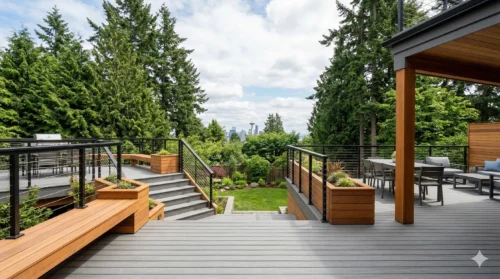
The thin horizontal cable profile creates unobstructed views, which is a real advantage on decks that face trees, water, sloped yards, gardens, or a wide patio area. Instead of looking through thicker balusters or heavy visual columns, the eye moves through the railing system with less interruption. The result feels lighter, cleaner, and more connected to the outdoors.
There is also a practical side. The open design of cable railing allows airflow across the deck surface, which can help reduce moisture retention. In the Seattle area, that matters. Less trapped debris around the edges can make the whole railing system easier to live with. Damp leaves, pollen, and grime have fewer places to sit.
Most cable systems use stainless steel cable for a reason. It offers strength, durability, and good corrosion resistance.1 Stainless steel is not completely maintenance-free, but with the right grade and hardware, it can handle exterior conditions well.
Still, cable railing is not magic. It needs tension. It needs sturdy posts. It needs the right hardware. And it needs to be installed with code compliance in mind.
Cable Railing System Details: Cable Bullet Hardware, Metal Posts, and Tension
The clean look hides the technical side. A cable railing system depends heavily on tension. Cable railing can be built with horizontal cable runs that attach to posts or vertical cable runs that attach to rails, and each layout changes how the system handles tension. If the posts are not securely mounted, the cable can loosen, sag, or lose its straight horizontal line over time. That is especially true on long runs, angled runs, and stairs, where adjustment and hardware placement matter more than they appear to at first.
This is where deck railing kits can be tempting. Kits may promise easy installation and a complete set of components, but not every kit fits every deck. Some kits work well for simple layouts, especially when the parts are designed to attach cleanly to compatible posts and framing. Others get complicated once the deck has corners, stairs, angled runs, mixed materials, or older framing that is not perfectly square.
High-quality components matter. Fasteners, cable braces, horizontal brackets, infill adapters, caps, tensioners, and cable bullet hardware all affect safety and long-term performance. So do the posts. Metal posts, powder-coated aluminum posts, and well-built composite or wood posts can all work, but they need to be structurally sound before the cable is tightened. These features separate a reliable railing from other products that may look similar online but perform differently once installed outdoors.
A good cable railing project is not only about buying sleek materials. It is about making sure the deck can support the system.
Traditional Deck Railing Still Makes Sense for Many Homes
Traditional deck railing has not disappeared for a reason. Wood railing, cedar posts, composite railing, vinyl, aluminum, and mixed-material systems can fit Northwest homes beautifully. Some feel warmer. Some create more privacy. Some are more affordable. Some are easier to match with older homes or covered outdoor spaces.
A traditional railing may also feel more secure for families who dislike horizontal cable lines. Cable railing has to follow local building codes, including spacing requirements that prevent unsafe openings. Still, style matters too. Some homeowners simply like the more grounded look of vertical balusters.
Composite railing is a strong option for homeowners with composite decking or anyone who wants a durable railing with less upkeep than painted wood. For many lower-maintenance projects, it can be the most popular choice because it feels finished without the constant repainting wood often needs. Glass can be the right choice when the goal is a nearly unobstructed view and better wind protection. But glass shows everything: water spots, fogging, fingerprints, dust. Cable railing keeps the view open without asking for the same constant cleaning.
Popularity should not drive the decision by itself. The right railing is the one that works with the property, the deck structure, and the real outdoor conditions.
Stainless Steel Cable, Aluminum, Composite, or Wood?
Materials decide how well the railing performs over time. Common cable railing materials include stainless steel, aluminum, and composite materials, each with different aesthetic and durability benefits. Stainless steel cable is often used because it is strong, durable, and resistant to corrosion. Exterior-grade stainless steel cable needs less upkeep than many railing materials, but it is not maintenance-free. Wet leaves and organic debris should not sit against the cable because they can hold moisture and create staining. Mild soap is usually enough for routine cleaning and helps prevent buildup from dirt, rust particles, and other contaminants.2 Abrasive cleaners can do more harm than good by scratching stainless steel or damaging protective coatings on metal.
Aluminum railings are a durable option, and some products may come with warranties against defects such as fading or warping. Powder-coated aluminum also gives the railing a clean modern finish, especially when combined with properly engineered cable components.
Composite railing feels softer and more finished than metal while reducing some of wood’s maintenance needs. Wood railing still has natural beauty and design flexibility, especially when it is carefully crafted around the home’s architecture, but in damp weather, it needs regular care.
| Railing option | View openness | Typical maintenance level | Good fit for Northwest homes |
| Horizontal cable railing | 5 out of 5 | 2 out of 5 | Strong views, modern decks, open yards |
| Glass railing | 5 out of 5 | 4 out of 5 | Wind control, view decks, higher cleaning tolerance |
| Composite railing | 3 out of 5 | 2 out of 5 | Composite deck projects, lower-maintenance homes |
| Wood or cedar railing | 2 out of 5 | 4 out of 5 | Traditional homes, warmer visual appeal |
| Powder coated aluminum railing | 4 out of 5 | 2 out of 5 | Durable modern systems, clean lines |
A railing can look perfect in a catalog and still be the wrong fit for a shaded, wet, leaf-heavy deck, especially if the existing surface already shows signs that the deck may need resurfacing before railing upgrades make sense.
Cable Railing and Code: The Details Matter
Cable railing must be planned around safety, not just visual appeal. Local building codes often require residential deck guards to be at least 36 inches high where guardrails are required. Openings are commonly limited so that a 4-inch sphere cannot pass through. That gap rule matters with cable, because loose or poorly spaced cable can create unsafe openings.
Posts are just as important. If posts flex too much, the cable may sag. If hardware is not installed correctly, the railing may need repeated adjustment. If angled runs are handled casually, the system can look uneven or fail inspection.
That is why how railing choices fit into the deck building process matters. Railing should be discussed early, not after the deck structure is already complete. Cable systems can affect post spacing, blocking, hardware selection, stair planning, and final inspection details.
This is also why professional deck builders look beyond the railing style. A professional team is not only asking whether cable looks sleek. They are checking structural integrity, code compliance, fastening points, post layout, and how the railing will withstand Northwest weather.
Which Railing Fits Your Outdoor Space Better?
Cable railing belongs on decks where the view should stay part of the experience. It is a fantastic fit when the deck overlooks trees, water, a garden, a lower patio, or a large backyard. It also gives homeowners a modern system without the more visible cleaning demands of glass panels, which can be one less thing to worry about in wet Northwest weather.
Traditional railing belongs where privacy, warmth, budget, or architectural fit matters more. Wood, cedar, composite, vinyl, and aluminum can all look finished and last well when they are installed correctly.
Cable can feel sleek and open. Traditional railing can feel grounded and familiar. Neither one is automatically better. The smarter question is this: what should the railing do for the deck? Frame the view? Add privacy? Make the space feel safer? Match a composite deck? Withstand wet weather with less maintenance? Keep the project cost under control? Once that is clear, the right solution becomes easier to see.
FAQ
Is cable railing good for Northwest weather?
Yes, cable railing can work well in Northwest weather when exterior-grade stainless steel cable, durable posts, and proper installation are used. Regular cleaning helps prevent staining and buildup from wet debris.
Does cable railing block the view?
Cable railing is designed to preserve unobstructed views. The thin horizontal cable lines create a more open sightline than many traditional railing systems.
Is cable railing hard to maintain?
Cable railing usually needs mild cleaning, debris removal, and occasional adjustment checks. It does not require constant cleaning like glass, but stainless steel and hardware still need basic care.
Can cable railing be installed with wood posts?
Yes, cable railing can be installed with wood posts if the posts are structurally sound and properly reinforced. The posts must be strong enough to hold cable tension without flexing.
Are deck railing kits a good idea?
Deck railing kits can work for simple layouts, but they are not ideal for every project. Stairs, angled runs, older framing, and custom posts can make installation more complicated.
What is better, cable railing or composite railing?
Cable railing is better for open views and a modern look. Composite railing may be better for lower maintenance, a softer visual style, and projects where privacy or a fuller railing profile matters.
Does cable railing meet local building codes?
It can, but only with proper spacing, secure posts, correct guard height, and code-compliant hardware. Local building codes should always be checked before installation.
Is cable railing more affordable than glass?
Cable railing is often more affordable than glass, but the final price depends on posts, hardware, materials, layout, labor, and project complexity.

Olympic Decks is your Seattle area Deck Company, We specialize in all your Decking needs – new deck installation, deck resurfacing, louvered roof and cedar wood fence installation.