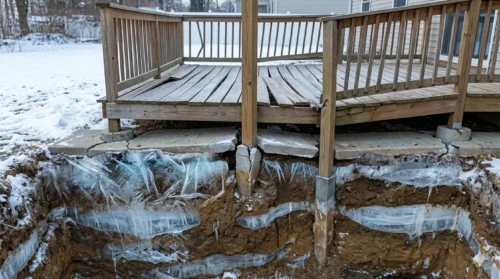
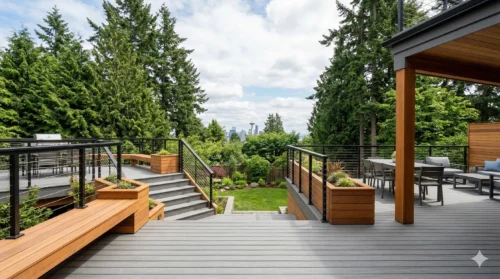
Some deck problems announce themselves loudly. A board cracks. A railing shifts. A tread feels soft the second you step on it. But a lot of stair issues do not start that way. They start as the kind of thing homeowners talk themselves out of worrying about.
Maybe the steps look dirty after winter. Maybe the deck stairs look a bit worn and overdue for a proper deck clean. So the first instinct is usually cosmetic: wash everything down, clean off the mold, and make the deck surface look presentable again. Sometimes that works. Often it does not.
Stairs take more abuse than the rest of the deck. They handle concentrated foot traffic, direct exposure, and regular contact with water, dirt, and debris from the yard, garden, and backyard. They also carry more structural stress. Flat walking surfaces and sections of the deck surface can hide problems for a while. Stairs usually cannot. In Seattle, stair and deck design also has to account for moisture resistance, slip safety, and the challenge of making compact or sloped spaces work well.
That is one reason the team at Olympic Decks pays close attention to stair systems during inspections. If the stairs are starting to fail, the issue is often deeper than surface wear, and it can say a lot about the condition of the larger structure.
Why stairs and deck condition should be evaluated together
Homeowners often treat stairs as a smaller part of the project, but stair performance and overall deck performance are closely connected. The stair system relies on the same framing, support logic, and build quality that hold the rest of the structure together. If the connection to the main deck starts to loosen, the problem rarely stays isolated for long.
That is especially true on older wood decks and on any existing deck that has gone through wet weather, sun, and years of maintenance focused more on appearance than on structural integrity. Stairs flex more, move more, and usually show stress before other surfaces do.
When cleaning is no longer the right solution
There is nothing wrong with starting with cleaning. A proper wash can improve traction, remove grime, and make a neglected outdoor space look usable again. Most people start there because the change is visible right away. But cleaning has limits.
A pressure washer can strip dirt off boards, but the right brush and cleaning products matter too if you want to avoid damaging the deck surface during maintenance. Fresh staining can improve visual appeal. It cannot fix failing connections. A coat of finish can enhance natural wood, but it will not restore structural integrity.
Sometimes homeowners repeat the same cosmetic fix because the result is immediate. The stairs look better for a few weeks, but the soft tread still feels soft, the railing still moves, and the same moisture marks return. That is when the real question changes.
Soft or uneven deck stairs are not just a surface issue
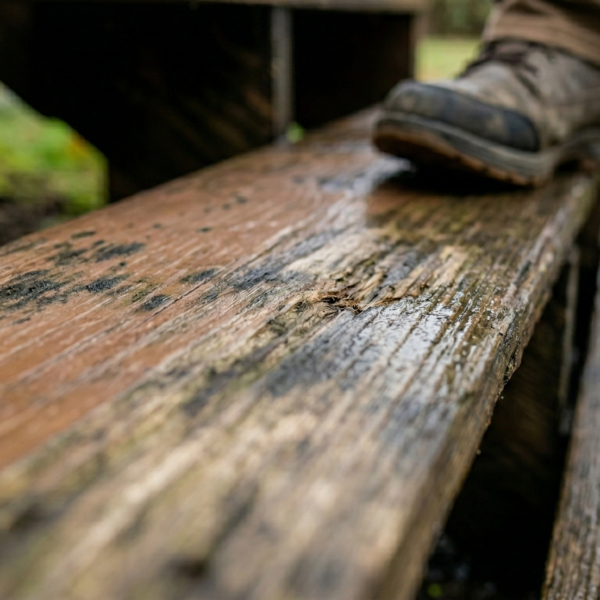
One of the clearest warning signs is how the steps feel underfoot. If a tread feels soft, springy, or uneven, that should not be brushed off as normal aging. For safety and comfort, deck stairs should generally fall within a 30° to 38° angle, with a maximum riser height of 7.75 inches and a minimum tread depth of 10 inches.1
With wood decks, this often points to moisture damage inside the wood. The top board may still look intact after cleaning or staining, but the fibers underneath may already be breaking down. That often happens in shaded areas, near the edge of the step, or where debris from the garden stays damp.
Sometimes the tread is the problem. In other cases, the issue is lower in the stair system, where the framing is weakening closer to the foundation of the stair run. Either way, deck stairs should feel stable and predictable.
A composite deck can hide this issue differently. The outer composite tread may keep its appearance longer than natural wood, but that does not mean the supporting structure below is sound.
Why deck design matters when a loose railing becomes a bigger concern
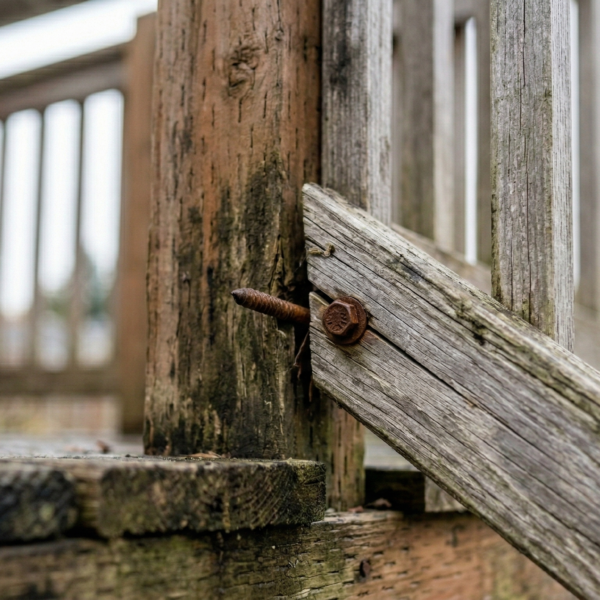
A shaky railing is easy to dismiss because it can seem minor at first. That is exactly why it gets ignored longer than it should.
Deck railings are functional safety components, especially on stair runs where movement is more dynamic and changes in vertical height matter. If the railing shifts when someone uses it for balance, the post connection may be weakening, the surrounding materials may be softening, or the assembly may not have been reinforced properly from the start. In Seattle, decks above 36 inches generally require guardrails at least 36 inches high.2
This matters on both wood decks and composite deck systems. Some homeowners assume newer-looking composite materials mean the stair system is fine overall. But deck railings only perform as well as the framing and fasteners holding them in place. A loose railing is usually a symptom, not the whole problem.
Staining, mold, and recurring moisture are rarely random
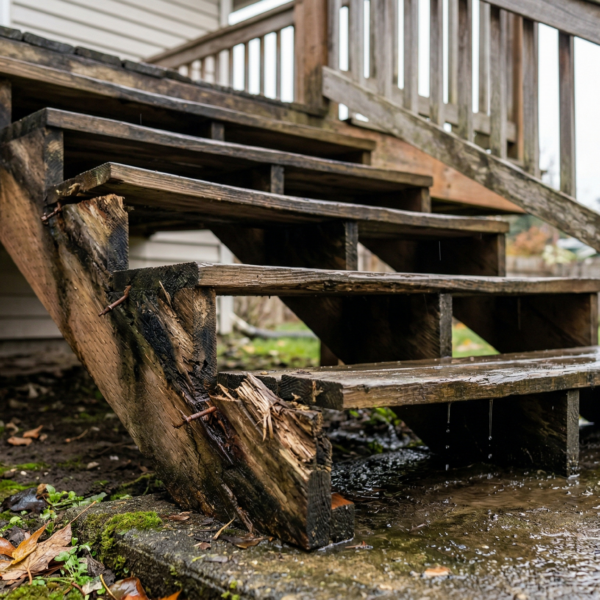
Not all discoloration is harmless. If the same parts of the stairs keep developing dark staining, slick patches, or visible mold, there is usually a reason.
Sometimes the layout traps water. Sometimes airflow is poor. Sometimes runoff from the main deck keeps feeding moisture into the same area. This is where surface-level maintenance runs into a larger deck design or drainage issue. Good water management should also include a slight slope away from the house so runoff does not keep working back toward nearby foundations.
If the problem keeps returning after cleaning, it is worth looking into managing moisture under the deck and around the stair structure itself. Moisture does not just affect how the stairs look. It changes how long the materials last and how safely the system performs over time.
The pattern is especially relevant where stairs land near concrete, planting beds, or heavily irrigated garden edges. Water exposure is not always dramatic. Often it is simply persistent, and persistent is enough.
Movement in a composite deck stair system is rarely just cosmetic
Deck stairs should feel consistent. The treads should read as one coordinated system, not as separate pieces drifting apart.
If boards are separating, gaps are widening, or one step sits out of line with the next, the problem may be in the framing, the fastening pattern, or the original installation. At that stage, a safety inspection should include checking joist spacing and the overall condition of the framing to determine whether the substructure is still sound.
Older stairs built with pressure treated lumber can dry, shrink, and change over time. That alone does not mean failure. But when those shifts combine with moisture and repeated wear, the result can be a stair system that no longer feels solid.
The same principle applies to a composite deck. Composite surfaces are often chosen for low maintenance, but they still depend on correct support spacing, compatible fasteners, and the right materials beneath them. Composite decking often lasts longer than wood decking because it is more durable and usually needs less upkeep over time, but longevity still depends on proper support and installation.
When repeated repairs stop making financial sense for the current deck
This is the stage many homeowners know well. One board gets replaced, one tread gets resecured, one railing fastener gets tightened, and a few months later something else needs attention.
A repair here and there is normal maintenance. But when the same stair area keeps asking for more work, or each fix reveals the next issue, it becomes harder to justify treating symptoms one by one.
That is when it makes sense to think about resurfacing instead of repeated repairs or, in some cases, a more meaningful rebuild. Not every aging stair system requires a new deck, but some do point to a larger problem in the current deck that cosmetic work is only delaying.
The better question is not whether the stairs can be repaired. It is whether the repair is a real solution or just helps the deck sit on borrowed time.
| Repair / Decision Point | Typical Cost or Code Number | Why It Matters |
|---|---|---|
| Deck refinishing | $3–$7 per sq. ft.; average about $980 | Useful when the issue is mostly surface wear, but it does not solve failing framing or structural movement. |
| Loose deck stair repair | $25–$50 per stair | Reasonable for isolated stair movement, but repeated fixes can add up quickly when the underlying system is failing. |
| General stair repair | $954–$3,238 average; major structural fixes can exceed $6,000 | This is often the point where homeowners should compare repair cost against partial rebuild value. |
| Deck railing replacement | $650–$3,400 average; average around $1,100 | Important when rail movement is no longer a simple fastener issue and safety is part of the decision. |
| Seattle deck permit trigger | Permit typically required when a deck is more than 18 inches above grade | Bigger stair/deck changes often move out of cosmetic work and into permit territory. |
| Seattle stair basics | Max riser 7.75 in.; min tread depth 10 in.; min width 36 in. | Helpful numeric checkpoint when explaining why “slightly uneven” stairs may already be outside a comfortable standard. |
Choosing the right materials still does not solve everything
Homeowners comparing options often focus on appearance first. That is understandable. People want a deck that fits the house and works with the rest of the outdoor space.
Some prefer natural wood for warmth and character. Others want a composite deck for easier upkeep and a low maintenance routine. Both can work, but both depend on good detailing, proper support, and deck design that matches how the stairs will actually be used.
Pressure-treated wood remains a common choice because it is affordable and resistant to decay and insects. Composite materials can reduce sanding, sealing, and staining, and they often suit a more modern deck design. In the Seattle area, composite and vinyl materials are also popular for their low-maintenance, water-resistant performance, while cedar remains common for its natural look even though it typically needs yearly sealing against rain and algae. Success still depends on layout, fastening, drainage, proper installation, and expert craftsmanship.
That is why different materials need to be chosen carefully. Matching materials for deck stairs and deck railings usually create a more cohesive look, while contrasting colors on the stairs can improve visibility and safety. Some combinations add visual interest, but they also need to make structural sense and complement the house.
Good stair design and deck lighting support the whole outdoor space
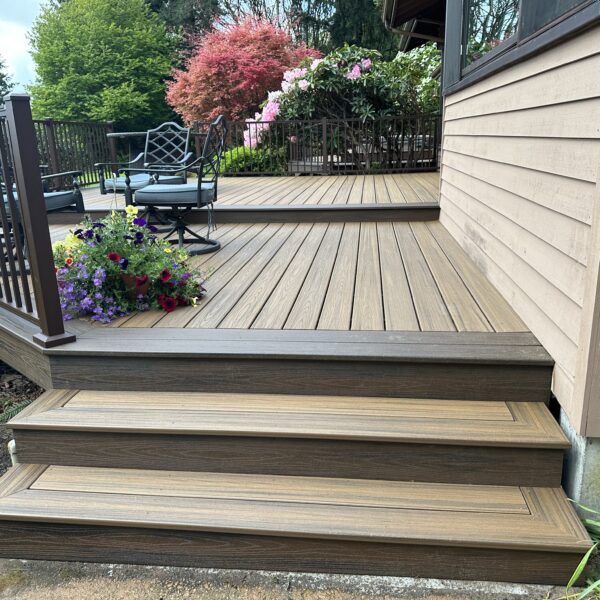
A stair system should do more than connect the deck to the ground. It should support how the whole space works.
That includes comfort, flow, safety, and how the stairs relate to the backyard, the garden, nearby furniture, and the main circulation through the outdoor space. Well-planned deck design can transform a cramped layout into something more usable. It can create better access, make the space more functional, and help the deck complement the yard. The width of the stair run also matters, especially when people move between seating, planters, and outdoor furniture. Adding a landing can improve accessibility and provide a natural resting point, especially on longer stair runs or where the layout changes direction. On larger projects, multi-level decks can also create clearer usage zones for dining, lounging, or circulation.
This is also where deck lighting, tread proportions, railing placement, and transitions into concrete start to matter more. Lighting built into deck stairs improves safety in low-light conditions, and deck lighting can turn a basic deck into a more usable evening space. Good stairs do not just look integrated. They feel accessible and secure, and in a more modern project they may also need to work alongside glass rail details or other adjacent elements, including open-riser steps that improve visibility through the stair run. In tighter layouts, spiral stairs can also be a space-efficient way to move between different deck levels.
When a bigger rebuild or new deck is the smarter move
Sometimes the best answer is not another cleanup or another season of trying to stretch life out of old decking.
If the stair system is soft in multiple places, if the railing feels unreliable, or if the problems point back to deeper issues in the underlying structure, it may be time to think bigger. That can mean rebuilding the stairs or planning a new deck that better fits your needs, design preferences, and the condition of the current deck. In Seattle, decks more than 18 inches above grade generally require permits, which is one more reason bigger stair and deck changes should be planned carefully.3
A larger project also gives homeowners a chance to rethink the layout, choose suitable materials, improve safety, and bring the work up to code compliance with the right building permits or necessary building permits where required. In some cases, it is also the right time to install matching materials, improve deck railings, or create a level surface between the stairs and adjacent concrete. It may also be the point where painted repairs stop making sense, where painted patches no longer enhance the look of the stairs, and where better ideas lead to a more complete rebuild. Deck installation services typically cover everything from consultation and design to foundation work, framing, and final finishing, which is exactly why larger rebuilds need to be approached as full systems rather than surface upgrades.
That is not about overbuilding. It is about investing in a durable solution that makes the exterior more useful, expands the living space, and improves the way the deck supports the backyard. Professional deck installation combines expert design, quality materials, and precise construction to create outdoor spaces that support the way a property is actually used.
FAQ
How do I know if deck stairs need more than cleaning?
If the stairs still feel soft, uneven, slippery, or unstable after cleaning, the issue likely goes deeper than the surface and may affect the structure below. That is usually the point where patchwork ideas stop being useful.
Is a loose railing on deck stairs serious?
Yes. A loose railing can point to weakened connections or structural movement in the stair system.
Can staining hide damage in wood deck stairs?
It can improve appearance, but it does not fix rot, soft wood, failing framing, or deeper problems inside the structure. Deck resurfacing can refresh the exterior of an existing deck, but only if the original foundation and framing structure are still sound.
Do composite deck stairs still need inspection?
Yes. Composite surfaces hold up well, but the framing, connections, and installation below still need to be checked. Composite decks require less maintenance than traditional wood decks, but that does not remove the need for regular inspections of the substructure.
What causes mold to keep coming back on deck stairs?
Usually trapped moisture, shade, poor airflow, drainage problems, or residue from cleaning chemicals around the stair structure.
When do repeated stair repairs stop making sense?
When the same issues keep returning, or each repair exposes another problem, a larger fix is often more cost-effective.
Do I need permits to rebuild deck stairs?
Often yes, especially if the work affects structure, safety features, or other code-related elements. Deck stairs should comply with local building codes to support safety and accessibility, and deck installation should meet local code requirements to protect structural integrity.
Can deck stairs reveal problems in the rest of the deck?
Yes. Because stairs handle movement and stress differently, they often show early signs of larger deck issues and give homeowners clearer ideas about whether the next step should be repair or replacement.

Olympic Decks is your Seattle area Deck Company, We specialize in all your Decking needs – new deck installation, deck resurfacing, louvered roof and cedar wood fence installation.